Skip to content


US tariffs change landed cost, freight demand, and routing decisions across every major trade lane. Section 301 duties of 25 percent still apply to most List 1, 2, and 3 goods from China since 2018-2019, with List 4A at 7.5 percent. The 2024-2026 expansion added semiconductors, electric vehicles, lithium-ion batteries, solar cells, steel, aluminium, and ship-to-shore cranes. In February 2025, IEEPA tariffs added 10 percent on China and threatened 25 percent on Mexico and Canada imports, with on-and-off pauses creating booking volatility. This guide explains how tariffs flow through HTS classification, MPF, HMF, ocean and air freight rates, and the routing choices importers make to protect margin.
How Tariffs Are Built on Top of an Import
Every commercial import into the United States carries four cost layers: customs duty under the HTS code, Section 301 or 232 add-ons where they apply, the Merchandise Processing Fee (MPF), and the Harbor Maintenance Fee (HMF) for ocean cargo.
- HTS classification: the Harmonized Tariff Schedule uses 10-digit codes that decide the base duty rate. A wrong code can multiply duty by 5x or trigger penalties.
- Section 301 (China): 25 percent on List 1, 2, 3; 7.5 percent on List 4A; expanded categories in 2024-2026 hit EVs (100 percent), solar cells (50 percent), and lithium-ion batteries (25 percent rising to higher rates).
- Section 232 (national security): 25 percent on steel and 10 percent on aluminium since 2018, with scope expanded in 2025 to more downstream products.
- Section 201 safeguards: applied to washing machines and solar cells, with quota structures and step-down schedules.
- IEEPA 2025 tariffs: 10 percent additional on China imports (February 2025), 25 percent threatened on Mexico and Canada with intermittent pauses.
- MPF: 0.3464 percent of customs value, minimum $32, maximum $634 per entry.
- HMF: 0.125 percent of value on ocean shipments only.
- Antidumping (AD) and Countervailing (CVD) duties: separate from regular tariffs, can reach 100 to 400 percent on targeted products such as Chinese tires, steel pipe, or solar panels.
Worked Example: $100,000 Electronics Shipment from China
An importer ships $100,000 of electronics under HTS heading 8517 from Shenzhen to Los Angeles. Section 301 List 3 applies at 25 percent.
- Section 301 duty: $25,000
- IEEPA 10 percent additional (Feb 2025): $10,000
- MPF (0.3464 percent, capped at $634): $346
- HMF (0.125 percent): $125
- Ocean freight (40 ft container, FCL): $3,000
- US trucking and last-mile: $1,200
Landed cost climbs from $100,000 cargo value to roughly $139,671 before insurance and brokerage. The duty layer alone is $35,000, more than 11 times the ocean freight cost. This is why importers call freight “the small cost” once Section 301 is in play, and why HTS classification reviews and Foreign Trade Zone strategies pay back fast.

How Tariffs Move Freight Rates
Tariff announcements drive three predictable freight reactions on the China to US lane and beyond.
- Pre-tariff front-loading: when a new duty is announced with a future effective date, importers rush bookings to clear US customs before the deadline. Spot rates on China to US West Coast lanes have spiked 20 to 40 percent during front-loading windows in 2018, 2024, and early 2025.
- Post-tariff demand drop: after the deadline, bookings collapse for 4 to 8 weeks while inventory burns down, dragging spot rates below contract levels.
- Trade lane shifts: sustained tariffs push manufacturing to Vietnam, India, Indonesia, Malaysia, and Mexico. Air freight from Hanoi and Ho Chi Minh City to US gateways has grown double digits since 2019, while Manzanillo and Veracruz ocean volumes follow nearshoring FDI in Monterrey, Saltillo, and Querétaro.
For a deeper look at how carrier decisions shape rates during these swings, read how shipping lines work and what impacts your freight rates and how port congestion and capacity constraints impact freight rates.
USMCA, Canada, and the Mexico Lane
USMCA replaced NAFTA in July 2020 and preserves duty-free treatment for goods that meet rules of origin. Autos require 75 percent regional value content and labour value rules; textiles must use yarn from member countries.
For compliant Canadian exports to the US, USMCA shields shippers from most baseline duty. The 2025 IEEPA threats of 25 percent on Mexico and Canada created planning chaos even when paused, because importers had to model two landed cost scenarios on every PO. Brokers now run “tariff-on” and “tariff-off” cost sheets in parallel, and many shippers added bonded warehouse or FTZ steps to delay duty until policy clarity returns.
De Minimis, E-Commerce, and Direct-to-Consumer
The Section 321 de minimis rule allowed shipments under $800 to enter the US duty-free. From May 2024 onward, the exemption was removed for China-origin goods, hitting Shein, Temu, and thousands of small sellers that built models on tariff-free fulfilment from China.
The freight side response: more sellers move inventory in bulk into US 3PL warehouses, paying duty once at the FCL or LCL stage instead of per parcel. Air freight from Asia to US e-commerce hubs (Chicago, Dallas, Los Angeles) absorbed part of that volume in 2024-2025. For a full breakdown of duty mechanics on the busiest lane, see our complete guide to shipping from China to USA.
Tools Importers Use to Manage Duty Exposure
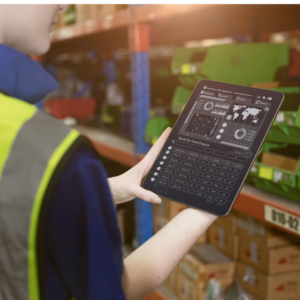
- Foreign Trade Zones (FTZ): goods enter the FTZ without paying duty. Duty is deferred until the cargo leaves the zone for US consumption, or avoided entirely if re-exported.
- Bonded warehouses: similar deferral mechanism, up to 5 years, useful for slow-moving SKUs.
- Duty drawback: 99 percent refund of duty paid on imported goods that are later re-exported, including in finished products.
- Tariff engineering: minor product changes that legitimately move an item to a different HTS code with a lower rate.
- Country-of-origin shifts: moving final assembly to Vietnam, Mexico, or Malaysia to escape Section 301 China duty, while respecting substantial transformation rules.
- Continuous customs bond: required for importers paying more than $50,000 in duty per year. The bond covers duties, taxes, and fees and is filed with CBP.
Cash Flow and Bond Sizing
A continuous bond is sized at 10 percent of duties, taxes, and fees paid in the prior 12 months, with a $50,000 minimum. After Section 301 added 25 percent on a $5M annual China import program, an importer’s bond requirement can jump from $50,000 to $375,000 in one renewal cycle. Cash deposits or surety premiums climb in step. Building tariff exposure into freight contracts and quoting alongside ocean freight is essential.

What Shippers Should Do Now
- Review HTS classification on top 20 SKUs with a licensed customs broker.
- Run landed cost models with current Section 301, Section 232, and IEEPA layers.
- Quote ocean and air alternatives in parallel on China lanes.
- Evaluate FTZ or bonded warehouse use for high-duty inventory.
- Confirm USMCA origin documentation on Mexico and Canada flows.
- Track de minimis policy if you ship direct-to-consumer parcels from Asia.

How ExFreight Helps
ExFreight quotes ocean freight and air freight instantly with all-in pricing, so importers can model post-tariff landed cost in seconds rather than waiting on broker emails. See the full set of freight forwarding services for FCL, LCL, air, and ground options across China, Vietnam, India, Mexico, Canada, and 100+ countries.
Get an instant quote at ExFreight.com and price your next shipment with tariff impact already in view.