Skip to content


Shipping lines are ocean carriers that operate container vessels on fixed liner schedules between ports. The top 10 carriers control roughly 85% of global container capacity, measured in TEU (twenty-foot equivalent units). MSC leads the market with about 6.5M TEU, followed by Maersk (4.3M), CMA CGM (3.9M), COSCO Shipping (3.3M), Hapag-Lloyd (2.0M), Evergreen (1.7M), ONE (1.7M), HMM (0.8M), Yang Ming (0.7M), and Zim (0.6M). Together they move the bulk of containerized trade across the Asia-Europe, Transpacific, and Transatlantic lanes.
This guide explains how carriers operate, how alliances share vessel capacity, how ocean freight rates are built, and which surcharges shippers pay on every bill of lading. For service-level pricing on your lane, see ExFreight ocean freight.
How Shipping Lines Operate
A shipping line runs a fleet of container vessels on published port rotations. Each rotation is a string of ports served on a weekly or fortnightly cadence, with a fixed transit time between load and discharge ports. The carrier sells slot capacity on those vessels to shippers, NVOCCs, and freight forwarders.
Vessels are classified by capacity:
- Ultra Large Container Vessels (ULCV): 18,000 to 24,000 TEU. The MSC Oscar carries 19,224 TEU and the Ever Ace carries 23,992 TEU. These ships work the Asia-Europe trade where port infrastructure can handle them.
- Neo-Panamax and Panamax: around 5,000 TEU, sized for the Panama Canal locks and used heavily on Transpacific and Latin America services.
- Feeder vessels: under 3,000 TEU, used to relay containers from hub ports like Singapore, Algeciras, or Cartagena into smaller regional ports.
Carriers also invest beyond the vessel. MSC, Maersk, CMA CGM, and COSCO own port terminals through subsidiaries (TIL, APM Terminals, CMA Terminals, China COSCO Ports), inland trucking, and logistics arms. This vertical integration lets a carrier control the box from the factory gate to the consignee door, which is sold as a door-to-door or merchant haulage product.
Carrier Alliances in 2026
Carriers cooperate through Vessel Sharing Agreements (VSAs) grouped into alliances. An alliance lets each member sell slots on partner vessels, which doubles port coverage without doubling fleet investment. The 2026 alliance map looks like this:
- Gemini Cooperation: Maersk plus Hapag-Lloyd, started February 2025 after Maersk exited the 2M alliance with MSC. Gemini runs a hub-and-spoke network with high schedule reliability targets.
- MSC standalone: Mediterranean Shipping Company operates independently after the 2M split, leveraging its 6.5M TEU fleet to keep weekly strings on every major lane.
- Premier Alliance: ONE, HMM, and Yang Ming, focused on Transpacific and Asia-Europe trades.
- Ocean Alliance: CMA CGM, COSCO, Evergreen, and OOCL, covering Asia-Europe, Transpacific, and Transatlantic.
Alliance discipline directly affects rates. When members pull capacity (blank sailings) ahead of weak demand, freight rates hold up. When alliances flood a lane with extra loaders, rates fall.
How Ocean Freight Rates Are Set
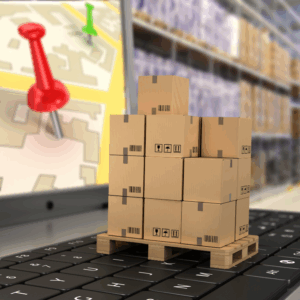
Ocean freight pricing has two layers: a base rate per container plus a stack of surcharges. Carriers publish tariffs filed with the Federal Maritime Commission (FMC) in the United States and held with the carrier directly in the European Union. The published tariff is the legal ceiling; the contracted or spot rate is what shippers actually pay.
Standard rate components on a typical Asia to US quote:
- Base ocean freight: the per-container rate from load port to discharge port.
- BAF (Bunker Adjustment Factor): fuel surcharge tied to IFO and VLSFO prices, recalculated quarterly.
- GRI (General Rate Increase): announced rate hike, common at the start of a contract season or when demand spikes.
- PSS (Peak Season Surcharge): applied during high-volume windows, typically May to October on Transpacific.
- War Risk Surcharge: levied on lanes through high-risk corridors such as the Red Sea or Gulf of Aden.
- THC (Terminal Handling Charge): port lift and yard handling at origin and destination.
- ISPS: security surcharge under the International Ship and Port Facility Security code.
- DDC (Destination Delivery Charge): inland positioning at destination terminal.
- CFS charge: consolidation and deconsolidation fee for LCL cargo at the Container Freight Station.
Capacity versus demand on the lane is the largest single driver of base rates. Fuel cost, port charges, Suez and Panama Canal transit fees, alliance discipline, and port congestion premiums move the rate week to week. For a parallel breakdown on the ground side, review the complete guide to LTL shipping expenses.
Spot Rates vs Contract Rates
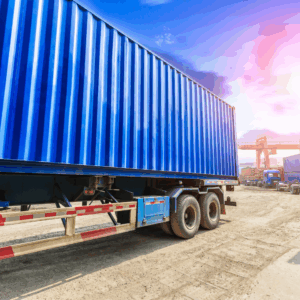
A Beneficial Cargo Owner (BCO) signs annual contracts with one or more carriers, locking in a Minimum Quantity Commitment (MQC) at a fixed base rate. Contract season on Transpacific runs roughly April to May; on Asia-Europe it runs October to December.
Spot bookings move at FAK (Freight All Kinds) rates, which apply a single price to most commodities in a 20ft or 40ft box. Spot is benchmarked against published indexes:
- SCFI (Shanghai Containerised Freight Index): weekly export rates from Shanghai.
- FBX (Freightos Baltic Index): daily container spot rates on 13 trade lanes.
- Drewry WCI (World Container Index): weekly composite on 8 major routes.
- Xeneta XSI: contract and spot benchmarks built from shipper-reported data.
When spot rates run below contract, BCOs push volume to the spot market. When spot blows past contract, carriers invoke MQC clauses or roll bookings until BCOs accept a peak-season adjustment. Port congestion magnifies both effects, as covered in how port congestion and capacity constraints impact freight rates.
NVOCC vs Freight Forwarder
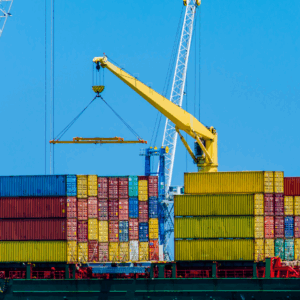
An NVOCC (Non-Vessel Operating Common Carrier) acts as a carrier on paper without owning vessels. The NVOCC buys slots from the actual ocean carrier, then issues its own House Bill of Lading (HBL) to the shipper. A traditional freight forwarder books with the carrier and hands the shipper the carrier-issued Master Bill of Lading (MBL).
Bill of lading types every shipper meets:
- Master Bill of Lading (MBL): issued by the ocean carrier to the NVOCC or forwarder.
- House Bill of Lading (HBL): issued by the NVOCC to the actual shipper.
- Sea Waybill: non-negotiable, used when no original document exchange is needed.
- Switch BL: reissued at a third location, often to mask shipper or consignee identity.
- Telex Release: electronic confirmation that the original BL has been surrendered, releasing cargo at destination.
Tracking these documents is the backbone of arrival management. See the guide to tracking shipments from China to the USA for the practical workflow.
Service Types Carriers Sell
Shipping lines and NVOCCs price by service mode:
- FCL (Full Container Load): a sealed 20ft, 40ft, or 40ft High Cube container moves origin to destination on one bill.
- LCL (Less than Container Load): cargo is consolidated with other shippers at a CFS at origin and deconsolidated at destination.
- FAK rates: flat per-container pricing across most commodity codes, common on spot bookings.
- Reefer: temperature-controlled containers for perishables, pharmaceuticals, and chemicals.
- Tank containers: ISO tanks for liquid bulk such as food-grade chemicals or wine.
- Project cargo: out-of-gauge equipment moved on flat racks, open tops, or breakbulk vessels.
Transit time depends on lane and service. A typical Asia-to-US-East-Coast string runs 30 to 35 days through the Panama Canal, while an Asia-to-US-West-Coast string runs 14 to 18 days. Lane-by-lane figures are tracked in how long it takes to ship from China to the US.
Putting It Together for Shippers
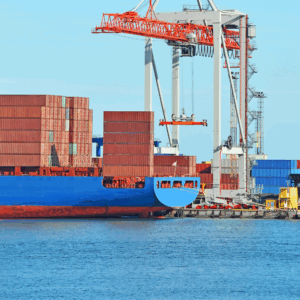
Shipping lines run on capital, capacity, and cooperation. The vessel size, alliance membership, and lane discipline determine how much space sits on the water; fuel, fees, and surcharges determine what each TEU costs to move. Spot indexes show the weekly market; contracts hold the floor. NVOCCs and forwarders translate carrier tariffs into bookings, paperwork, and tracking that shippers can actually use.
For instant quotes on FCL, LCL, and door-to-door ocean services with full visibility on every BL, start at ExFreight.