Skip to content

The fastest answer: for most commercial cargo moving from China to France, ocean freight is the cheapest option and air freight is the fastest. A full container load (FCL) from Shanghai or Ningbo to Le Havre typically runs 28 to 40 days port to port in 2026 (carriers continue routing via the Cape of Good Hope rather than the Suez Canal), while air freight from Shanghai or Guangzhou into Paris Charles de Gaulle clears in 5 to 7 days. Your main cost driver is mode and volume: ocean wins on anything above roughly 2 cubic meters or 200 kilograms, and air wins when the goods are light, high value, or time critical.
Whichever mode you choose, the customs picture at the French end is the same: a 20 percent import VAT (TVA) on the landed CIF value plus duty that averages around 4.2 percent but varies by product. ExFreight handles the door to door execution on this lane, and you can quote and book online through our China to France freight forwarding service, part of our wider China freight coverage. The table below summarizes the four ways to move a shipment on this corridor.
| Mode | Typical transit | Cost basis | Best for |
|---|---|---|---|
| Ocean FCL | 28 to 40 days port to port | Flat rate per 20ft or 40ft container | Full or near-full container loads, lowest unit cost |
| Ocean LCL | 35 to 48 days door to door | Per cubic meter (cbm) or 1,000 kg, whichever is greater | Smaller shipments of 2 to 15 cbm |
| Air freight | 5 to 7 days airport to airport | Per chargeable kilogram | Urgent, light, or high value cargo |
| Express | 3 to 5 days door to door | Per kg, all in courier rate | Samples and small parcels under 100 kg |
Shipping methods from China to France compared
The choice between ocean and air comes down to three variables: total weight and volume, cargo value, and how fast you need delivery. Ocean freight has a far lower cost per kilogram but a long transit and several fixed origin and destination charges that make very small shipments inefficient. Air freight reverses that profile: high cost per kilogram, low fixed overhead, and a transit measured in days.
A useful rule of thumb on the China to France lane: if your shipment is under roughly 200 kilograms and not bulky, compare an air quote against LCL, because the LCL minimums and destination fees often erode ocean’s advantage at that size. Above 2 cubic meters, ocean almost always wins on price. For a structured way to weigh speed against cost, see our air versus ocean decision framework. The sections below break down each mode with the real ports, airports, and indicative 2026 ranges for this corridor.
Ocean freight from China to France
Ocean is the workhorse of China to France trade. On the export side, the main load ports are Shanghai and Ningbo on the central coast, Shenzhen (Yantian) and Guangzhou (Nansha) in the south, and Qingdao in the north. On the French import side, the dominant gateway is the Port of Le Havre, which handles roughly 60 percent of the country’s container traffic and feeds Paris and northern France. Marseille-Fos on the Mediterranean serves southern France and routes through Suez when that lane is open, and Dunkirk is a third northern option focused heavily on Asia trade.
Most China to France ocean services run from Shanghai, Ningbo, or Yantian to Le Havre. In 2026 the Red Sea diversions keep vessels on the longer Cape of Good Hope route, which is why transit sits at 28 to 40 days rather than the 18 to 22 days seen before the diversions. Marseille-Fos can be a few days faster when carriers use Suez, but availability varies week to week.
| Service | Indicative 2026 range | Notes |
|---|---|---|
| FCL 20ft (Shanghai to Le Havre) | USD 1,200 to 2,800 | Flat per container, plus origin and destination charges |
| FCL 40ft / 40HC (Shanghai to Le Havre) | USD 2,000 to 4,600 | Rates swung sharply in 2026; book 10 to 14 days ahead |
| LCL | USD 40 to 90 per cbm | Charged per cbm or per 1,000 kg, whichever is greater; minimum 1 cbm |
These are indicative ranges, not live quotes. Spot rates on Asia to North Europe moved a great deal through 2026, with a sharp step up into Le Havre during the first half of the year, so always request an all in quote with two to three weeks of validity. Remember to budget the destination side too: French Terminal Handling Charges run roughly USD 150 to 300 per container, plus customs clearance, any inland trucking to your delivery point, and demurrage if you do not unpack and return the box on time.
The LCL versus FCL break even on this lane usually lands between 13 and 15 cubic meters. A standard 20ft container holds about 28 to 33 cbm of usable space; once your LCL volume passes roughly half a container, the per cbm LCL rate plus the fixed LCL handling fees typically costs more than just booking a full 20ft box. If you are consistently shipping 15 cbm or more, FCL is almost always cheaper per unit and gives you a sealed container with less handling and lower damage risk.
Air freight from China to France
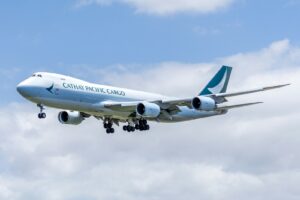
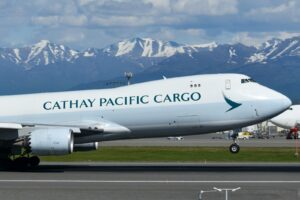
Air freight is the right call when the cargo is light, high in value, or simply needed fast. The main origin cargo airports are Shanghai Pudong (PVG), Guangzhou Baiyun (CAN), Hong Kong (HKG), and Beijing (PEK). The primary French gateway is Paris Charles de Gaulle (CDG), the country’s largest cargo hub, with Lyon Saint-Exupery (LYS) and Marseille Provence (MRS) as secondary options. Carriers with strong capacity on this lane include Air France, China Southern, and Lufthansa Cargo.
Airport to airport transit is typically 5 to 7 days once you include booking, security screening, the flight, and destination handling. Indicative 2026 air rates run roughly USD 5 to 9 per chargeable kilogram, with the lower end reserved for larger consignments of 1,000 kilograms or more and the higher end for smaller or lighter shipments. Express courier service, which bundles pickup, customs, and final delivery into one rate, runs 3 to 5 days door to door and suits samples and parcels under about 100 kilograms.
The catch with air is chargeable weight. Airlines bill the greater of actual gross weight or volumetric weight, calculated as length by width by height in centimeters divided by 6,000. Bulky but light cargo can cost far more than its scale weight suggests, so measure and cube your cartons before assuming air is competitive. Air wins clearly when the value per kilogram is high enough that the freight is a small share of landed cost, when an ocean delay would cause a stockout, or when you are launching a product and need first units on shelves quickly.
China export clearance and documents
On the China side, goods must be declared to customs before loading. The Chinese exporter or its agent files an export declaration through the China International Trade Single Window, supported by a commercial invoice, packing list, the sales contract, and the bill of lading or air waybill. The declared HS code must match across all of these documents and the customs declaration, because mismatches are the most common cause of held cargo and rejected VAT export refund claims. As of January 1, 2026, China’s standalone VAT Law tightened the review of these supporting documents, so consistency between contract, invoice, declaration, and the special VAT fapiao matters more than ever.
Most China to France trades are sold FOB (Free On Board) a named Chinese port, which means the supplier handles export clearance and delivers the goods onto the vessel, and the buyer takes over cost and risk from there, including ocean freight, insurance, and French import. Under FOB the Chinese supplier also keeps the export VAT refund. If you would rather control the whole chain and consolidate at origin, EXW or FCA terms shift that handover earlier. For a full breakdown of what FOB does and does not cover, read our guide on what FOB means in freight. You can confirm China’s export rules with the General Administration of Customs of China.
France import customs, duties and VAT
When your shipment reaches France, three charges can apply: customs duty, import VAT, and any product specific levies. Duty is assessed on the customs value (broadly the CIF value, goods plus freight plus insurance to the EU border) using the EU TARIC tariff. Rates run from 0 to roughly 17 percent depending on the product, with an average around 4.2 percent; many electronics and machinery items carry zero duty, while textiles, footwear, and some consumer goods sit higher. Import VAT (TVA) is then charged at the standard rate of 20 percent on the CIF value plus the duty.
A key French advantage: since January 2022, import VAT is mandatorily auto-liquidated. You no longer pay TVA in cash to customs at the border; instead you declare and simultaneously deduct it on your monthly VAT return (the CA3), which is a major cash flow benefit for VAT registered importers. To import at all you need an EORI number, and note that in 2026 France moved to a new EORI format based on the 9 digit SIREN identifier, issued through the pro.douane.gouv.fr portal. Customs declarations are filed electronically in the DELTA system using the H1 declaration format.
Required import documents are the commercial invoice, packing list, bill of lading or air waybill, the EORI number, and any product specific certificates (CE marking documentation, health or phytosanitary certificates, or REACH compliance for chemicals). Classify your goods carefully, because the HS code drives both the duty rate and any restrictions; our HTS code classification guide walks through how to find the right number. To estimate the full bill before you ship, including duty, VAT, and all the destination fees, use our landed cost calculation guide. Confirm the current French rules directly with French Customs (Douane).
Transit times from China to France
Plan your inventory around the realistic door to door windows below, not just the port to port leg. Origin pickup and export clearance in China usually add 2 to 4 days, and French import clearance plus inland delivery typically adds 2 to 5 days on top of the figures shown.
| Mode | Port/airport to port/airport | Typical door to door |
|---|---|---|
| Ocean FCL | 28 to 40 days | 32 to 47 days |
| Ocean LCL | 30 to 42 days | 35 to 48 days |
| Air freight | 3 to 5 days | 5 to 7 days |
| Express | n/a | 3 to 5 days |
Add buffer around Chinese New Year (late January or February), when factory closures and a pre holiday booking rush both delay sailings and push rates up. The week before Golden Week in early October has a similar effect. On this lane in 2026, also factor in the Cape of Good Hope routing, which has made ocean schedules longer and less predictable than in prior years.
How to lower your China to France shipping costs
- Consolidate to FCL. Once your volume reaches 13 to 15 cbm, a full 20ft container almost always beats LCL per unit and cuts handling and damage risk.
- Cube your cartons before choosing air. Volumetric weight (length by width by height divided by 6,000) can make light, bulky air shipments far more expensive than expected. Tighter packing lowers the chargeable weight.
- Classify HS codes correctly. The right code can mean zero duty instead of a high rate, and it prevents costly clearance holds. A small classification error repeats on every shipment.
- Book ahead on volatile weeks. Rates into Le Havre swung sharply in 2026; booking 10 to 14 days out and locking an all in quote with two to three weeks validity protects your budget.
- Register for VAT and use auto-liquidation. A VAT registered French importer declares and deducts import TVA on the same return rather than paying it in cash at the border, freeing up working capital.
- Plan around peak seasons. Shipping just before Chinese New Year or Golden Week means higher rates and longer delays; ship earlier where you can.
Common mistakes shipping from China to France
- Treating FOB as door to door. FOB ends when the goods are on the vessel at the Chinese port. Ocean freight, insurance, and all French import costs are on the buyer, so budget for them up front.
- Forgetting the EORI number. Without a valid EORI (now in the new 9 digit SIREN format for 2026) you cannot clear goods in France, and arranging one at the last minute delays release.
- Underestimating landed cost. Sellers who only compare freight rates miss the 20 percent VAT, duty, THC, clearance, and inland delivery. Model the full landed cost before pricing your product.
- Mismatched documents. Different HS codes or values on the invoice, packing list, and declaration trigger holds in both China and France. Keep every document consistent.
- Choosing air by weight alone. Bulky cargo is billed on volumetric weight; failing to cube cartons leads to surprise air invoices.
- Ignoring peak season timing. Booking during the Chinese New Year or Golden Week rush means paying more and waiting longer.
Ship from China to France with ExFreight
ExFreight gives you instant online quotes, booking, and tracking for ocean and air freight on the China to France lane, with the customs and documentation handled end to end. Compare modes, lock a rate, and book in minutes through our China to France freight forwarding service, and explore the full corridor on our China freight hub. Whether you are moving a single LCL pallet or regular full containers into Le Havre or Marseille, you get transparent pricing and a clear view of duty and VAT before you ship.
Frequently asked questions
How long does shipping from China to France take?
Ocean FCL runs about 28 to 40 days port to port in 2026 because carriers route via the Cape of Good Hope, or roughly 32 to 47 days door to door. Air freight is 5 to 7 days and express is 3 to 5 days door to door.
How much does it cost to ship a container from China to France?
Indicative 2026 ranges are about USD 1,200 to 2,800 for a 20ft container and USD 2,000 to 4,600 for a 40ft, plus origin and destination charges. These are ranges, not live quotes, and rates moved sharply through the year.
What is the import VAT on goods from China to France?
France charges a standard 20 percent import VAT (TVA) on the CIF value plus any duty. Since 2022 it is auto-liquidated, so VAT registered importers declare and deduct it on the same return instead of paying cash at the border.
Do I need an EORI number to import from China into France?
Yes. An EORI number is mandatory to clear any commercial import in France. In 2026 France moved to a new 9 digit EORI format based on the SIREN identifier, issued through the pro.douane.gouv.fr portal.
What are the main ports and airports for China to France freight?
Ocean cargo loads at Shanghai, Ningbo, Yantian, or Qingdao and arrives mainly at Le Havre, with Marseille-Fos and Dunkirk as alternatives. Air freight flies from Shanghai (PVG), Guangzhou (CAN), or Hong Kong (HKG) into Paris Charles de Gaulle (CDG).
When should I choose air freight instead of ocean from China to France?
Air makes sense when cargo is light, high in value, or time critical, typically under about 200 kg. Above 2 cbm, ocean is almost always cheaper, though you should always compare a small air shipment against LCL.