Skip to content

The best way to ship from China to Canada depends on weight and urgency: ocean FCL is the cheapest mode for full containers and pallet-heavy loads, ocean LCL fits cargo from roughly 1 to 13 cbm, and air freight wins when the shipment is small, dense, or time-sensitive. A typical 40ft container sails Shanghai to Vancouver in about 14 to 18 days port to port, while air freight moves the same lane in 4 to 8 days airport to airport. The main cost driver on this route is the transpacific ocean rate, which moves with vessel capacity and season, so booking 3 to 4 weeks ahead protects both price and space.
Most importers use a freight forwarder to combine origin pickup in China, the main transpacific leg, Canadian customs clearance, and final delivery into one managed shipment. ExFreight handles the full China to Canada freight forwarding workflow with instant online rates across ocean and air, so you can compare modes side by side before you commit. The summary table below shows how the four common modes line up on transit, cost basis, and ideal use, and the rest of this guide breaks down ports, rates, customs, and the practical decisions behind each one.
| Mode | Transit (port/airport to port/airport) | Cost basis | Best for |
|---|---|---|---|
| Ocean FCL | 14 to 18 days | Flat rate per 20ft / 40ft container | Full containers, heavy or high-volume cargo |
| Ocean LCL | 18 to 30 days | Per cbm (or per 1,000 kg, whichever is greater) | 1 to 13 cbm, no rush |
| Air freight | 4 to 8 days | Per chargeable kg | Urgent, dense, or high-value goods |
| Express | 3 to 5 days | Per kg, all-in door to door | Samples, documents, small parcels |
Shipping methods from China to Canada compared
The mode you choose is mostly a math problem between weight, volume, and how fast you need the goods. Ocean freight is priced by the container or by the cubic meter, so it rewards dense, heavy, and bulky cargo where the per-unit cost falls fast. Air freight is priced on the greater of actual or volumetric weight, so it punishes light, bulky cargo but stays competitive for compact, dense shipments that need to land in days, not weeks. Express courier sits at the top of the speed scale and the top of the price scale, and it makes sense only for small, urgent consignments such as samples or replacement parts.
A useful rule of thumb: if your shipment fills a 20ft or 40ft container, go FCL. If it is between roughly 1 and 13 cbm, compare LCL against FCL on a per-unit basis, because once you pass that band a 20ft box is often cheaper per cubic meter and clears faster. If it is under about 300 kg and urgent, price air freight. Cost is only half the picture: factor in inventory carrying cost, the risk of a stockout, and any contractual delivery date, because a few hundred dollars of air premium can be cheaper than a missed launch. If you want a structured way to weigh speed against cost, our air vs ocean decision framework walks through the break-even logic with worked numbers.
Ocean freight from China to Canada
Ocean is the backbone of China to Canada trade and the right default for almost any shipment that is not urgent. The main Chinese load ports are Shanghai, Ningbo, Shenzhen (Yantian), Qingdao, and Xiamen, each with frequent direct or transshipment services across the Pacific. On the Canadian side, the Port of Vancouver is the dominant Pacific gateway and Canada’s largest port, handling roughly 3.5 million TEUs a year, while the Port of Prince Rupert offers the shortest transpacific sailing in North America, about 500 nautical miles closer to Asia than other Pacific Northwest ports, which can shave a day or more off the water time. For eastern Canada, cargo either rails inland from Vancouver and Prince Rupert on CN or CP, or sails to the Port of Montreal, usually via a transshipment hub in Europe or on the US East Coast.
Direct Shanghai to Vancouver services run about 14 to 18 days port to port. Prince Rupert is comparable or slightly faster and feeds CN rail straight to Toronto and Montreal, which is why many Ontario and Quebec importers route through the Pacific rather than waiting for an all-water Atlantic service. Routings to Montreal that go all-water through Suez or via US East Coast transshipment can stretch transit to 30 days or more, so for central and eastern Canada the Vancouver or Prince Rupert plus rail option is usually faster and is worth pricing first.
| Routing | Indicative 2026 range (USD) | Notes |
|---|---|---|
| FCL 20ft, China to Vancouver | $2,500 to $4,500 | Varies with season and capacity |
| FCL 40ft / 40HQ, China to Vancouver | $3,800 to $8,300 | Peak season pushes the top of the range |
| FCL 40ft, China to Toronto / Montreal | $4,500 to $9,500 | Includes inland rail to destination |
| LCL, China to Canada | $40 to $90 per cbm | Subject to a per-shipment minimum |
These are indicative ranges, not live quotes. Transpacific rates move sharply with season and vessel capacity, and June 2026 saw FCL into Canada step up month over month, so always confirm a current rate at booking. The LCL versus FCL break-even on this lane sits around 13 to 15 cbm: below that, LCL is usually cheaper because you pay only for the space you use, and above it a 20ft container often costs less per unit and clears faster because it is not deconsolidated at a container freight station (CFS). Remember that ocean quotes are frequently port-to-port: origin haulage in China, terminal handling charges at both ends, Canadian customs release, rail transfer, and final trucking are separate line items, so build a buffer of several days and a clear view of all-in cost before you compare modes.
Air freight from China to Canada
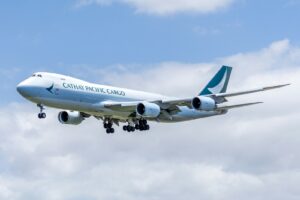
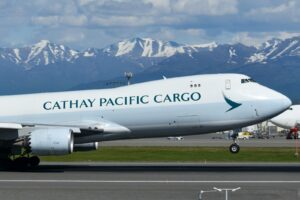
Air freight is the choice when ocean is too slow or the cargo is too valuable to sit on the water for three weeks. The main air cargo origins are Shanghai Pudong (PVG), Beijing (PEK), Guangzhou (CAN), Shenzhen (SZX), and Hong Kong (HKG), all with strong freighter and belly capacity to North America. On the Canadian side the main import gateways are Vancouver (YVR), Toronto Pearson (YYZ), and Montreal (YUL). Standard airport-to-airport transit runs 4 to 8 days once you allow for cargo cut-off, the flight, and import handling, with express courier service landing small parcels in 3 to 5 days door to door.
Indicative 2026 air rates run roughly $5 to $9 per chargeable kilogram, though spot rates have at times pushed higher into Canadian gateways. The chargeable weight is the greater of actual weight and volumetric weight, calculated as length times width times height in centimeters divided by 6,000, so loosely packed cargo can be billed well above its scale weight. Air wins when your shipment is under about 300 to 500 kg, when the goods are high value relative to their size (electronics, instruments, fashion, spare parts), or when a stockout or a launch date makes ocean transit too risky. For larger, denser air loads, ask about consolidated airport-to-airport service rather than door-to-door express, which carries a premium, and watch fuel and security surcharges, which can add meaningfully to the headline per-kg figure.
China export clearance and documents
Exports from China clear through the General Administration of Customs, with declarations filed electronically through the China International Trade Single Window. Your supplier or their appointed agent files the customs declaration form and is responsible for claiming the export VAT refund where the goods qualify, a process that requires the declaration, the export invoice, and the bank settlement records to match. As the buyer, your job is to make sure the commercial documents are clean and consistent, because Canadian customs will rely on them, and any mismatch between the invoice, packing list, and bill of lading is one of the fastest ways to get a shipment held.
The standard export document set is the commercial invoice, packing list, bill of lading or air waybill, and where relevant a certificate of origin, a fumigation or heat-treatment certificate for wood packaging (ISPM 15), and any product-specific certificates such as those for electronics, food contact items, or regulated chemicals. The Incoterm you agree with your supplier decides who controls and pays for each leg. Many China to Canada buyers ship FOB so they, through their forwarder, control the main transit and Canadian clearance, rather than EXW (which puts the China inland leg and export formalities on the buyer) or DDP (which hands full control, and a hidden markup, to the seller). Our guide on what FOB means in freight explains exactly where risk and cost transfer between the parties. You can confirm China-side procedure directly with the General Administration of Customs of China.
Canada import customs, duties and GST
Canadian imports clear through the Canada Border Services Agency (CBSA). Duty is assessed on the value for duty, which in most cases is the price paid for the goods (the transaction value) converted to Canadian dollars, at the rate set by the goods’ tariff classification. Goods from China generally qualify for the Most-Favoured-Nation (MFN) tariff, and rates vary widely by product, from zero on many industrial inputs to higher rates on finished consumer goods, footwear, and textiles. On top of any duty, the federal Goods and Services Tax (GST) of 5% applies to the duty-paid value of most commercial imports at the time of importation. Provincial sales tax (PST) or the provincial portion of HST is generally collected at the point of resale rather than at the border for commercial importers registered for GST/HST, though casual and personal imports can be treated differently.
Getting the tariff classification right is what determines your duty rate, so confirm the correct code before you ship using our HTS code classification guide, then model duty plus GST plus freight with our landed cost calculator and worked examples so there are no surprises on arrival. The core import documents are the commercial invoice (or the Canada Customs Invoice, form CI1, which is required when the shipment value exceeds CAD 2,500), the bill of lading or air waybill, the packing list, and a cargo control document filed by the carrier. Resident and non-resident commercial importers must also be registered in the CBSA Assessment and Revenue Management (CARM) system, which is now the official channel for accounting and paying duties and taxes and for posting any required financial security. Full requirements, memoranda, and the CI1 form are published by the Canada Border Services Agency.
Transit times from China to Canada
| Service | Origin to destination | Typical transit |
|---|---|---|
| Ocean FCL | Shanghai to Vancouver | 14 to 18 days port to port |
| Ocean FCL | South China to Prince Rupert | 13 to 18 days port to port |
| Ocean FCL + rail | China to Toronto / Montreal | 22 to 30 days door area |
| Ocean LCL | China to Canada | 18 to 30 days, plus CFS handling |
| Air freight | China to YVR / YYZ / YUL | 4 to 8 days airport to airport |
| Express courier | China to Canada door | 3 to 5 days |
These figures are the moving parts only. Add buffer for cargo cut-off at origin, Canadian customs release, any CBSA examination, rail dwell at the terminal, and final trucking to your door. A realistic door-to-door FCL plan into the Toronto or Montreal area is closer to four weeks than the port-to-port number alone, while a Vancouver-area delivery can be a week shorter. Seasonal congestion before Chinese New Year and during the autumn peak can add several days at both ends, so plan inventory with the upper bound of these ranges rather than the best case.
How to lower your China to Canada shipping costs
- Consolidate to FCL. Once your volume approaches 13 to 15 cbm, a 20ft container usually beats LCL on price per unit and avoids deconsolidation delays at the CFS.
- Book early and avoid peak. Rates spike before Chinese New Year and during the autumn peak. Booking 3 to 4 weeks out locks space and protects price against last-minute surcharges.
- Use Prince Rupert plus rail for central and eastern Canada. It is often faster and competitively priced versus all-water routings to Montreal, and it keeps your cargo on a single, predictable rail corridor.
- Classify correctly. The right tariff code can mean a lower duty rate and prevents costly reclassification, interest, and penalties at the border.
- Ship FOB, not EXW or DDP. Controlling the main leg and Canadian clearance through your forwarder is usually cheaper and more transparent than leaving it to the supplier and paying an undisclosed margin.
- Right-size air shipments. Cut volumetric weight by tightening packaging and pallet dimensions, and compare consolidated airport-to-airport service against door-to-door express for anything over a few hundred kilograms.
- Recover GST where eligible. Many GST/HST-registered businesses can claim an input tax credit for the 5% import GST, so account for it as recoverable cash flow rather than a sunk cost.
Common mistakes shipping from China to Canada
- Undervaluing or vague invoices. A commercial invoice that lacks a full goods description, terms of sale, country of origin, and accurate value triggers CBSA holds and possible penalties.
- Skipping CARM registration. Commercial importers that are not set up in CARM cannot account for or pay duties and taxes, which stalls release at the border.
- Ignoring ISPM 15 wood packaging rules. Untreated wood pallets and crates can be refused, returned, or fumigated at the importer’s expense.
- Defaulting to air when ocean would do. Paying per kilogram for non-urgent, bulky cargo is the most common way importers overspend on this lane.
- Forgetting GST in the budget. The 5% GST on the duty-paid value affects cash flow at import even when it is later recoverable.
- Underestimating inland time. Treating the port-to-port number as door-to-door leaves Ontario and Quebec buyers short by a week or more and disrupts inventory planning.
- Misclassifying goods. Guessing the tariff code instead of confirming it can mean overpaying duty or, worse, an audit and back-duty assessment.
Ship from China to Canada with ExFreight
ExFreight gives you instant online ocean and air rates, end-to-end booking, and customs support for the China to Canada lane, so you can compare FCL, LCL, and air in one place and book the option that fits your budget and your deadline. Whether you are moving a single LCL pallet from Ningbo or a full 40ft container from Shenzhen into Vancouver, Toronto, or Montreal, you see the real cost and transit before you commit. Get started with our China to Canada freight forwarding service or explore the full range of freight shipping options from China to plan your next import with confidence.
Frequently asked questions
How long does shipping from China to Canada take?
Ocean FCL runs about 14 to 18 days port to port to Vancouver, and 22 to 30 days door area to Toronto or Montreal once rail and clearance are added. Air freight takes 4 to 8 days airport to airport, and express courier 3 to 5 days door to door.
How much does it cost to ship a container from China to Canada?
Indicative 2026 ranges are about $2,500 to $4,500 for a 20ft and $3,800 to $8,300 for a 40ft into Vancouver, plus inland rail for eastern Canada. These are ranges, not live quotes, since transpacific rates move with season and capacity.
What taxes and duties apply when importing from China to Canada?
Duty is charged on the value for duty at the tariff rate for the goods’ classification, usually the Most-Favoured-Nation rate for Chinese goods. The federal GST of 5% then applies to the duty-paid value at importation, and many registered businesses can later recover it.
Do I need to register with CARM to import into Canada?
Yes. Commercial importers must be registered in the CBSA Assessment and Revenue Management (CARM) system, which is the official channel for accounting and paying duties and taxes on commercial shipments into Canada.
Should I choose air or ocean freight from China to Canada?
Choose ocean for full containers and heavy or bulky cargo where cost matters most, and air for shipments under a few hundred kilograms that are urgent or high value. Compare the per-unit cost against your deadline and inventory risk to decide.
Which Canadian ports receive cargo from China?
The main Pacific gateways are the Port of Vancouver, Canada’s largest, and the Port of Prince Rupert, which offers the shortest transpacific sailing. Eastern Canada is served via the Port of Montreal or by rail from the Pacific ports.