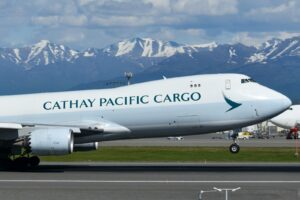
For most commercial shipments from the USA to Saudi Arabia, ocean freight is the default choice and air freight is the speed option. A full container (FCL) from the US East Coast to Jeddah typically runs 22 to 38 days port to port, while air freight moves the same cargo to King Abdulaziz International (JED) or King Khalid International (RUH) in roughly 3 to 6 days. The single biggest cost driver on this lane is not the freight rate, it is destination compliance: Saudi Arabia charges 15% VAT on the landed value of every commercial import plus a customs duty of typically 5% to 15%, and most regulated products cannot clear at all without a valid SABER conformity certificate.
The right mode depends on weight, value and deadline. Dense, low-value, time-flexible cargo belongs on the water; light, high-value or urgent cargo belongs in the air. ExFreight gives US exporters instant online quotes and bookings on both modes through one platform, with the US export documentation handled end to end. The table below summarizes the four ways to move goods on this corridor.
| Mode | Typical transit | Cost basis | Best for |
|---|---|---|---|
| Ocean FCL | 22 to 38 days | Flat rate per 20ft / 40ft container | Full or near-full loads, dense or heavy cargo |
| Ocean LCL | 28 to 45 days | Per cubic meter (CBM) or per 1,000 kg, whichever is greater | Pallet-sized shipments under roughly 15 CBM |
| Air freight | 3 to 6 days | Per chargeable kilogram (greater of actual or volumetric) | Urgent, high-value or perishable cargo |
| Express / courier | 2 to 5 days | Per kg, all-in door to door | Documents, samples, small parcels under 70 kg |
If you would rather hand the whole move to one partner, our USA to Saudi Arabia freight forwarding service manages pickup, export clearance and delivery under a single quote.
Shipping methods from USA to Saudi Arabia compared
Ocean and air sit at opposite ends of the cost and speed curve, and the decision is usually settled by a simple ratio of value to weight. As a rule of thumb, ocean freight costs a fraction of air per kilogram but takes five to ten times longer. Air freight wins when the inventory carrying cost, the risk of a missed deadline, or the value density of the cargo outweighs the premium per kilo. For a structured way to choose, see our air freight versus ocean freight decision framework.
A practical breakdown by shipment profile:
- Ocean FCL: the cheapest cost per unit once you have enough volume to fill or nearly fill a container. You pay one flat rate whether the box is 70% or 100% full, so the more you load, the lower your effective per-CBM cost.
- Ocean LCL: you pay only for the space you use, billed per CBM. Ideal for a few pallets, but it carries higher per-CBM handling and longer dwell at consolidation and deconsolidation hubs.
- Air freight: priced on chargeable weight, the greater of actual kilograms and volumetric weight (length x width x height in cm divided by 6,000). Light, bulky cargo is penalized; dense cargo is rewarded.
- Express: a door-to-door integrator service for small, urgent consignments where you want one party handling pickup, clearance and delivery.
Ocean freight from USA to Saudi Arabia
Ocean is the backbone of US to Saudi trade. The main US export gateways are the East Coast ports of New York/New Jersey (USNYC), Norfolk (USORF), Savannah (USSAV), Baltimore (USBAL) and Charleston (USCHS), plus Houston (USHOU) on the Gulf and the Los Angeles/Long Beach complex (USLAX/USLGB) for West Coast cargo. On the Saudi side, the two dominant import ports are Jeddah Islamic Port (SAJED) on the Red Sea, which serves the western region and the holy cities, and King Abdulaziz Port in Dammam (SADMM) on the Arabian Gulf, which serves the Eastern Province and the industrial heartland around Riyadh.
Most US to Saudi sailings transship through a Mediterranean or Gulf hub rather than running fully direct, so transshipment routing is the norm. Indicative 2026 ocean rates on this lane, presented as ranges and not live quotes, look roughly like this:
| Service | Indicative 2026 range | Notes |
|---|---|---|
| FCL 20ft | US$2,200 to US$4,000 | Per container, port to port, base ocean only |
| FCL 40ft / 40HC | US$3,200 to US$5,500 | Per container, port to port, base ocean only |
| LCL | US$55 to US$110 per CBM | Minimum charge usually 1 CBM, plus origin and destination fees |
Rates move with bunker surcharges, Red Sea routing conditions, peak season and equipment availability, so treat the figures above as a planning baseline. The LCL versus FCL break-even on this corridor generally falls around 13 to 15 CBM: below that, LCL is cheaper; above it, a 20ft FCL (about 28 to 33 CBM usable) almost always wins on cost per cubic meter and gives you a faster, cleaner customs path because the box is not co-mingled with other importers’ cargo.
Port choice should follow your buyer’s location. If the consignee sits in Riyadh, Jeddah and Dammam are roughly equidistant by road, but cargo bound for the Western Province, Mecca or Medina clears faster through Jeddah, while Eastern Province and Jubail/Yanbu industrial cargo is best routed through Dammam. Both ports run modern container terminals with strong throughput, so the deciding factor is usually inland trucking distance from the port to the final delivery address, not the port’s own handling speed. Budget for terminal handling charges, documentation fees and any inland haulage on top of the base ocean rate when you build your quote.
Air freight from USA to Saudi Arabia
Air freight collapses the transit window from weeks to days. The primary US air cargo gateways for Saudi-bound freight are New York (JFK), Chicago (ORD), Atlanta (ATL), Dallas (DFW) and Los Angeles (LAX). At destination, the two main cargo airports are King Abdulaziz International Airport in Jeddah (JED) and King Khalid International Airport in Riyadh (RUH), with Dammam’s King Fahd International (DMM) handling Eastern Province volumes. Typical door-to-airport transit is 3 to 6 days depending on routing, with consolidated services on the longer end and direct or premium services faster.
Air is billed on chargeable weight. Indicative 2026 air rates from the US to Saudi Arabia run roughly US$3.50 to US$6.50 per kilogram for general cargo, before fuel and security surcharges, with the per-kilo rate dropping as shipment weight rises into the +500 kg and +1,000 kg breaks. Air wins when any of the following is true: the cargo is high value relative to its weight, a production line or retail launch deadline is at risk, the goods are perishable or temperature-sensitive, or the ocean carrying cost of inventory in transit exceeds the air premium. For lower-value, heavy or bulky cargo with flexible timing, ocean remains far cheaper.
A worked comparison makes the trade-off concrete. A 300 kg shipment of electronics worth US$60,000 might cost around US$1,500 by air and arrive in under a week, versus a few hundred dollars by LCL ocean arriving in five to six weeks. On a US$60,000 shipment the air premium is a small fraction of cargo value and almost always justified. Flip the numbers to a 300 kg shipment of low-value spare parts worth US$3,000 and the same air premium is a large share of the goods value, so ocean is the rational choice unless the parts are stopping a line. Run this value-to-weight check on every consignment before you default to a mode.
USA export clearance and documents
Exporting from the United States to Saudi Arabia is straightforward for most commercial goods, but the filing thresholds matter. The core requirement is Electronic Export Information (EEI), filed through the Automated Export System (AES). EEI is mandatory when the value of goods under a single Schedule B classification exceeds US$2,500, or whenever the shipment requires an export license regardless of value. You will need the correct 10-digit Schedule B number for statistics and, where the item appears on the Commerce Control List, the right ECCN to confirm whether the shipment is “No License Required” or needs a license under the Export Administration Regulations (EAR).
The standard export document set is: commercial invoice, packing list, bill of lading or air waybill, and the EEI/AES filing (ITN). Saudi import rules add destination-side documents discussed below. Incoterms decide who files what and where the risk transfers. Under FOB (Free On Board), the US seller clears the goods for export and loads them at the US port, then risk passes to the buyer; under CIF, the seller also pays ocean freight and insurance to the Saudi port. Choosing the wrong term is a common and expensive mistake, so read our guide to what FOB means in freight before you quote. Authoritative US export guidance lives with U.S. Customs and Border Protection and the International Trade Administration.
Saudi Arabia import customs, duties and VAT
This is where US exporters lose the most time and money, so plan for it from the first quote. Saudi customs and tax are administered by the Zakat, Tax and Customs Authority (ZATCA), and every declaration flows through the FASAH single-window platform. Three charges and one certificate define the landed cost:
For the complete document checklist and duty rules, see Saudi Arabia customs clearance requirements.
- Customs duty: the GCC common external tariff applies, generally 5% on most goods and rising to 12% to 15% (and higher on some protected categories) depending on the HS classification. Duty is calculated ad valorem on the CIF value.
- VAT: 15% on the duty-inclusive CIF value, applied from the first riyal on commercial imports and assessed automatically through FASAH.
- SABER / SASO conformity: most regulated products require a Product Certificate of Conformity (PCoC) and a per-shipment Shipment Certificate of Conformity (SCoC) registered on the SABER platform, proving the goods meet Saudi (SASO) technical standards. Without a valid SCoC, regulated cargo will not be released.
The required import document set is: commercial invoice (often requiring specific declarations), packing list, bill of lading or air waybill, certificate of origin, and the SABER conformity certificates for regulated goods. Note that SABER tariff codes were updated effective January 2026, so confirm classifications are current before shipping. To model the full delivered cost including duty and VAT, use our landed cost calculator guide, and verify your product’s tariff treatment with our HTS code classification guide.
A short worked example shows how the charges stack. On a CIF shipment valued at US$50,000 carrying a 5% duty, customs assesses US$2,500 of duty, then 15% VAT applies to the duty-inclusive value of US$52,500, adding US$7,875. The combined duty and VAT of US$10,375 is the importer’s obligation on top of the freight, which is why quoting freight alone badly understates what the Saudi buyer actually pays at the border. Shipments under SAR 1,000 (about US$270) in value are generally exempt from duty, but commercial imports above that threshold are not, and VAT applies from the first riyal regardless. Always agree in writing who bears duty and VAT, the importer of record, and the SABER registration responsibility before the cargo moves.
Transit times from USA to Saudi Arabia
Transit varies with origin port, destination port and routing. The ranges below are port to port or airport to airport and exclude US inland trucking and Saudi customs clearance, which add several days at each end.
| Route | Mode | Typical transit |
|---|---|---|
| US East Coast to Jeddah | Ocean FCL | 22 to 38 days |
| US East Coast to Dammam | Ocean FCL | 28 to 42 days |
| US West Coast to Jeddah / Dammam | Ocean FCL | 30 to 45 days |
| US to Jeddah / Dammam | Ocean LCL | 28 to 45 days |
| US to Jeddah (JED) / Riyadh (RUH) | Air freight | 3 to 6 days |
| US to Saudi Arabia | Express courier | 2 to 5 days |
How to lower your USA to Saudi Arabia shipping costs
The largest savings come from mode discipline and clean compliance, not from haggling over a few dollars of ocean rate.
- Consolidate to FCL. If you regularly ship 13 CBM or more, move from LCL to a 20ft container and your cost per cubic meter drops sharply while customs handling gets simpler.
- Match mode to value density. Reserve air for cargo where speed or value justifies it. Shifting non-urgent freight to ocean is usually the single biggest line-item cut.
- Get SABER right before the goods sail. Registering PCoC and SCoC certificates in advance prevents demurrage and detention charges that accumulate while non-compliant cargo sits at the Saudi port.
- Classify accurately. A correct Schedule B on export and a correct HS code on import avoid overpaying duty and avoid FASAH holds for value or code mismatches.
- Quote total landed cost, not just freight. Duty plus 15% VAT plus conformity fees often exceed the ocean rate, so model them up front to avoid surprises at delivery.
- Book early in the week. Aligning with sailing and flight schedules reduces dwell time and the risk of rolled cargo during peak season.
Common mistakes shipping from USA to Saudi Arabia
Most failed or delayed Saudi shipments trace back to a short list of avoidable errors:
- No SABER certificate. Sending regulated goods without a valid SCoC is the number one cause of cargo being held or rejected at Jeddah and Dammam.
- Skipping the AES/EEI filing. Failing to file EEI when the Schedule B value exceeds US$2,500 (or when a license applies) exposes the exporter to penalties and blocks the bill of lading.
- Underestimating landed cost. Forgetting the 15% VAT and duty on top of freight leads to under-quoted deals and disputes with the Saudi buyer.
- Wrong or vague commercial invoice. Missing declarations, mismatched values or incomplete consignee details create FASAH holds that require formal correction through ZATCA.
- Outdated tariff codes. Using pre-2026 SABER tariff codes after the January 2026 update can trigger reclassification and delays at clearance.
- Choosing the wrong Incoterm. Agreeing to a term that leaves you responsible for Saudi import duties and VAT when you did not budget for them can erase the margin on a deal.
Ship from USA to Saudi Arabia with ExFreight
ExFreight lets US exporters quote, book and track shipments to Saudi Arabia online in minutes, across air freight and ocean, with US export documentation and AES filing support built in. Whether you are moving a single pallet of LCL or a full 40ft container to Jeddah or Dammam, you get transparent all-in pricing and one platform that handles the paperwork on both ends. Start with an instant quote on the US export page and ship your next consignment to Saudi Arabia with the compliance handled correctly the first time.
Frequently asked questions
How long does shipping from the USA to Saudi Arabia take?
Ocean FCL from the US East Coast to Jeddah typically takes 22 to 38 days port to port, and to Dammam 28 to 42 days. Air freight to Jeddah (JED) or Riyadh (RUH) takes about 3 to 6 days. Add several days at each end for inland transport and customs clearance.
How much does it cost to ship a container from the USA to Saudi Arabia?
Indicative 2026 ranges are roughly US$2,200 to US$4,000 for a 20ft container and US$3,200 to US$5,500 for a 40ft, port to port and ocean only. These are planning ranges, not live quotes, and exclude duty, 15% VAT and local fees.
What import duties and taxes apply in Saudi Arabia?
Saudi Arabia charges a customs duty of generally 5% to 15% on the CIF value depending on the product, plus 15% VAT on the duty-inclusive value. Both are calculated automatically through the FASAH platform administered by ZATCA.
Do I need a SABER certificate to ship to Saudi Arabia?
Yes for most regulated products. You need a Product Certificate of Conformity (PCoC) and a per-shipment Shipment Certificate of Conformity (SCoC) registered on the SABER platform, proving the goods meet Saudi SASO standards. Regulated cargo without a valid SCoC will not be released.
What US export documents do I need for Saudi Arabia?
You need a commercial invoice, packing list, bill of lading or air waybill, and an Electronic Export Information (EEI) filing through AES when the Schedule B value exceeds US$2,500 or a license is required. A certificate of origin and SABER certificates are needed on the Saudi import side.
Should I choose ocean or air freight to Saudi Arabia?
Choose ocean for heavy, bulky or low-value cargo with flexible timing, since it is far cheaper per kilogram. Choose air for urgent, high-value or perishable goods where the speed and value density justify the premium of roughly US$3.50 to US$6.50 per kilogram.
Ready to ship? Get an instant freight quote.