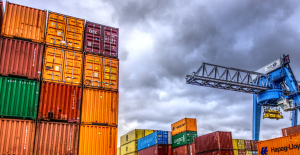
No, a standard ISO ocean shipping container cannot be air freighted. A 20ft or 40ft sea container is too tall, too long, and too heavy to fit through any commercial aircraft cargo door or rest on any aircraft floor. The largest container you can put on a plane is the LD11 Unit Load Device, with internal dimensions of roughly 3.18 m by 1.53 m by 1.63 m and a maximum gross weight of 3,176 kg.
If your cargo currently fills an ocean container, the only way to move it by air is to break it down and reload it into multiple Unit Load Devices (ULDs). This guide explains why ISO containers cannot fly, which ULDs replace them, what aircraft carry them, and when paying 10 to 15 times the ocean rate makes sense.
Why a Standard Shipping Container Cannot Be Air Freighted
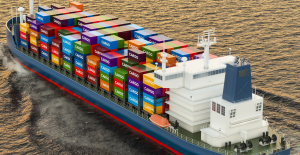
An ISO 20ft container measures 6.06 m long, 2.44 m wide, and 2.59 m tall, with a maximum gross weight of 28,200 kg. A 40ft container doubles the length and the payload. No passenger widebody or freighter aircraft has a cargo door, deck width, or floor strength rated to accept those dimensions and that weight as a single unit.
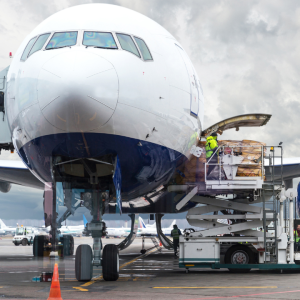
The cargo doors of a Boeing 747F or 777F are sized for aircraft pallets and contoured ULDs, not 8.5 ft tall steel boxes. The aircraft floor is engineered for distributed pallet loads, not the 28 ton point load of a fully loaded sea container. Even an empty 40ft container weighs around 3,800 kg and is 12 m long, which already exceeds the dimensions of every air cargo loading system in service.
What Air Freight Uses Instead: Unit Load Devices (ULDs)
Air freight moves cargo in Unit Load Devices, the air industry equivalent of a shipping container. ULDs are aluminum containers and pallets shaped to match the curved fuselage of widebody aircraft. The most common types are:
- LD3 (AKE): 1.53 m by 1.56 m by 1.63 m, 1,587 kg max. Lower deck of passenger and freighter widebodies.
- LD7 (PMC) pallet: 3.18 m by 2.24 m by 1.63 m, 5,103 kg max. Standard lower deck pallet.
- LD8 (DQF): 1.5 m by 2.44 m by 1.63 m. Lower deck container.
- LD11 (LDP): 3.18 m by 1.53 m by 1.63 m, 3,176 kg max. Largest lower deck container.
- M1 / M2 main deck pallets: 3.18 m by 2.44 m by up to 3.0 m tall. Freighter aircraft only.
For temperature controlled cargo, active reefer ULDs such as RKN and RAP containers maintain pharmaceutical and biotech shipments at strict temperature ranges using internal compressors and battery power.
Which Aircraft Can Carry Air Freight Containers
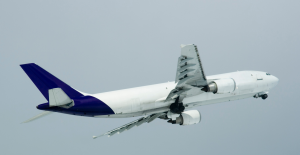
Two categories of aircraft move ULDs. Passenger widebodies including the Airbus A350, Boeing 777, Airbus A330, and Boeing 787 carry LD3, LD7, and LD8 containers in their belly holds. Dedicated freighters including the Boeing 777F, Boeing 747F, Boeing 767F, and Airbus A330F carry the same lower deck ULDs plus large M1 and M2 pallets on the main deck, where cargo can stack up to 3 m tall.
Only freighter aircraft can move oversized or stackable cargo. If your shipment is taller than 1.63 m, it has to fly on a freighter, not a passenger plane.
Air Freight vs Ocean Freight Containers: Cost Comparison
The reason most container cargo moves by sea is cost. A 40ft ocean container from Asia to the United States typically costs $2,500 to $5,000 all in, depending on lane and season. The same volume of cargo moved by air, broken into roughly 6 to 8 LD7 pallets, costs $25,000 to $60,000. That is 10 to 15 times more expensive.
Transit time is the trade off. Ocean freight from Shanghai to Los Angeles takes 14 to 18 days port to port, and 30 to 40 days door to door. Air freight on the same lane is 1 to 3 days in the air and 5 to 7 days door to door. For a deeper breakdown of what drives the price, see our guide on air freight charges and how they are calculated, and our timing guide on how long it takes to ship from China to the US.
When Air Freight Is the Right Choice for Container-Volume Cargo
Paying 10x to 15x the ocean rate is justified in specific situations:
- Pharmaceuticals and biotech requiring active temperature control in RKN or RAP reefer ULDs.
- High value electronics where insurance, theft risk, and capital tied up in inventory outweigh the freight premium.
- Urgent automotive parts stopping a production line, where the cost of an idle factory exceeds the air freight bill within hours.
- Time critical inventory for a product launch, seasonal peak, or stockout recovery.
- Perishables such as fresh seafood, flowers, and chilled produce.
For everything else, ocean freight remains the default. A sea air hybrid is a middle ground worth considering: cargo moves by ocean to a transshipment hub, then flies the final leg. Common routings include Asia to Dubai by sea, then Dubai to Europe by air, cutting transit time roughly in half at 40 to 60 percent of the all air rate.
How to Decide Between Ocean Containers and Air ULDs
Use this quick framework. Ocean is the right choice when cargo is non perishable, transit time of 30 to 40 days is acceptable, and freight cost is a meaningful share of landed cost. Air is the right choice when cargo is high value per kg, time sensitive, temperature controlled, or worth more in stock than the freight premium costs you.
If you are weighing both modes for the same lane, an experienced freight forwarder can quote ocean and air side by side so you see the full landed cost and timeline of each option. Compare quotes for ocean freight and air freight on the same shipment to make the call with real numbers.
Get Instant Air and Ocean Freight Quotes
You cannot put a 20ft or 40ft ocean container on a plane, but you can move the same cargo as ULDs when speed, security, or temperature control matter more than cost. Get an instant quote from ExFreight to compare ocean container rates against air freight ULD pricing for your exact lane, weight, and timeline.