Skip to content

 You are not legally required to use a freight forwarder for Amazon FBA, but for any international FBA shipment a freight forwarder is effectively essential. Amazon does not move your inventory from your supplier to its fulfillment centers, and it does not act as your importer of record, customs broker, or carrier. The moment your goods cross a border, you become responsible for ocean or air booking, customs clearance, ISF filing, duties and taxes, FBA carton and pallet prep, and a delivery appointment Amazon will reject if any detail is wrong. A freight forwarder absorbs that entire chain so your product lands in the warehouse compliant and on time.
If you source from China, Vietnam, India, or anywhere overseas, this guide explains what a forwarder does for FBA, when you need one, how customs and DDP work, how to choose ocean versus air versus parcel, and the mistakes that get shipments refused at the dock.
What does a freight forwarder do for Amazon FBA?
A freight forwarder arranges the end-to-end movement of your inventory from your supplier’s factory to an Amazon fulfillment center, handling every regulatory and operational step in between. For an FBA seller, the forwarder is the single party who books the transport, clears customs, preps the goods to Amazon’s standard, and schedules the delivery. Without one, you would have to stitch together a carrier, a customs broker, a trucker, and a prep service yourself and keep them all in sync.
For Amazon FBA specifically, a freight forwarder handles:
- Booking space on ocean vessels, aircraft, or trucks and comparing rates across modes
- Consolidating cargo from multiple suppliers into a single shipment
- Preparing the commercial invoice, packing list, bill of lading, and Shipper’s Letter of Instruction
- Filing export clearance at origin and import clearance at destination, including HS code classification
- Submitting the U.S. Importer Security Filing (ISF 10+2) for ocean cargo
- Calculating and paying duties and taxes, including DDP arrangements
- FBA prep: FNSKU labeling, carton and pallet labeling, shrink-wrapping, and meeting weight and dimension limits
- Booking the Amazon delivery appointment and managing warehouse slot timing
- Tracking the shipment and resolving delays or document gaps
- Arranging cargo insurance
ExFreight has run FBA freight since 2009, returning instant rates from 50+ carriers and handling customs clearance and DDP in one place. You can review the full scope of our Amazon FBA shipping services to see how each step is covered.
Why is a freight forwarder almost essential for international FBA shipments?
A freight forwarder is almost essential for international FBA because Amazon enforces strict inbound rules and customs authorities enforce strict import rules, and a single error in either system stops your inventory cold. Here is why the forwarder matters at each failure point:
- Amazon will not move your freight. Getting inventory to the warehouse is entirely your responsibility, from the factory door onward.
- International logistics is unforgiving. A wrong HS code, a missing ISF, or an incorrect Incoterm can trigger holds, penalties, and storage fees.
- Amazon rejects non-compliant deliveries. Mislabeled cartons, oversized pallets, or a delivery without an appointment can get the entire load refused at the door.
- Customs compliance is mandatory. You need an importer of record, accurate declarations, and paid duties before goods are released.
- Scale lowers cost. Forwarders consolidate shipments and leverage carrier volume to cut your per-unit freight cost.
The forwarder becomes your logistics partner, ensuring every shipment is compliant, on time, and within budget so a rejected load never freezes your inventory and your Amazon sales rank.
How does customs clearance, ISF, and DDP work for FBA freight?
Customs clearance for FBA requires a designated importer of record, accurate documentation, and payment of duties and taxes before your goods are released. When you import on a commercial scale, you cannot use Amazon as the importer of record, so either you or your forwarder’s brokerage takes that legal role and owns the declaration’s accuracy.
For ocean shipments into the United States, an Importer Security Filing (ISF 10+2) must be submitted to U.S. Customs at least 24 hours before the cargo is loaded at the origin port. Miss it and you risk a $5,000 penalty plus a customs hold. Your forwarder files the ISF, classifies your products under the correct HS codes, and clears the goods through CBP.
The cleanest setup for FBA is DDP (Delivered Duty Paid) shipping. Under DDP, the forwarder handles export, freight, import clearance, and all duties and taxes, delivering the goods to Amazon with nothing outstanding. This matters because Amazon refuses any shipment that arrives with unpaid duties or that names Amazon as the consignee or importer of record. ExFreight quotes and manages freight forwarding from China to the USA on a DDP basis so your FBA cartons arrive duty-paid and ready to receive.
What are Amazon’s FBA prep and labeling requirements?
Amazon’s FBA prep requirements govern how every carton and pallet must be labeled, packed, and dimensioned before it reaches a fulfillment center, and non-compliance leads to refusal or unplanned prep fees. An FBA-experienced forwarder builds these rules into the shipment so the load is receivable on arrival.
- FNSKU labels on every unit, scannable and not covering other barcodes
- Carton labels with the FBA shipment ID and box ID, one per carton
- Carton weight limit of 50 lb unless a single oversize unit requires more, with a “Team Lift” mark above 50 lb
- Pallet standards: 40 x 48 inch GMA pallets, shrink-wrapped, with four pallet labels and a height cap (typically 72 inches including the pallet)
- An appointment (ARN/PRO) booked for LTL and FTL deliveries so the carrier can check in at the warehouse
Getting these details wrong is the most common reason international FBA loads are turned away. A forwarder that has done FBA prep before catches the issues before the cargo ships, not after it has crossed an ocean.
Ocean vs air vs small parcel: which shipping mode is best for FBA?
The right mode for an FBA shipment depends on the trade-off between speed, cost, and shipment size. Air freight wins on speed for restocks and launches, ocean freight wins on cost for bulk inventory, and small parcel suits sample quantities. The table below compares the options for FBA planning.
| Mode | Transit speed (Asia to US) | Relative cost | Best for FBA |
|---|---|---|---|
| Air freight | 5–10 days | Highest per kg | Time-sensitive restocks, product launches, high-value or low-weight goods, avoiding stockouts |
| Ocean LCL | 30–45 days | Low per unit, no full-container minimum | 1–10 pallets, sellers not yet filling a container, balancing cost and volume |
| Ocean FCL | 30–40 days | Lowest per unit at volume | Large, steady inventory; 10+ pallets; sellers shipping a full 20ft or 40ft container |
| Small parcel | 3–7 days | High per kg, low total for tiny loads | Samples, test inventory, very small carton counts under a few hundred pounds |
Most established FBA sellers blend modes: ocean for the bulk of inventory and air to plug urgent gaps. ExFreight quotes all of them instantly, including LCL ocean freight for partial loads, FCL ocean shipping for full containers, air freight for time-sensitive FBA restocks, and international small parcel shipping for the smallest consignments.
Amazon Partnered Carrier vs freight forwarder: what is the difference?
Amazon’s Partnered Carrier Program (PCP) is a domestic transport option, not an international freight solution, so it cannot replace a freight forwarder for imported inventory. PCP gives you discounted LTL and small-parcel rates for moving goods already inside the destination country to an Amazon warehouse. It does not arrange ocean or air freight from your overseas supplier, clear customs, file ISF, or pay duties.
A freight forwarder covers the entire international leg, from the factory through customs and DDP, then arranges the final move to the fulfillment center. An importing seller needs the forwarder for everything up to the U.S. door; PCP, if used at all, only handles a domestic hand-off after the goods have already cleared. For an international FBA program, the forwarder is indispensable and PCP is at best a final-mile convenience.
Can you ship to Amazon FBA without a freight forwarder?
Yes, you can technically ship to FBA without a forwarder, but it is only realistic for experienced importers handling very small loads. Going without one means you personally take on every task the forwarder would own:
- Book ocean, air, or trucking capacity directly with carriers
- Hire and coordinate a customs broker, drayage, and trucking separately
- File ISF and manage import clearance, HS codes, and duty payment yourself
- Learn and follow Amazon’s inbound, labeling, and appointment policies
- Track the shipment and chase missing documents across time zones
For a growing seller, this DIY route usually produces costly errors, refused loads, and stockouts. A forwarder absorbs the risk and the coordination so you can focus on sourcing and selling rather than on freight operations.
How much does FBA freight forwarding cost?
FBA freight forwarding cost is not a fixed fee; it is driven by the shipping mode, cargo size and weight, the lane, and duties and prep. The main cost factors are:
- Mode: air costs the most per kilogram but moves fastest; ocean is far cheaper per unit but slower
- Weight and volume: air is priced on chargeable weight, so bulky, light goods cost disproportionately more by air
- Origin and destination lane: port pairs, distance, and inland trucking all factor in
- Duties and taxes: set by your product’s HS code and country of origin
- Added services: FBA prep, consolidation, and cargo insurance
The forwarder fee is real, but it routinely lowers your total landed cost by preventing expensive failures: rejected loads, customs holds, storage fees, and emergency air freight to recover from a stockout. The fastest way to see true numbers is an instant quote on your actual cartons and lane.
How ExFreight handles FBA freight
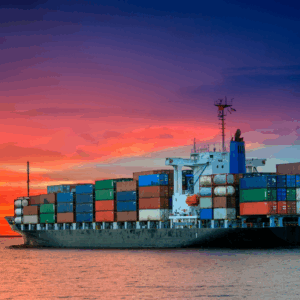 ExFreight is a digital freight forwarder serving 200+ countries since 2009. You quote, book, upload documents, and track every FBA shipment from one dashboard, with instant rates from 50+ ocean, air, and parcel carriers. Customs clearance and DDP are built in, so your inventory arrives duty-paid and Amazon-receivable rather than stuck at a port. The platform schedules delivery appointments, flags missing documents, and gives you real-time visibility from factory to fulfillment center, supporting everyone from first-time sellers to global brands.
Frequently asked questions
Is Amazon a freight forwarder?
No. Amazon is a fulfillment provider, not a freight forwarder. It stores, picks, packs, and ships your products to customers only after your inventory has already arrived at a fulfillment center. Amazon does not book international freight, clear customs, act as your importer of record, or pay your duties. Moving goods from your overseas supplier to the warehouse is entirely your responsibility, which is exactly the gap a freight forwarder fills for FBA sellers.
What is an Importer Security Filing (ISF) for FBA?
An ISF, often called ISF 10+2, is a filing U.S. Customs requires for ocean shipments, submitted at least 24 hours before the cargo is loaded at origin. It declares ten data elements about the importer and shipment plus two from the carrier. Filing late or not at all can trigger a $5,000 penalty and a customs hold. Your freight forwarder files the ISF for your FBA ocean shipments, so you stay compliant without managing the filing yourself.
Why should I use DDP shipping for Amazon FBA?
DDP (Delivered Duty Paid) means the forwarder handles export, freight, import clearance, and all duties and taxes, delivering your goods with nothing outstanding. It matters for FBA because Amazon refuses any shipment that arrives with unpaid duties or that names Amazon as the consignee or importer of record. DDP eliminates that risk, ensures the goods are released cleanly, and lets you predict your full landed cost up front instead of facing surprise charges at the border.
Should I ship FBA inventory by ocean or air?
Use ocean freight for the bulk of your inventory when cost matters more than speed, since it is far cheaper per unit despite a 30–45 day transit. Use air freight for urgent restocks, product launches, and high-value, low-weight goods, where its 5–10 day speed prevents stockouts that would cost you sales rank. Most established sellers combine both: ocean as the base supply and air to cover gaps. The right balance depends on your margins, sell-through rate, and inventory runway.
What documents do I need to ship to Amazon FBA?
At a minimum you need a commercial invoice, a packing list, and a bill of lading. For U.S. exports above $2,500 you also need a Shipper’s Letter of Instruction. Customs clearance requires correct HS codes, and certain products need a certificate of origin or compliance certificates. For ocean cargo into the U.S., an ISF filing is mandatory. A freight forwarder prepares and files all of these for you, reducing the chance of a customs hold or refused delivery.
Ship your FBA inventory the simple way
Shipping to Amazon FBA is far more than placing a purchase order: it is international freight, customs clearance, ISF, DDP, FBA prep, and a delivery appointment that all have to be right at once. A freight forwarder bridges the gap between your supplier and Amazon, keeps every shipment compliant, and frees you to scale. If you are importing inventory for FBA, ExFreight makes it instant and transparent. Get an FBA freight quote in minutes, compare carriers, and book duty-paid delivery straight to the fulfillment center.