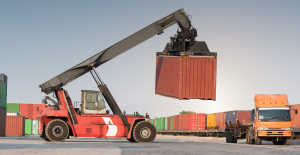
What is Container Demurrage? How to Avoid Costly Port Storage Fees
What is Container Demurrage?
Container demurrage is a fee charged by the shipping line when an import container remains at the port terminal beyond the allotted “free time” period after the vessel has been discharged. It is essentially a penalty for occupying port terminal space longer than permitted. Demurrage charges accumulate daily and escalate over time — starting at $75–150/day for the first week and increasing to $200–350/day in subsequent weeks.
Understanding demurrage is critical for any importer moving ocean freight through US ports. A single container sitting too long can generate thousands of dollars in avoidable fees — costs that erode your margins and create friction with suppliers and customers alike.
Demurrage vs Detention — What is the Difference?
These two terms are frequently confused, even by experienced logistics professionals. They are related but refer to distinct charges at different stages of the container lifecycle.
Demurrage applies while the full container sits at the port terminal. The clock starts after the vessel is discharged and the container is made available for pickup. If you do not retrieve the container before free time expires, the shipping line begins charging demurrage.
Detention applies after the container leaves the port. Once a trucker picks up the container and brings it to your facility, you have a set window to unload it and return the empty container to the shipping line’s designated depot. If you exceed that window, detention charges begin — even though the container is no longer at the port.
Both are charged by the shipping line. Both accumulate daily. Both can be avoided with proper planning and documentation coordination.
Think of it this way: Demurrage = rent for using port terminal space. Detention = rent for keeping the container itself.
A third related term is per diem, which is sometimes used interchangeably with detention but more often refers to equipment charges on domestic intermodal moves. Understanding all three helps you read your freight invoices accurately and dispute incorrect charges.
How Demurrage Charges Work
The demurrage clock follows a predictable sequence — but the financial impact accelerates quickly if you are not prepared.
- Vessel arrives at port and the container is discharged to the terminal
- The terminal notifies the freight forwarder or importer that the container is available for pickup
- Free time begins — typically 3 to 7 calendar days depending on the shipping line, port, and service contract
- If the container is not picked up before free time expires, demurrage begins accruing daily
Typical demurrage rate tiers on a standard 40-foot container:
- Days 1–5 over free time: $75–$150/day per container
- Days 6–10: $150–$250/day
- Days 11 and beyond: $200–$350/day — some shipping lines charge $500/day or more at this tier
A single 40-foot container sitting 14 days over free time can easily generate $2,500 to $4,500 in demurrage — on top of all your other freight costs. High-volume importers with multiple containers on the same vessel can face five-figure demurrage bills from a single shipment delay.
Free time does not always count only business days. Many shipping lines count calendar days, including weekends and holidays. This catches importers off guard when a vessel arrives on a Thursday and the weekend eats into their free time before customs even clears.
Common Causes of Demurrage
Most demurrage charges are preventable. They typically stem from one of these six root causes:
- Customs holds — Incomplete documentation, ISF filing errors, FDA prior notice issues, CPSC inspections, or random exams can delay customs release by days or weeks. Until customs releases the cargo, the container cannot legally leave the terminal — and demurrage continues to accrue.
- Missing original bill of lading — For shipments using an original B/L (versus a telex or express release), the original document must be surrendered to the carrier before the cargo can be released. Bank delays, courier delays, or document errors can hold up release by days.
- Importer not ready to receive goods — Warehouse at capacity, no delivery appointment scheduled, or trucking not arranged in advance are among the most common — and entirely avoidable — causes of demurrage.
- Banking and payment delays — Particularly common with Letter of Credit (LC) shipments. The bank must release the documents before the importer can take possession of the B/L and present it for cargo release.
- Port congestion — During peak seasons or labor disruptions, terminals may not make containers available for pickup even after customs clears. In these cases, demurrage may not be charged (or can be disputed), but congestion surcharges often apply instead.
- Incorrect documentation — Wrong HTS codes, missing certificates of origin, inaccurate commercial invoices, or missing permits for regulated goods (food, electronics, agriculture) can trigger customs holds that delay pickup.
How to Avoid Demurrage Charges
The most effective demurrage prevention strategy is built around documentation lead time and coordinated logistics. Here is what experienced importers do:
- File all customs documentation before the vessel arrives. The ISF (Importer Security Filing) must be submitted 24 hours before loading at the origin port, but your customs entry, FDA prior notice, and other clearance documents should be filed well before the estimated arrival date — ideally 7–10 days out.
- Arrange trucking pickup within 2 days of vessel discharge. The moment the terminal confirms container availability, your drayage carrier should be scheduled. Do not wait for customs clearance confirmation before contacting your trucker — have them on standby.
- Use express bill of lading or telex release when possible. Eliminating the original B/L from the equation removes a major source of document-related delays. Discuss this option with your supplier before the cargo ships.
- Confirm warehouse capacity and delivery appointment in advance. Your trucker needs a delivery appointment before they can drop the container. If your warehouse requires 48–72 hours advance notice for appointments, factor that into your pickup timeline.
- Work with a freight forwarder who monitors free time and coordinates pickups proactively. At ExFreight, we pre-clear documentation and coordinate drayage timing specifically to keep containers moving before demurrage begins.
Can You Negotiate Demurrage?
Yes — demurrage charges are not always final. Shipping lines have structured dispute and waiver processes, and a well-documented case can result in partial or full waiver of demurrage fees.
Demurrage is most commonly waived or reduced when:
- The delay was caused by port congestion or terminal unavailability (not the importer’s failure to act)
- The delay was caused by a customs examination ordered by CBP — the importer had no control over the hold
- You have a volume contract or preferred customer relationship with the shipping line
- Your freight forwarder has a direct relationship with the line’s customer service or commercial team
- You can demonstrate that you acted promptly but were delayed by factors outside your control
Documentation is everything in a demurrage dispute. You need timestamps: when the container was available, when customs released it, when the truck was ordered, and when it was picked up. Gaps in that timeline will be used against you.
ExFreight negotiates demurrage disputes on behalf of our customers, with documented cases and direct carrier relationships. If you have received a demurrage invoice, contact our team before paying — review your ocean freight services options and let us assess whether a dispute is warranted.
Demurrage at Major US Ports
Free time allowances and demurrage rates vary by port and by shipping line. Here is an overview of current conditions at the three busiest US import gateways:
Los Angeles / Long Beach
The largest port complex in the United States handles roughly 40% of all US containerized imports. Free time is typically 4 to 5 calendar days. Demurrage starts at approximately $100/day for the first tier and escalates from there. LA/Long Beach is currently the most congested US port complex, with vessel wait times and terminal delays making early documentation filing especially critical.
New York / Newark
The busiest port on the East Coast. Free time is typically 4 calendar days. Starting demurrage rates run approximately $90/day. The Port of New York and New Jersey handles a high volume of high-value consumer goods, apparel, and food products — cargo types that are frequently subject to FDA and CPSC holds.
Port of Savannah
The fastest-growing major US port and now the third-largest by volume. Free time is typically 5 calendar days — slightly more generous than LA or New York. Starting demurrage is approximately $85/day. Savannah generally offers faster clearance times and less congestion than the two larger port complexes, making it an increasingly popular routing option for importers on the East Coast and Midwest.
Regardless of which port your cargo moves through, the fundamentals remain the same: file early, arrange trucking in advance, and work with a logistics partner who monitors your containers through the entire cycle.