Skip to content

For most importers, shipping from China to Australia means choosing between ocean freight, which is the cheapest mode and the right call for any shipment that is not urgent, and air freight, which costs several times more but moves cargo in days rather than weeks. Ocean port-to-port transit runs roughly 12 to 27 days for full containers and 21 to 31 days for consolidated LCL cargo, while air freight lands in Sydney, Melbourne or Brisbane in 3 to 5 days. The single biggest cost driver is mode and volume: once a shipment passes roughly 14 to 15 cubic metres, a full container almost always beats loose LCL on a per-cubic-metre basis.
ExFreight handles this lane end to end, from factory pickup in China through Australian customs clearance and final delivery. You can compare instant rates and book online through our China to Australia freight forwarding service, which covers FCL, LCL and air. The table below summarises the four main options so you can match the mode to your deadline and budget before reading the detail.
| Mode | Typical transit (port/airport to port/airport) | Charged by | Best for |
|---|---|---|---|
| Ocean FCL (20ft / 40ft) | 12 to 27 days | Per container | Volume above ~15 cbm, non-urgent bulk orders |
| Ocean LCL | 21 to 31 days | Per cubic metre (cbm) | Small to mid shipments under ~15 cbm |
| Air freight | 3 to 5 days | Per kg (chargeable weight) | Urgent, high-value or low-density goods |
| Air express | 2 to 4 days | Per kg, all-in | Samples, documents, very small parcels |
Shipping methods from China to Australia compared
The trade-off across modes is consistent: you pay for speed. Ocean freight is the default for commercial cargo because the cost per kilogram is a fraction of air, but you accept three to five weeks of transit plus customs and delivery time. Air freight reverses that equation, delivering in under a week at a price that only makes sense for goods where the carrying cost of slow inventory, a product launch deadline, or a high value-to-weight ratio justifies it.
A useful rule of thumb on this lane: if the air premium over ocean is less than the value you lose by waiting three to five weeks, fly it; otherwise ship by sea. For a typical consumer-goods importer that often means air for first batches, samples and replenishment of fast-selling lines, and ocean for the bulk re-orders that follow. Express sits a notch above standard air, bundling pickup, line-haul and customs into one all-in rate, which suits very small, time-critical parcels where the per-kg cost matters less than getting the goods on a plane today.
Within ocean freight the choice is FCL versus LCL. FCL gives you a sealed container loaded at origin and opened at destination, which means fewer touchpoints, lower damage risk and a fixed price regardless of how full it is. LCL shares container space with other shippers, so you pay only for the volume you use, but your cargo is consolidated and deconsolidated, adding handling time and a small risk of delay. For a structured way to weigh speed against cost on this lane, see our framework on air freight versus ocean freight.
Ocean freight from China to Australia
China’s main export gateways for the Australia trade are Shanghai, Ningbo-Zhoushan, Shenzhen (Yantian and Shekou), Guangzhou (Nansha), and Qingdao. On the Australian side the primary import ports are Sydney (Port Botany), Melbourne, Brisbane, and Fremantle for Western Australia. The busiest direct corridors are Shanghai or Ningbo to Sydney and Melbourne, with Shenzhen and Guangzhou feeding the same destinations out of South China.
Indicative 2026 rate ranges, which move with the market and are not live quotes, sit around USD 1,500 to 1,800 for a 20ft container and USD 2,900 to 3,600 for a 40ft container into Sydney, Melbourne or Brisbane. These figures rose sharply through mid-2026 on a broad Pacific upswing, so always confirm a fresh quote at booking and treat any rate as valid for only two to three weeks. LCL is typically priced per cubic metre, commonly in the USD 60 to 280 per cbm band depending on the consolidation point and destination, with a minimum charge applied to very small loads.
| Service | Origin ports | Destination ports | Indicative transit |
|---|---|---|---|
| FCL direct | Shanghai, Ningbo, Shenzhen, Guangzhou, Qingdao | Sydney, Melbourne, Brisbane, Fremantle | 12 to 22 days |
| LCL consolidated | Shanghai, Shenzhen, Ningbo | Sydney, Melbourne, Brisbane | 21 to 31 days |
The LCL versus FCL break-even on this lane falls around 14 to 15 cubic metres. Below that, LCL usually wins because you only pay for the space you occupy. Above it, a 20ft container (roughly 28 to 33 cbm of usable space) gives a lower effective cost per cubic metre, often 20 to 35 percent cheaper once you cross the threshold, and removes the consolidation handling that slows LCL down. If your order is borderline, price both and factor in that FCL also reduces damage and delay risk.
Two practical points shape the ocean cost beyond the base freight. First, the quoted ocean rate is rarely the all-in cost: origin charges (export customs, terminal handling, documentation) and destination charges (terminal handling, customs clearance, wharfage, and local delivery) sit on top, and on a low base rate these accessorials can rival the sea freight itself. Always compare on a landed, all-in basis rather than on the headline per-container number. Second, demurrage and detention clocks start once a container lands, so a customs or biosecurity hold at an Australian port can add storage charges quickly; clean, consistent paperwork lodged in advance is the cheapest insurance against them. Transit also varies by route, with direct strings to Sydney and Melbourne running faster than services that tranship through a Southeast Asian hub.
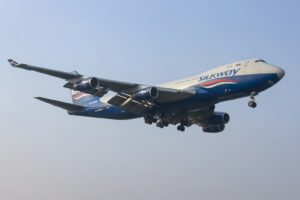
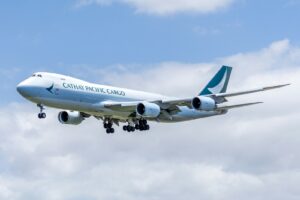
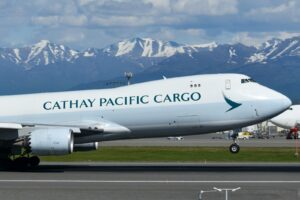
Air freight from China to Australia
The main cargo airports on this lane are Shanghai Pudong (PVG), Guangzhou Baiyun (CAN), Shenzhen Bao’an (SZX) and Hong Kong (HKG) on the China side, flying into Sydney (SYD), Melbourne (MEL) and Brisbane (BNE). Door-to-airport to airport transit is typically 3 to 5 days, with express courier shipments of small parcels moving in 2 to 4 days.
Air freight is charged on chargeable weight, which is the greater of actual gross weight and volumetric (dimensional) weight. Indicative 2026 rates run roughly USD 3.80 to 9.50 per kg, with the rate per kilogram falling as the shipment gets heavier, and a common mid-2026 market reference near USD 5.50 per kg. Because the billing is weight-based, air wins decisively for dense, high-value goods such as electronics, instruments, and spare parts, and for any shipment where a three to five week ocean transit would cost you a sale or stock-out. For low-value, high-volume goods, the per-kg economics almost always favour ocean.
The volumetric calculation is the detail that trips up most first-time air shippers. Airlines and forwarders divide the package volume in cubic centimetres by 6,000 to get the dimensional weight in kilograms, then bill on whichever is higher, actual or dimensional. Bulky but light cargo (cushions, plastic housings, packaging materials) is therefore expensive to fly even when it weighs little, while dense cargo (machined parts, batteries within regulation, dense electronics) is billed close to its real weight. Knowing your dimensional weight before you book lets you decide whether to re-pack, switch to ocean, or accept the air premium. Note that lithium batteries, aerosols, and similar dangerous goods carry extra documentation, packaging and surcharge requirements on every China to Australia flight.
China export clearance and documents
Every commercial shipment leaving China clears through a Chinese export customs declaration lodged with the General Administration of Customs. The declaration must carry the exporter’s name and tax ID, the overseas consignee, the HS code, the declared FOB value, and the customs office number. The core document set is the commercial invoice, packing list, bill of lading or air waybill, and the export declaration, with the commercial invoice showing product description, unit price, total value, HS code and the agreed Incoterm. Mismatches between the declaration and the invoice are the most common cause of delay and of rejected VAT export refund claims, so the paperwork must be internally consistent.
Most factory-direct purchases are quoted FOB (Free On Board) a named Chinese port, which means the supplier covers costs up to the ship’s rail and you control the main freight and everything downstream. Understanding exactly where risk and cost transfer under FOB protects you from double-charging and surprise origin fees; our guide on what FOB means in freight walks through the term in detail. On the export-refund side, Chinese exporters reclaim input VAT through the export refund system, a process governed by the official rules published by the General Administration of Customs of China, and 2026 brought tighter documentation review under the new VAT Law.
Australia import customs, duties and GST
Australia administers imports through the Australian Border Force (ABF) and the Australian Taxation Office. Two charges apply to most commercial cargo: customs duty, commonly 5 percent on many goods (the exact rate depends on the tariff classification and any preference under the China-Australia Free Trade Agreement), and Goods and Services Tax (GST) at a flat 10 percent. GST is calculated on the value of the taxable importation, which is the customs value plus duty, plus international transport and insurance.
The AUD 1,000 threshold drives the documentation. Goods with a customs value of AUD 1,000 or less (excluding alcohol and tobacco) clear on a Self-Assessed Clearance and are generally free of duty and GST. At or above AUD 1,000, you must lodge a full import declaration and pay an import processing charge that ranges from roughly AUD 23 to AUD 192 depending on value and lodgement method. The standard document set is the commercial invoice, packing list, bill of lading or air waybill, and, where you claim ChAFTA preference, a valid Certificate of Origin. Australia also enforces strict biosecurity controls through the Department of Agriculture, so timber packaging, foodstuffs and certain materials face additional inspection.
To estimate your total cost into Australia before you ship, build a full landed-cost figure (goods, freight, insurance, duty and GST) using our worked examples on how to calculate landed cost, and pin down your duty rate by finding the correct tariff number with our HTS code classification guide. The authoritative source for declaration rules, thresholds and processing charges is the Australian Border Force.
Transit times from China to Australia
Plan against door-to-door totals, not just the port-to-port leg. Customs clearance, biosecurity inspection and inland delivery add days at the Australian end, and the cut-off and consolidation schedule adds time at origin for LCL.
| Service | Port/airport to port/airport | Typical door to door |
|---|---|---|
| Air express | 2 to 4 days | 4 to 7 days |
| Air freight | 3 to 5 days | 6 to 10 days |
| Ocean FCL | 12 to 22 days | 20 to 35 days |
| Ocean LCL | 21 to 31 days | 30 to 45 days |
How to lower your China to Australia shipping costs
- Size the mode to the volume. Move from LCL to FCL the moment you pass roughly 15 cbm, and reserve air for cargo that genuinely needs speed. Splitting a borderline order across modes rarely pays.
- Consolidate orders. Combining several suppliers’ goods into one container or one LCL consolidation cuts the number of minimum charges and origin handling fees you pay.
- Optimise packing density. Air freight bills on volumetric weight, so reducing carton dimensions and eliminating void space can cut the chargeable weight even when the actual weight is unchanged.
- Claim ChAFTA preference. A valid Certificate of Origin under the China-Australia Free Trade Agreement can reduce or eliminate the customs duty on many goods, lowering both duty and the GST calculated on top of it.
- Book early and lock the rate. Ocean rates on this lane moved up sharply in 2026, so confirming a quote two to three weeks ahead protects you from mid-cycle increases.
- Negotiate Incoterms. Buying FOB rather than EXW or CIF usually gives you control of the main freight and visibility into every charge, which removes hidden origin markups.
Common mistakes shipping from China to Australia
- Undervaluing the invoice. Declaring a low value to cut duty and GST is a customs offence in Australia and triggers revaluation, penalties and delay. The declared value must match the commercial reality.
- Inconsistent paperwork. Differences between the Chinese export declaration, the commercial invoice and the bill of lading stall clearance at both ends. Keep HS codes, values and descriptions identical across documents.
- Ignoring biosecurity. Untreated wooden pallets, packaging with bark, and undeclared organic content routinely fail Australian biosecurity inspection, adding fumigation costs and days of hold time.
- Misjudging the FCL break-even. Shippers often default to LCL out of habit and overpay above 15 cbm, or book a full container for a half load and waste space. Price both for borderline volumes.
- Forgetting GST is recoverable. GST-registered Australian businesses can generally claim the 10 percent import GST back as an input tax credit, so it should be treated as a cash-flow item, not a sunk cost, when comparing landed costs.
- Missing the ChAFTA Certificate of Origin. Without a valid certificate at clearance, you pay full duty even on goods that qualify for a preferential rate.
Ship from China to Australia with ExFreight
ExFreight gives you instant online rates, booking and tracking for ocean FCL, ocean LCL and air across this lane, with customs clearance handled at both ends. Compare modes and book your shipment through our China to Australia freight forwarding service, or explore the full range of options on our China shipping hub. Whether you are moving a single LCL pallet or repeat full containers, you get transparent all-in pricing and a single point of control from the Chinese factory door to delivery anywhere in Australia.
Frequently asked questions
How long does shipping from China to Australia take?
Ocean freight runs about 12 to 22 days port to port for full containers and 21 to 31 days for LCL, while air freight lands in Sydney, Melbourne or Brisbane in 3 to 5 days. Door to door, add customs and delivery time: roughly 20 to 45 days by sea and 6 to 10 days by air.
How much does it cost to ship a container from China to Australia?
Indicative 2026 ranges are about USD 1,485 to 1,815 for a 20ft container and USD 2,925 to 3,575 for a 40ft container into the main Australian ports. These are market figures, not live quotes, and moved up sharply through 2026, so confirm a fresh rate at booking.
Do I pay GST and duty when importing from China to Australia?
Yes. GST is a flat 10 percent and customs duty is commonly 5 percent, though the exact duty depends on the tariff classification and any ChAFTA preference. Goods valued at AUD 1,000 or less are generally exempt from both, excluding alcohol and tobacco.
When should I choose air freight over ocean freight?
Choose air for urgent, high-value or low-density goods where a three to five week ocean transit would cost you a sale or stock-out. For bulk, low-value cargo, ocean freight is far cheaper per kilogram and is the default commercial choice.
What is the break-even between LCL and FCL on this lane?
It falls around 14 to 15 cubic metres. Below that, LCL is usually cheaper because you pay only for the space you use. Above it, a full container gives a lower cost per cubic metre, often 20 to 35 percent less, and reduces handling and delay risk.
What documents do I need to import from China to Australia?
The core set is a commercial invoice, packing list, and bill of lading or air waybill, plus a full import declaration for goods valued at AUD 1,000 or more. Claiming ChAFTA duty preference also requires a valid Certificate of Origin.