Skip to content

For most importers, shipping from China to Netherlands by ocean FCL through the Port of Rotterdam is the cheapest reliable option, with port-to-port transit of roughly 25 to 32 days and a 40ft container running an indicative USD 3,700 to USD 4,600 in mid-2026. Air freight via Amsterdam Schiphol moves the same cargo in 5 to 8 days at USD 5 to USD 12 per kg, and rail freight sits in the middle at 12 to 18 days. The main cost driver is mode choice: ocean wins on price for anything over a few cubic meters, air wins only when speed or product value justifies the premium.
The Netherlands is Europe’s primary gateway. Rotterdam is the largest seaport on the continent (over 12 million TEU a year) and the Dutch Article 23 VAT deferment system lets importers defer the 21% import VAT instead of paying it at the border, a structural cash-flow advantage you do not get clearing into most other EU countries. ExFreight handles this lane end to end as your China to Netherlands freight forwarding partner, from factory pickup in Shenzhen or Shanghai through Rotterdam clearance to final delivery. Use the table below to pick your mode, then read on for ports, rates and customs detail.
| Mode | Transit (port/airport to port/airport) | Cost basis (indicative 2026) | Best for |
|---|---|---|---|
| Ocean FCL | 25 to 32 days | USD 3,700 to 4,600 per 40ft; USD 2,400 to 3,200 per 20ft | Full or near-full container loads, low cost per unit |
| Ocean LCL | 28 to 38 days | USD 35 to 120 per cbm (plus origin/destination fees) | Small shipments under 13 to 15 cbm |
| Rail | 12 to 18 days | Between LCL and air per cbm; competitive for mid-size loads | Faster than sea, cheaper than air, inland China origins |
| Air | 5 to 8 days | USD 5 to 12 per kg (express USD 12 to 14 per kg) | Urgent, high-value, light or perishable cargo |
Shipping methods from China to Netherlands compared
Four modes serve this lane and the right one depends on weight, volume, urgency and product value. Ocean FCL gives the lowest cost per unit once you can fill (or nearly fill) a container. Ocean LCL shares a container across shippers and suits small consignments, but per-cbm rates and fixed destination charges erode the saving as volume grows. Rail freight from China to Europe has matured into a genuine middle path: slower than air, faster than sea, and unaffected by the Red Sea reroutings that have lengthened ocean transit. Air is the premium option, justified when a stockout or a high-value SKU makes days matter more than dollars.
A simple rule: if your shipment is under about 2 cbm or under roughly 200 kg, compare LCL against air on total landed cost, because air’s faster cash cycle sometimes beats LCL’s headline price. Above 13 to 15 cbm, FCL almost always beats LCL. For a structured way to weigh these trade-offs, see our air freight vs ocean freight decision framework.
Two factors that often get ignored shift the calculation. The first is inventory carrying cost: every extra week of ocean transit is a week of capital tied up in goods that are not yet sellable, which for high-margin or fast-moving SKUs can quietly exceed the freight saving versus air. The second is reliability. Ocean schedules on the China to Europe trade have been less predictable since carriers began routing around the Cape of Good Hope, so if you sell against firm delivery dates, building in buffer stock or splitting a critical order across ocean and air can be cheaper than a single late shipment that triggers penalties or lost sales.
Ocean freight from China to Netherlands
Ocean is the backbone of China to Netherlands trade. Vessels depart China’s major export ports, Shanghai, Ningbo-Zhoushan, Shenzhen (Yantian and Shekou terminals), Qingdao, Xiamen and Guangzhou (Nansha), and arrive almost exclusively at the Port of Rotterdam, Europe’s largest container hub. A smaller share routes through Antwerp in neighboring Belgium for Benelux-bound cargo, but for Dutch delivery Rotterdam is the default discharge port.
FCL routes and indicative rates
A 20ft container (FCL) from a main South or East China port to Rotterdam runs an indicative USD 2,400 to USD 3,200 in mid-2026, and a 40ft runs roughly USD 3,700 to USD 4,600. These are indicative ranges, not live quotes: ocean rates on this lane are volatile and moved sharply upward in the first half of 2026 as carriers continued routing around the Cape of Good Hope instead of the Suez Canal, which adds 7 to 15 days and tightens equipment supply. Always request an all-in quote (base ocean freight plus BAF, surcharges and terminal handling) with a stated validity window.
LCL versus FCL break-even
LCL is priced per cubic meter (indicatively USD 35 to USD 120 per cbm on this lane in 2026, plus fixed origin consolidation and destination deconsolidation charges). Because those fixed charges apply regardless of size, LCL economics flatten as volume rises. The practical break-even sits around 13 to 15 cbm: below that, LCL is usually cheaper; above it, paying for a full 20ft (about 28 to 33 cbm of usable space) typically costs less per unit and removes the risk of damage and delay that comes with shared containers.
Transit time
Standard port-to-port ocean transit is 25 to 32 days when carriers route via Suez, and longer when they route via the Cape. Add 3 to 7 days of pre-carriage in China and 2 to 5 days of post-carriage and customs in the Netherlands for a realistic door-to-door figure.
Rail as the ocean alternative
For inland Chinese origins such as Chengdu, Chongqing, Wuhan, Zhengzhou and Xi’an, rail freight to the Netherlands deserves a serious look. Block trains run from western and central China across Central Asia and Eastern Europe and arrive in 12 to 18 days, roughly half the ocean transit, at a cost that sits between LCL and air. Because rail does not touch the Red Sea, it has been insulated from the reroutings that lengthened sea schedules, making it a stable choice for mid-size, time-sensitive loads. The trade-off is lower frequency and per-shipment capacity than ocean, so very large container programs still favor sea.
Air freight from China to Netherlands
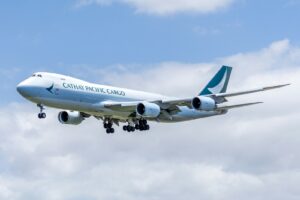
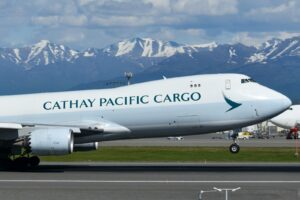
Air freight is the fast lane. Cargo lifts from Shanghai Pudong (PVG), Guangzhou Baiyun (CAN), Shenzhen Bao’an (SZX), Beijing Capital (PEK) and Hong Kong (HKG), and lands at Amsterdam Airport Schiphol (AMS), one of Europe’s largest freight gateways with extensive direct services from China. Some volume also clears through Frankfurt (FRA) or Liege (LGG) and trucks the short distance into the Netherlands.
Transit is typically 5 to 7 days standard and 3 to 5 days express, airport to airport. Indicative pricing in mid-2026 is USD 5 to USD 12 per kg for standard and deferred service, rising to USD 12 to USD 14 per kg for express, with the exact rate set by chargeable weight (the greater of actual and volumetric weight). Air wins when the product is light relative to its value, when a stockout would cost more than the freight premium, or when the goods are perishable or seasonal. For dense, low-value cargo, the per-kg math almost always favors ocean.
China export clearance and documents
Exports from China must be declared to the General Administration of Customs of China before loading. Your Chinese supplier or their appointed agent files the export customs declaration and is responsible for the commercial invoice, packing list, the export contract and, where applicable, the goods’ HS classification and any export licence. Many Chinese manufacturers also claim a VAT export refund on qualifying goods, which is handled on the supplier side and does not affect your Dutch import.
Get the paperwork right at origin, because errors made in China surface as delays in Rotterdam. The commercial invoice must show the true transaction value, an accurate goods description, the HS code, country of origin and the agreed Incoterm. The packing list must match the invoice line for line and reflect actual carton counts, weights and dimensions, since Dutch Customs and your carrier both check declared against measured weight. If your goods need a certificate of origin to claim a preferential duty rate, or product certificates such as CE marking, arrange them before the cargo ships, not after it has arrived.
The single most important decision at origin is the Incoterm. FOB (Free On Board) a named Chinese port is the most common and usually the best choice for importers: the supplier delivers cleared and loaded onto the vessel, and you control the main carriage and your forwarder from that point. EXW shifts even origin haulage and export clearance to you, and DDP hands everything to the supplier but bundles freight into the unit price where you lose visibility. Understand exactly where risk and cost transfer before you sign by reading our guide to FOB shipping terms, and confirm China’s official export rules with the General Administration of Customs of China.
Netherlands import customs, duties and VAT
On arrival, goods must be declared to Dutch Customs (Belastingdienst Douane) through the DMS declaration system. You (or your customs broker as importer of record) need a valid EORI number before clearance can proceed. The landed tax is two layers: import duty plus VAT.
Import duty is charged on the customs value (broadly the CIF value: cost, insurance and freight) at the rate set by the goods’ TARIC commodity code. Rates vary widely by product, from 0% on many electronics and industrial parts to 6 to 12% on consumer goods, textiles and furniture. On top of duty, the Netherlands applies 21% import VAT, calculated on the customs value plus the duty plus certain freight and insurance costs to the EU border. Note that the EU has proposed removing the EUR 150 low-value duty exemption (reform under discussion, not yet in force), which would make low-value e-commerce parcels from China attract duty as well as VAT.
The Netherlands’ competitive advantage is the Article 23 licence, which lets importers defer import VAT to the periodic VAT return instead of paying it in cash at the border. The importer reports the VAT and reclaims it as input tax on the same return, making the cash impact effectively zero. Non-EU companies (including Chinese sellers acting as importer of record) generally need a general fiscal representative to hold the licence, and that representative is jointly liable for the importer’s Dutch VAT, which is why the licence is granted to established, vetted parties. The application goes to the Belastingdienst and typically takes several weeks, so set it up before your first shipment if you want the deferment to apply from day one.
Because the Netherlands sits inside the EU customs union, goods cleared in Rotterdam are in free circulation across all 27 member states, so many importers use Dutch clearance as the entry point for cargo whose final destination is Germany, France or wider Europe. Standard import documents are the commercial invoice, packing list, bill of lading or air waybill, and any product-specific certificates (CE conformity, MSDS for chemicals, or import licences). To model the full bill before you ship, use our landed cost calculation guide and our HTS and tariff code classification guide. Verify the rules at source with Dutch Customs (Belastingdienst Douane) and the EU Taxation and Customs Union.
Transit times from China to Netherlands
The figures below are airport-to-airport or port-to-port. Add pre-carriage in China, customs clearance and final delivery for a realistic door-to-door estimate.
| Mode | Port/airport to port/airport | Typical door-to-door |
|---|---|---|
| Ocean FCL | 25 to 32 days (longer via Cape of Good Hope) | 32 to 45 days |
| Ocean LCL | 28 to 38 days | 35 to 48 days |
| Rail | 12 to 18 days | 18 to 25 days |
| Air standard | 5 to 7 days | 8 to 12 days |
| Air express | 3 to 5 days | 5 to 8 days |
How to lower your China to Netherlands shipping costs
- Consolidate to FCL. Once you regularly ship more than 13 to 15 cbm, move from LCL to a full container. The per-unit saving and lower damage risk usually outweigh the higher headline price.
- Book on FOB, not DDP. Controlling main carriage through your own forwarder gives you rate transparency and stops freight being marked up inside the supplier’s unit price.
- Use Article 23 VAT deferment. Deferring the 21% import VAT to your VAT return instead of paying it at the border protects working capital, especially on high-value or high-volume flows.
- Classify correctly. The right TARIC code can be the difference between 0% and 12% duty. Confirm the code before you ship, not after, to avoid overpaying or facing a reclassification penalty.
- Right-size your packaging. Air and LCL both bill on volumetric weight, so cutting void space directly cuts chargeable weight.
- Plan around rate cycles. Ocean rates on this lane spike around Chinese New Year and during capacity crunches. Booking ahead and locking validity windows shields you from mid-cycle surcharges.
Common mistakes shipping from China to Netherlands
- No EORI number in place. Without a valid EORI, the Dutch import declaration cannot be filed and cargo sits at the port accruing storage.
- Wrong or guessed commodity code. An incorrect TARIC code triggers duty corrections, delays and penalties. It is the single most common clearance error.
- Ignoring Article 23. Paying 21% VAT in cash at the border when a deferment licence is available ties up significant working capital for no reason.
- Choosing DDP for visibility-sensitive cargo. DDP hides freight inside the unit price and removes your control over routing, carrier and clearance quality.
- Underestimating door-to-door time. Quoting only port-to-port transit and forgetting pre-carriage, clearance and delivery leads to missed promise dates with end customers.
- Undervaluing the commercial invoice. Declaring a low value to cut duty is customs fraud and risks seizure, fines and audit. The invoice must reflect the true transaction value.
Ship from China to Netherlands with ExFreight
ExFreight moves your cargo from any major Chinese origin to the Netherlands across ocean, air and rail, with Rotterdam clearance, Article 23 guidance and door-to-door delivery handled under one roof. Get an instant online quote and book your shipment through our China to Netherlands freight forwarding service, and explore the full range of routes and tools on our China shipping hub. Whether you are sending a single pallet or a full container program, you get transparent pricing, real transit options and customs done right the first time.
Frequently asked questions
How long does shipping from China to the Netherlands take?
Ocean freight to Rotterdam takes about 25 to 32 days port to port, longer if carriers route via the Cape of Good Hope. Rail takes 12 to 18 days and air freight to Schiphol takes 5 to 8 days.
How much does it cost to ship a container from China to the Netherlands?
Indicative mid-2026 ocean FCL rates are roughly USD 2,400 to 3,200 for a 20ft container and USD 3,700 to 4,600 for a 40ft to Rotterdam. These are indicative ranges, not live quotes, and move with surcharges and capacity.
What is the import VAT rate in the Netherlands?
The standard Dutch import VAT rate is 21%, charged on the customs value plus import duty and certain freight and insurance costs. With an Article 23 licence you can defer this VAT to your periodic VAT return instead of paying it at the border.
What is the Article 23 VAT deferment licence?
Article 23 lets an importer defer import VAT to the next VAT return rather than paying it in cash at customs, and reclaim it as input tax on the same return, so the cash impact is effectively zero. Non-EU companies usually need a general fiscal representative to use it.
Do I need an EORI number to import from China into the Netherlands?
Yes. The importer of record must hold a valid EORI number before customs clearance can proceed. Without it the Dutch import declaration cannot be filed and goods are held at the port.
Which is cheaper, LCL or FCL, from China to the Netherlands?
LCL is usually cheaper for shipments under about 13 to 15 cbm. Above that volume a full container (FCL) typically costs less per unit and reduces the risk of damage and delay from shared loads.