Skip to content

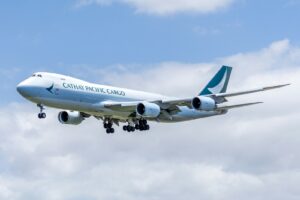
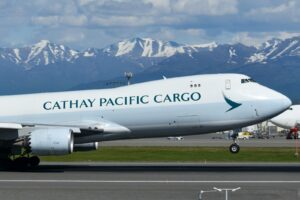
For most US exporters, shipping from USA to Brazil by ocean FCL is the lowest cost-per-kilo option, with port-to-port transit of roughly 18 to 22 days from Miami or the US East Coast to the Port of Santos, and 22 to 35 days from Gulf and West Coast gateways. When cargo is urgent, light, or high in value, air freight from the USA to Brazil moves in 1 to 3 days of flight time (5 to 10 days door to door) through Sao Paulo Guarulhos (GRU) and Viracopos Campinas (VCP).
The single biggest cost driver on this lane is not the freight rate: it is the Brazilian import tax stack. Import duty (II), IPI, PIS, COFINS, and state ICMS cascade on top of each other and routinely add 40% to 100% to the product value once landed. Your real cost depends far more on correct HS classification and customs valuation than on the ocean or air rate you negotiate. Plan the tax side before you plan the freight.
| Mode | Transit (port/airport to port/airport) | Cost basis | Best for |
|---|---|---|---|
| Ocean FCL | 18 to 35 days | Per 20ft / 40ft container | Full containers, dense or heavy cargo, lowest cost per cubic meter |
| Ocean LCL | 22 to 38 days | Per cubic meter (cbm), with minimums | 1 to 13 cbm part loads not justifying a full box |
| Air freight | 1 to 3 days flight, 5 to 10 days door to door | Per kg (chargeable weight) | Urgent, perishable, high-value, light cargo |
| Express | 3 to 6 days | Per kg, all-in courier rate | Documents, samples, small parcels under ~70 kg |
Shipping methods from USA to Brazil compared
Choosing a mode is a trade-off between speed and cost per kilo, and the break-even depends on chargeable weight and value. Ocean FCL gives the lowest unit cost when you can fill or nearly fill a container. Ocean LCL is the default for part loads, but its per-cbm pricing, destination handling, and longer dwell at Santos mean a shipment above roughly 13 to 15 cbm is usually cheaper as a full 20ft container. Air wins whenever the freight is a small share of the goods value, when stockouts cost more than the air premium, or when the cargo is dense enough that ocean offers little saving. Our air freight vs ocean freight decision framework walks through the chargeable-weight math so you can pick objectively rather than by habit.
One Brazil-specific factor changes the calculus: AFRMM, a 25% levy on the international ocean freight amount, applies to maritime imports but not to air. On a route where ocean freight is high, that surcharge narrows the gap between sea and air more than on most other lanes, so always model it into the comparison.
A second factor is clearance time at destination. Brazilian customs assigns each declaration to a channel: green (automatic release), yellow (document review), red (document plus physical inspection), or gray (full valuation audit). A red or gray channel can add days or weeks regardless of the mode you chose, so the practical transit on this lane is the freight time plus a clearance buffer. Clean, consistent paperwork is the single biggest lever you control over that buffer, which is why the documentation discipline below matters as much as the rate you book.
Ocean freight from USA to Brazil
The Port of Santos, in Sao Paulo state, is the largest container port in Latin America and handles the bulk of US containerized exports to Brazil. Paranagua (Parana) and Itajaí or Navegantes (Santa Catarina) are strong alternatives for southern distribution, while Rio de Janeiro, Itaguaí (Sepetiba), Salvador, and Suape (Pernambuco) serve the central, northeast, and Rio markets. On the US side, the major load ports are Miami, Port Everglades, Jacksonville, Savannah, Charleston, Houston, New York and New Jersey, and the Los Angeles and Long Beach complex.
Miami and Port Everglades are the fastest gateways into Santos because several carriers run direct or near-direct services, typically 18 to 22 days. US East Coast ports such as Savannah, Charleston, and New York usually route in 22 to 30 days. Gulf (Houston) and West Coast (Los Angeles and Long Beach) services run 28 to 35 days and often transship through a Caribbean or US hub.
| US load port | Brazil discharge port | Indicative FCL transit |
|---|---|---|
| Miami / Port Everglades | Santos | 18 to 22 days |
| Savannah / Charleston | Santos | 22 to 28 days |
| New York / New Jersey | Santos / Itaguaí | 24 to 30 days |
| Houston | Santos / Paranagua | 28 to 33 days |
| Los Angeles / Long Beach | Santos | 30 to 35 days |
As an indicative 2026 guide, FCL ocean rates from the USA to Santos run roughly $1,800 to $3,200 for a 20ft and $2,300 to $4,800 for a 40ft, with Miami to Santos at the low end and West Coast origins at the high end. LCL is priced per cubic meter, indicatively $90 to $160 per cbm with a one to two cbm minimum, plus origin and destination charges. These are ranges, not live quotes: BAF (bunker adjustment), peak-season surcharges, and equipment availability move them month to month. The LCL-to-FCL break-even on this lane typically sits near 13 to 15 cbm, so above that volume price a 20ft box against your LCL number. For the framework behind choosing sea over air, see the same cost and transit decision guide.
Air freight from USA to Brazil
Sao Paulo Guarulhos (GRU) is the primary air cargo gateway for Brazil and the largest air logistics complex in Latin America, handling the majority of inbound general cargo. Viracopos at Campinas (VCP) concentrates express and e-commerce freight and offers more bonded storage flexibility. Rio de Janeiro Galeao (GIG) serves the Rio market. The main US departure gateways are Miami (MIA), New York JFK, Atlanta (ATL), and Los Angeles (LAX), with MIA offering the densest schedule of direct freighter and bellyhold capacity into GRU and VCP.
Flight time from the eastern US to Sao Paulo is roughly 9 to 11 hours, so cargo physically moves in 1 to 3 days. Realistic door-to-door air freight, including pickup, consolidation, US export filing, the flight, and Brazilian customs clearance, runs 5 to 10 days. Air is priced on chargeable weight, the greater of actual and volumetric weight, with indicative 2026 general cargo rates of roughly $3.50 to $8.00 per kg depending on volume, lane, and season; express and small-parcel services sit higher. Air wins when freight cost is a small fraction of cargo value, when the goods are perishable or time-critical, or when an ocean stockout would cost more than the air premium. You can review live capacity and book on the USA to Brazil air freight service page.
USA export clearance and documents
US export clearance for Brazil centers on Electronic Export Information (EEI), filed through the Automated Export System (AES) inside the ACE platform. EEI is mandatory when the value of goods under any single Schedule B number exceeds $2,500, or whenever the shipment requires an export license regardless of value. The US Principal Party in Interest (USPPI), normally the exporter, is legally responsible for accurate and timely filing, and in most cases the EEI must be accepted before the cargo departs. You will need the correct Schedule B number, the ECCN where an item is controlled under the EAR, and the consignee details. For the supporting authority and step-by-step filing guidance, see the International Trade Administration at trade.gov and US Customs and Border Protection at cbp.gov/trade.
Core export documents are the commercial invoice, packing list, bill of lading or air waybill, and, where the product qualifies, a certificate of origin. The commercial invoice deserves extra care for Brazil: it must carry a complete goods description, unit and total values, the Incoterm and named place, country of origin, and the NCM (tariff) code, because the Brazilian importer relies on it to build the import declaration. Discrepancies between the invoice, packing list, and bill of lading are a leading trigger for a yellow or red customs channel.
Incoterms decide who clears export, who pays freight, and where risk passes. On this lane many shipments move FOB (US load port) with the buyer arranging main carriage, or CIF (Santos) where the seller covers freight and insurance to destination. Under FOB, CIF, CFR, and FCA the US seller handles export clearance, but valuation for Brazilian tax differs by term, so agree the Incoterm before quoting: a CIF price folds freight and insurance into the customs (CIF) base on which every Brazilian tax is calculated, while FOB leaves the buyer to add those costs. Our guide on what FOB means in freight explains exactly where cost and risk transfer.
Brazil import customs, duties and VAT
Brazilian imports are controlled by Receita Federal (the Federal Revenue Service) through the SISCOMEX foreign-trade system. Clearance is registered as an Import Declaration: the legacy DI is being replaced by the DUIMP (Declaracao Unica de Importacao), a single consolidated filing rolling out under Brazil’s customs modernization. The importer must hold an active RADAR licence (an import authorization with a credit limit) before any DUIMP can be lodged, so confirm your Brazilian buyer or importer of record is RADAR-enabled well before the cargo sails. Maritime imports also generate AFRMM, a 25% charge on the declared international ocean freight, payable before clearance. The official authority and customs manuals are published by Receita Federal.
Brazil does not levy a single VAT. It stacks several taxes that cascade on the customs (CIF) value:
- Import Duty (II): the Mercosur Common External Tariff, ranging 0% to 35% with most manufactured goods near 10% to 18%, charged on the CIF value.
- IPI (industrialized products tax): generally 0% to 15%, charged on CIF plus II.
- PIS-Importacao: standard 2.1% on the customs value.
- COFINS-Importacao: standard 9.65% on the customs value.
- ICMS (state tax): typically 17% to 20% (for example 18% in Sao Paulo), calculated “por dentro” so it is grossed up over the other taxes, which raises the effective rate.
- SISCOMEX fee: a fixed administrative charge per declaration plus a small amount per additional item.
Because ICMS is calculated on a base that already includes the other taxes, the combined effective burden commonly lands between 40% and 100% of the product value. Required documents are the commercial invoice, packing list, bill of lading or air waybill, and any product-specific licences (for example ANVISA for health and cosmetics, INMETRO for regulated equipment, MAPA for agricultural goods). To model the full landed number before you commit, use our landed cost calculation guide, and to confirm the exact duty rate per product start from the correct tariff number using our HTS code classification guide (Brazil’s NCM code is built on the same Harmonized System).
Transit times from USA to Brazil
Transit varies with mode, US gateway, and whether the service is direct or transshipped. The figures below are typical port-to-port or airport-to-airport ranges; door-to-door adds pickup, consolidation, customs, and final delivery.
| Route and mode | Typical transit |
|---|---|
| Ocean FCL, Miami to Santos | 18 to 22 days |
| Ocean FCL, US East Coast to Santos | 22 to 30 days |
| Ocean FCL, Gulf / West Coast to Santos | 28 to 35 days |
| Ocean LCL, USA to Santos | 22 to 38 days (consolidation plus deconsolidation) |
| Air freight, US gateway to GRU / VCP | 1 to 3 days flight, 5 to 10 days door to door |
| Express courier, USA to Brazil | 3 to 6 days |
How to lower your USA to Brazil shipping costs
- Classify before you ship. The NCM (HS) code sets II, IPI, and any product licences. A wrong code triggers re-classification, fines, and clearance delays, all of which cost more than getting it right up front.
- Fill the box. Above roughly 13 to 15 cbm, a 20ft FCL usually beats LCL once you add LCL destination handling and longer dwell at Santos.
- Pick the right Brazilian port. Routing to Paranagua, Itajaí, or Navegantes for southern Brazil, or Suape and Salvador for the northeast, can cut inland trucking that often exceeds the ocean saving of forcing everything through Santos.
- Model AFRMM. The 25% freight levy means a lower negotiated ocean rate compounds into a lower tax, so freight savings on this lane are worth more than on most.
- Consolidate. Combining purchase orders into fewer, fuller shipments spreads fixed clearance and SISCOMEX costs across more cargo.
- Confirm RADAR early. A buyer whose RADAR credit limit is too low cannot clear the shipment, leading to demurrage and storage that dwarf any freight saving.
Common mistakes shipping from USA to Brazil
- Underestimating the tax stack. Quoting landed cost off duty alone ignores IPI, PIS, COFINS, and the grossed-up ICMS, so the real number arrives far higher than budgeted.
- Skipping or mis-filing the EEI. Missing an AES filing above the $2,500 Schedule B threshold, or filing it late, can stop the cargo from departing and expose the USPPI to penalties.
- Assuming the importer is RADAR-ready. No active RADAR licence means no DUIMP and no clearance, with the container accruing demurrage at Santos.
- Ignoring product licences. ANVISA, INMETRO, or MAPA approvals must exist before arrival; discovering the requirement at the port causes long, expensive holds.
- Vague Incoterms. Not pinning FOB versus CIF leaves freight, insurance, and the customs valuation base ambiguous, which surfaces as disputes and surprise charges at destination.
- Thin commercial invoices. Incomplete descriptions, values, or NCM codes are a leading cause of Brazilian customs holds and re-inspection.
Ship from USA to Brazil with ExFreight
ExFreight gives US exporters instant online quotes, booking, and tracking for the USA to Brazil lane across ocean and air, with the documentation and filings handled end to end. Compare live ocean and USA to Brazil air freight options, model your full landed cost including II, IPI, PIS, COFINS, and ICMS, and book the routing that fits your timeline and budget. Explore the full range of USA export freight services to get a rate for your next shipment to Santos, Paranagua, or any Brazilian port or airport.
Frequently asked questions
How long does shipping from the USA to Brazil take?
Ocean FCL runs about 18 to 22 days from Miami to Santos and 22 to 35 days from US East Coast, Gulf, and West Coast ports. Air freight moves in 1 to 3 days of flight time, or roughly 5 to 10 days door to door.
How much does it cost to ship a container from the USA to Brazil?
Indicative 2026 FCL rates to Santos are roughly $1,800 to $3,200 for a 20ft and $2,300 to $4,800 for a 40ft, with Miami at the low end and the US West Coast at the high end. These are ranges, not live quotes, and shift with fuel surcharges and season.
What taxes apply when importing into Brazil?
Brazil stacks Import Duty (II, 0% to 35%), IPI (0% to 15%), PIS (2.1%), COFINS (9.65%), and state ICMS (about 17% to 20%) on the CIF value, plus a 25% AFRMM levy on ocean freight. The combined effective burden often lands between 40% and 100% of the product value.
Do I need to file an EEI to export from the USA to Brazil?
Yes, an Electronic Export Information filing through AES is required when the value under any single Schedule B number exceeds $2,500, or whenever an export license is needed. The US exporter (USPPI) is responsible for filing it before departure.
What is RADAR and DUIMP in Brazilian importing?
RADAR is the import authorization, with a credit limit, that a Brazilian importer must hold before clearing goods. DUIMP is the single consolidated Import Declaration, replacing the legacy DI, that is filed through the SISCOMEX system administered by Receita Federal.
Which Brazilian ports and airports handle US cargo?
Santos is the main container port, with Paranagua, Itajaí, Navegantes, Itaguaí, Suape, and Salvador serving other regions. For air freight, Sao Paulo Guarulhos (GRU) is the primary gateway, with Viracopos Campinas (VCP) for express and Rio Galeao (GIG) for the Rio market.