Skip to content

For most commercial shipments from the United States to Canada the best mode is cross-border ground freight: full truckload (FTL) when you fill a trailer and less-than-truckload (LTL) when you do not. The two countries share the world’s longest land border, so a truck leaving Chicago, Detroit, Buffalo, or Seattle can deliver into Toronto, Montreal, or Vancouver in two to five business days, customs included, without ever touching a port or an airport. Air freight is reserved for urgent or high-value cargo, and ocean freight is a niche option for coastal or oversized loads.
The main cost driver on this lane is not the ocean or the air rate, it is the mileage and the truck capacity. Cross-border LTL runs roughly 0.20 to 0.45 USD per pound (about 120 to 250 USD per pallet), while FTL spot rates sit near 2.05 USD per mile, so a 500-mile run lands around 1,025 USD and a 2,000-mile transcontinental load can exceed 4,000 USD. Because most goods that originate in the USA qualify for duty-free treatment under CUSMA, your landed cost is driven by freight plus the 5 percent GST (or 13 to 15 percent HST), not by tariffs. ExFreight handles this lane end to end: compare instant rates and book through our USA to Canada freight forwarding service, or move time-critical cargo through our USA to Canada air freight service.
| Mode | Typical transit | Cost basis | Best for |
|---|---|---|---|
| Ground LTL (cross-border) | 2 to 7 business days | Per pound / per pallet (CWT) | 1 to 6 pallets, palletized freight |
| Ground FTL (cross-border) | 2 to 5 business days | Per mile / flat lane rate | Full trailers, 13+ pallets, time-sensitive volume |
| Air freight | 2 to 6 days door to door | Per kg (chargeable weight) | Urgent, high-value, low-weight cargo |
| Ocean (coastal / intermodal) | 5 to 20+ days | Per container / per cbm | Oversized or coastal loads, no land route |
Shipping methods from USA to Canada compared
Unlike most international lanes, the USA to Canada corridor is dominated by trucking because of the contiguous land border. The decision is rarely ocean versus air, it is LTL versus FTL versus expedited.
- Ground LTL: the default for palletized shipments that do not fill a trailer, generally 1 to 6 pallets or under roughly 13 to 16 cbm. You pay only for the space you use, billed per hundredweight (CWT) by freight class and density.
- Ground FTL: the right call once you have enough volume to fill a dry van (about 13 to 26 pallets), or when you need a single, sealed, time-definite move. You pay a flat lane rate or a per-mile rate for the whole trailer.
- Air freight: use it when speed or product value justifies the premium. Chargeable weight (the greater of actual and volumetric weight) sets the price, so air suits dense, valuable, low-volume cargo.
- Ocean: rarely used USA to Canada because trucking is faster and cheaper across a shared border. It only makes sense for coastal port-to-port moves or cargo too large for a road permit.
If you are weighing speed against cost across modes, our air freight vs ocean freight decision framework walks through the break-even math, and it applies just as well to the air-versus-ground choice on this lane.
Ocean freight from USA to Canada
Ocean is the exception, not the rule, on this lane. With an open land border, almost everything that could float between US and Canadian ports moves faster and cheaper by truck or rail. Ocean freight USA to Canada is reserved for two cases: coastal moves where water beats road geography, and oversized or project cargo that cannot get a road permit.
Canada’s three principal seaports are the Port of Vancouver (the country’s largest, the Pacific gateway), the Port of Montreal (the St. Lawrence gateway to central Canada), and the Port of Halifax (the deep-water Atlantic gateway with strong rail connectivity to Toronto and Montreal). US Gulf and East Coast ports such as Houston, New Orleans, Savannah, and Newark can feed Montreal and Halifax on short coastal or feeder services, while US West Coast ports connect to Vancouver. Realistic port-to-port transit on these short sea routes runs roughly 5 to 12 days for FCL and longer for LCL with consolidation.
On price, FCL is indicative only and quoted per container: expect roughly 1,500 to 3,500 USD for a 20ft and 2,500 to 5,000 USD for a 40ft on short coastal lanes, with port, terminal, and drayage fees on top. LCL is priced per cbm (often 60 to 130 USD per cbm with a minimum), so the LCL versus FCL break-even usually falls near 13 to 15 cbm: below that, LCL or cross-border LTL wins, above it a full container or full trailer is cheaper. For nearly all US-to-Canada freight, cross-border ground beats ocean on both transit and total cost, which is why we route the vast majority of this lane over the road.
Air freight from USA to Canada
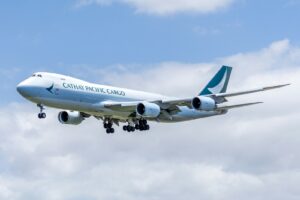
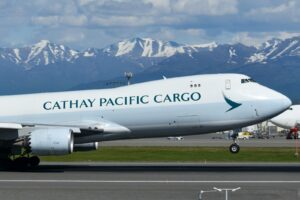
Air freight earns its premium when the cargo is urgent, high-value, or low-weight. Door-to-door air on this lane typically runs 2 to 6 days, including customs, and the dominant gateways are Toronto Pearson (YYZ), Vancouver International (YVR), and Montreal-Trudeau (YUL), fed by US hubs such as Chicago O’Hare (ORD), New York JFK, Los Angeles (LAX), and Dallas Fort Worth (DFW).
Pricing is by chargeable weight, the greater of actual gross weight and volumetric weight (length x width x height in cm divided by 6,000). Indicative all-in air rates on US-Canada lanes range widely with weight breaks and fuel, but light, dense shipments are where air becomes competitive against expedited trucking. Air wins when a missed delivery costs more than the freight, when the goods are small and valuable (electronics, samples, spare parts, pharmaceuticals), or when a buyer needs the cargo before a road move could clear and deliver. For most palletized, non-urgent freight, ground LTL or FTL delivers in a similar window at a fraction of the cost, so reserve air for the shipments that truly need it.
USA export clearance and documents
Exporting from the USA to Canada is straightforward, but a few filings and documents are non-negotiable. The core paperwork is the commercial invoice, the packing list, and the bill of lading (a PARS-barcoded BOL for cross-border trucking so the carrier can pre-arrive the load at the border). To claim duty-free treatment you also need a CUSMA certification of origin.
Electronic Export Information (EEI): US exports generally require an EEI filing through the Automated Export System (AES) when the value of any single Schedule B/HTS commodity line exceeds 2,500 USD, or whenever an export license is required regardless of value. Note the long-standing exception for this lane: shipments from the US to Canada are exempt from EEI filing unless the goods are licensable or controlled. Always confirm whether your commodity is controlled and whether an ECCN under the EAR applies before shipping.
Classification and Incoterms: classify your goods with the correct Schedule B number on export and the matching HTS code on the Canadian import side, and agree clear Incoterms with your buyer so responsibility for freight, clearance, duties, and taxes is unambiguous. Our guide to FOB and other Incoterms explains who pays for what at each handoff. For the authoritative US export rules, see U.S. Customs and Border Protection and the country and product guidance at the International Trade Administration (trade.gov).
Canada import customs, duties and CUSMA, GST/HST
Canada assesses duty on the customs value of imported goods, then applies the federal Goods and Services Tax (GST) and, in some provinces, the Harmonized Sales Tax (HST). The GST rate is 5 percent. In Ontario it is combined into 13 percent HST, and in the Atlantic provinces (Nova Scotia, New Brunswick, Newfoundland and Labrador, Prince Edward Island) it is 14 to 15 percent HST. Alberta and the territories charge only the 5 percent GST. The tax is calculated on the duty-paid value (customs value plus any duty).
For the complete document checklist and duty rules, see Canada customs clearance requirements.
CUSMA duty relief: goods that qualify as originating in the US under the Canada-United States-Mexico Agreement (CUSMA, the Canadian name for USMCA) enter duty-free. To claim it you need a valid CUSMA certification of origin, which the exporter, producer, or importer may complete on the invoice or a separate document, including electronically. The agreement allows up to 10 percent non-originating content under the de minimis rule, so verify your product actually meets the rules of origin before certifying. Goods that do not qualify are dutiable at Canada’s Most-Favoured-Nation rates by HTS classification.
CARM, the new mandatory system: since October 2024, all commercial importers of record must be registered in the CBSA Assessment and Revenue Management (CARM) Client Portal, hold a business number with an import-export (RM) program account, and post their own financial security. The old B3 and B2 forms are replaced by the digital Commercial Accounting Declaration (CAD), and duties and taxes are paid through CARM on a monthly billing cycle. If your Canadian buyer is the importer of record, confirm they are CARM-registered before you ship, because an unregistered importer cannot release commercial goods.
De minimis for courier shipments: under CUSMA, courier shipments from the US qualify for duty-free entry up to 150 CAD and tax-free entry up to 40 CAD; above those thresholds duty and GST/HST apply normally. Required documents on the Canadian side are the commercial invoice, the CUSMA certification of origin (to claim preference), the cargo control/manifest, and the CAD filed through a customs broker. To estimate your full cost before you ship, work through our landed cost calculation guide, and use our HTS code classification guide to pin down the correct tariff number. The official Canadian authority is the Canada Border Services Agency.
Transit times from USA to Canada
Published transit times below are typical, customs included where noted, and exclude weekends and holidays. Cross-border clearance usually completes same day or within two business days when paperwork is in order and the importer is CARM-registered.
| Mode | Example lane | Typical transit |
|---|---|---|
| Ground LTL | Buffalo to Toronto | 2 to 4 business days |
| Ground LTL | Chicago to Montreal | 3 to 5 business days |
| Ground FTL | Detroit to Toronto | 1 to 2 business days |
| Ground FTL | Seattle to Vancouver | 1 to 2 business days |
| Ground FTL | Los Angeles to Toronto | 4 to 6 business days |
| Air freight | Major US hub to YYZ / YVR / YUL | 2 to 6 days door to door |
| Ocean (coastal FCL) | US East/Gulf to Montreal / Halifax | 5 to 12 days port to port |
How to lower your USA to Canada shipping costs
- Certify CUSMA origin. The single biggest saving is duty-free entry. Confirm your goods meet the rules of origin and supply a valid certification of origin on every qualifying shipment so the importer pays only GST/HST, not duty.
- Match the mode to the volume. Move 1 to 6 pallets by LTL, fill a trailer with FTL once you cross roughly 13 pallets, and reserve air for cargo that genuinely cannot wait. Paying air rates for non-urgent freight is the most common overspend on this lane.
- Consolidate shipments. Combining several small orders into one LTL or FTL move spreads the fixed border-clearance and pickup costs across more freight and lowers your cost per unit.
- Palletize and declare density correctly. LTL is priced by freight class and density, so tight, stackable, accurately measured pallets get a better class and avoid reweigh/reclass charges.
- Get the importer CARM-ready early. A registered importer of record with posted security clears in hours, not days; an unregistered one stalls the load and racks up storage. Sort registration before the first shipment.
- Ship Tuesday to Thursday. Border lanes and capacity are tightest around weekends; mid-week pickups often clear and deliver faster at steadier rates.
Common mistakes shipping from USA to Canada
- Assuming CUSMA is automatic. Duty-free treatment requires a valid certification of origin and goods that actually meet the rules of origin. Skip the certificate and you pay MFN duty even on qualifying goods.
- Ignoring CARM. Since October 2024 the importer of record must be registered in the CARM portal with financial security. Shipping to an unregistered importer means the goods cannot be released.
- Confusing GST with HST. The tax is 5 percent GST in Alberta and the territories but 13 to 15 percent HST in Ontario and the Atlantic provinces. Budgeting for 5 percent everywhere understates landed cost.
- Sending goods through the postal stream. Following recent tightening of US de minimis rules, postal shipments can face tariff collection even when they would qualify under CUSMA; use a commercial courier or freight carrier to preserve the exemption.
- Wrong or missing PARS barcode. Cross-border trucking relies on a PARS-barcoded BOL so the carrier can pre-arrive the load. A missing or mismatched barcode means the truck waits at the border.
- Misclassifying the commodity. The wrong HTS code triggers the wrong duty rate, CARM reassessments, and penalties. Classify carefully and keep your Schedule B and Canadian HTS consistent.
Ship from USA to Canada with ExFreight
ExFreight makes the USA to Canada lane simple: instant online rates across ground, air, and ocean, CUSMA-ready documentation, and brokerage that keeps your cargo moving through CARM and CBSA without surprises. Compare live quotes and book your cross-border move through our USA to Canada freight forwarding service, or expedite urgent cargo with our USA to Canada air freight service. For more lanes, rate tools, and country guides, start at our USA shipping hub.
Frequently asked questions
Do I pay duty shipping from the USA to Canada?
Most US-origin goods enter Canada duty-free under CUSMA when you provide a valid certification of origin and the goods meet the rules of origin. Goods that do not qualify pay Canada’s Most-Favoured-Nation duty rate by HTS classification.
What is the GST or HST rate on imports into Canada?
The federal GST is 5 percent. Ontario applies 13 percent HST and the Atlantic provinces 14 to 15 percent HST, while Alberta and the territories charge only the 5 percent GST. The tax is calculated on the duty-paid value.
How long does shipping from the USA to Canada take?
Cross-border ground LTL typically takes 2 to 7 business days and FTL 1 to 5 business days depending on distance. Air freight runs 2 to 6 days door to door. Customs clears same day or within two business days when paperwork is in order.
What is CARM and do I need to register?
CARM is the CBSA Assessment and Revenue Management system. Since October 2024 every commercial importer of record into Canada must be registered in the CARM Client Portal with an import-export program account and posted financial security before goods can be released.
Is ground or air freight better from the USA to Canada?
Ground freight is best for almost all shipments because the shared land border makes trucking faster and cheaper than air or ocean. Use LTL for 1 to 6 pallets, FTL for full trailers, and reserve air for urgent or high-value, low-weight cargo.
Do I need EEI or AES filing to ship from the USA to Canada?
Shipments from the US to Canada are generally exempt from Electronic Export Information (EEI) filing through AES, unless the goods are licensable or export-controlled. Always confirm whether your commodity is controlled under the EAR before shipping.
Ready to ship? Get an instant freight quote.