Skip to content

The Strait of Hormuz has now been effectively closed to commercial shipping for more than 69 consecutive days, representing the most severe and sustained disruption to a single maritime chokepoint in modern freight history. Approximately one-fifth of the world’s oil supply ordinarily transits this 21-mile-wide waterway, and its closure has cascaded into elevated energy costs, tightened vessel capacity, and broad uncertainty across global supply chains.
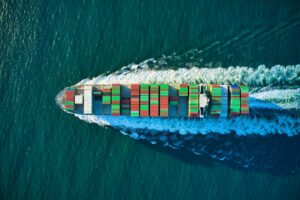
As of this reporting period, more than 1,550 commercial vessels — including tankers, container ships, and bulk carriers — remain stranded in and around the strait, with an estimated 22,500 mariners trapped aboard. This is not a temporary weather event or a short labor action; it is an active military and geopolitical standoff between the United States, which has imposed a naval blockade of Iranian ports, and Iran, which has responded by seizing effective control of strait transit and threatening to attack any vessel that attempts passage without explicit Iranian permission.
Project Freedom: Launched, Then Paused Within 48 Hours
The brief US military escort initiative known as “Project Freedom” was launched and then suspended within fewer than 48 hours, dealing a significant confidence blow to the shipping industry’s hopes for a near-term resolution. The operation did facilitate the safe passage of two US-flagged merchant vessels, but it was withdrawn before meaningful scale was achieved.
The Trump administration cited the potential for a deal between the United States and Iran as justification for the pause. Markets initially surged on the news, with crude oil prices retreating and energy equities rallying on hopes of imminent resolution. But within the shipping industry, the response was more measured: industry figures told NBC News that ship operators “are likely to remain cautious until they see a more stable, predictable and sustained situation” before resuming Hormuz transits at scale.
Why a Single Operation Was Not Enough
The suspension of Project Freedom matters because it signals that a US-led military escort regime alone cannot reopen the strait. The two escorted vessels passed through, but Iran’s Revolutionary Guard Corps maintained its threat posture throughout the operation. Without a sustained, scaled, multi-vessel escort architecture — or, more realistically, a diplomatic agreement that removes the IRGC threat — operators have no basis to assume a single ship will pass safely.
Insurance underwriters are tracking this dynamic closely. War risk premiums for Hormuz transit have not eased meaningfully following the Project Freedom announcement, indicating that the underwriting community views the risk as unchanged in operational terms regardless of diplomatic signals.
1,550 Stranded Vessels: The Scale of the Backlog
The most striking metric of the current state is the vessel backlog. More than 1,550 commercial ships are now stranded in and around the strait — tankers waiting to load Gulf crude, container ships unable to complete eastbound voyages, bulk carriers holding cargo that has been at anchor for weeks. Of these, an estimated 22,500 mariners are effectively trapped aboard, raising acute crew welfare, provisioning, and rotation concerns.
The vessel backlog is not just a humanitarian issue; it is a market structure problem. With effective fleet capacity locked behind the strait, charter rates on global trade routes have tightened. Asset utilization data shows owners shifting available tonnage onto longer Cape-of-Good-Hope routings, which absorb capacity at multiples of the corridor distance. The net effect is a reduction in available global ocean freight capacity even in regions geographically distant from the Persian Gulf.
Energy Costs and the Cascade Effect
Approximately 20% of global oil supply normally transits the Strait of Hormuz. The disruption has lifted energy prices materially, raising bunker costs across the global container fleet and pressuring carriers to apply emergency bunker surcharges (EBS) and low-sulphur fuel adjustments outside their normal pricing cadences. Shippers signing new ocean contracts in Q2 and Q3 2026 should expect bunker formulas that reflect the new pricing baseline rather than pre-crisis benchmarks.
Beyond fuel, the cascade extends to industrial inputs that depend on Gulf petrochemicals — plastics, fertilizers, and base chemicals — many of which feed into the manufactured goods that move via ocean freight and air freight from Asia to North America and Europe. Shippers of finished goods that contain Gulf-sourced inputs should expect inventory volatility and cost-of-goods pressure that lags the headline news cycle.
What “Long Time to Reboot” Actually Means
Industry figures speaking to NBC News emphasized that even if a US-Iran deal is reached, the strait will not return to normal operations immediately. Vessel operators will need to see “stable, predictable, and sustained” conditions over weeks, not days, before normal transit resumes at scale. Insurance markets will need to reprice war risk. Charter parties signed under crisis conditions will need to unwind. Crew rotations on stranded vessels will need to be completed.
The realistic timeline from political resolution to operational normalcy is measured in weeks at minimum, possibly months. Freight forwarders and shippers should plan accordingly: even an optimistic diplomatic scenario does not translate into Gulf cargo moving normally in the near term.
Operational Implications for Cargo Owners
If your cargo is in transit, stuck at a Gulf port, or scheduled for routing through Hormuz, the practical steps are:
- Confirm vessel location via your forwarder or carrier portal — knowing whether a box is on a stranded vessel, at a transshipment hub, or pre-loading determines what options exist.
- Validate insurance coverage — many policies have war risk exclusions or require specific endorsements for Hormuz-area transit.
- Review contract terms for force majeure and frustration clauses that may have been triggered by the disruption.
- Explore alternative routing via Cape of Good Hope for non-Gulf destinations, Suez-routed alternatives where feasible, and air freight for time-critical small shipments.
- Communicate proactively with end customers — the worst commercial damage from disruption events typically comes from missed-expectation surprises, not from the disruption itself.
This is a chokepoint disruption with no historical parallel in modern freight history. The right operating posture is to plan for continued constrained conditions, work the alternatives early, and expect the recovery, when it comes, to be slower than the news cycle suggests.
For the original reporting on the Project Freedom suspension and industry response, see the NBC News coverage.