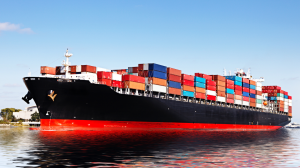
What Does FOB Mean in Freight? Complete Guide to FOB Shipping Terms
What Does FOB Mean in Freight Shipping?
FOB stands for Free On Board (also called Freight On Board), one of the 11 Incoterms defined by the International Chamber of Commerce (ICC) in the 2020 revision. FOB specifies that the seller delivers goods onto the vessel at the named port of shipment, at which point risk and cost responsibility transfer from seller to buyer. In international trade, FOB is the most commonly used Incoterm for China-to-US ocean freight, appearing in over 60% of transactions between Chinese exporters and American importers.
Understanding FOB is not optional if you import goods from China, Vietnam, or any manufacturing hub. The wrong Incoterm can add thousands of dollars in hidden costs, limit your control over logistics, and expose you to customs compliance risk. This guide covers FOB in full detail — how it compares to every other major Incoterm, when to use it, and how to calculate your true landed cost.
FOB Point of Transfer: Risk and Cost in Detail
The critical concept in FOB is the point of transfer. Under FOB terms, two things shift from seller to buyer at the exact moment goods are loaded onto the vessel at the named export port:
- Risk of loss or damage — if the container falls into the harbor during loading, the buyer bears the loss
- Cost responsibility — all freight, insurance, and destination charges are the buyer’s obligation
Seller Responsibilities Under FOB
- Manufacturing or sourcing the goods to contract specifications
- Export packaging, marking, and labeling
- Inland trucking from factory to the named port of export (e.g., factory in Dongguan → Shenzhen Yantian terminal)
- Terminal handling charges (THC) at the origin port
- Export customs clearance — filing the EX-1/Export Declaration and obtaining export licenses if required
- Loading the goods onto the vessel nominated by the buyer
- Providing a clean shipped-on-board Bill of Lading or other transport document
Buyer Responsibilities Under FOB
- Nominating the vessel and booking ocean freight with a freight forwarder
- Ocean freight charges (typically $800–$2,500 per 20ft container from China to US West Coast in 2024–2025)
- Marine cargo insurance (recommended 0.3%–0.5% of cargo value)
- ISF 10+2 filing at least 48 hours before departure — mandatory for all US-bound ocean shipments
- Import customs clearance and customs broker fees ($150–$350 per shipment)
- Import duties, taxes, and MPF (Merchandise Processing Fee)
- Destination port THC and container demurrage if applicable
- Inland trucking from the destination port (e.g., Los Angeles/Long Beach) to the buyer’s warehouse
When a Chinese supplier quotes “FOB Shanghai $8.50/unit”, that price includes everything up to and including loading at Shanghai’s Yangshan Deep Water Port. It does not include the $1,200 ocean freight, $180 ISF filing, $250 customs broker fee, or $800 drayage to your Los Angeles warehouse.
All 11 Incoterms Explained: Complete Comparison Table
The ICC’s Incoterms 2020 defines 11 rules divided into two groups: Any Mode of Transport (EXW, FCA, CPT, CIP, DAP, DPU, DDP) and Sea and Inland Waterway Only (FAS, FOB, CFR, CIF). Understanding all 11 is essential for negotiating supplier contracts correctly.
| Incoterm | Full Name | Mode | Risk Transfers At | Seller Pays Freight? | Seller Clears Export? | Buyer Clears Import? | Best Used When |
|---|---|---|---|---|---|---|---|
| EXW | Ex Works | Any | Seller’s premises | No | No | Yes | Buyer has local agent in seller’s country |
| FCA | Free Carrier | Any | Named place (seller’s premises or carrier) | No | Yes | Yes | Container shipments; better than EXW |
| FAS | Free Alongside Ship | Sea only | Alongside vessel at export port | No | Yes | Yes | Bulk/breakbulk cargo |
| FOB ★ | Free On Board | Sea only | On board vessel at export port | No | Yes | Yes | Most China ocean freight; buyer controls forwarder |
| CFR | Cost and Freight | Sea only | On board vessel at export port | Yes | Yes | Yes | Seller has good carrier rates; buyer accepts risk |
| CIF | Cost, Insurance and Freight | Sea only | On board vessel at export port | Yes | Yes | Yes | Smaller importers who want simple pricing |
| CPT | Carriage Paid To | Any | First carrier at origin | Yes | Yes | Yes | Air freight, multimodal shipments |
| CIP | Carriage and Insurance Paid To | Any | First carrier at origin | Yes | Yes | Yes | High-value cargo via air or multimodal |
| DAP | Delivered At Place | Any | Named destination (unloaded) | Yes | Yes | Yes | Seller delivers to buyer’s warehouse door |
| DPU | Delivered at Place Unloaded | Any | Named destination (after unloading) | Yes | Yes | Yes | Terminal deliveries; seller unloads |
| DDP | Delivered Duty Paid | Any | Named destination | Yes | Yes | No (seller handles) | E-commerce; seller ships direct to consumer |
★ FOB is the most recommended Incoterm for importers sourcing from Chinese manufacturers via ocean freight.
FOB vs CIF: The Most Important Comparison for China Importers
The FOB vs CIF debate is the most consequential choice you’ll make when negotiating with a Chinese supplier. Both terms are common in China trade, but they have very different implications for cost control and risk.
Why Experienced Importers Choose FOB Over CIF
Under CIF (Cost, Insurance and Freight), the seller pays for ocean freight and arranges a minimum insurance policy. This sounds convenient, but there are serious drawbacks:
- Hidden freight markup: Chinese suppliers typically add 10–20% to the actual freight rate when quoting CIF. On a 40ft container, that’s an extra $150–$400 in hidden profit for the seller.
- No carrier control: The seller books the cheapest carrier, not the most reliable. Delays, lost shipments, and damage claims become your problem even though you had no input in carrier selection.
- Minimum insurance only: CIF requires only Institute Cargo Clauses (C), the most basic coverage. For electronics, machinery, or fragile goods, you need Clauses (A) — All Risk coverage.
- Customs valuation risk: For US customs, the dutiable value is based on the transaction value. Under CIF, freight is included in the invoice value, which can artificially inflate duties.
Under FOB, you nominate the freight forwarder (such as ExFreight’s China freight forwarding services), control carrier selection, and negotiate your own rates directly. For the China to USA ocean freight route, this control can save $200–$800 per container versus CIF pricing from a Chinese supplier.
FOB vs EXW: When EXW Makes Sense
EXW (Ex Works) places the maximum burden on the buyer. Under EXW, the seller only makes goods available at their premises — typically the factory gate. The buyer must arrange:
- A China-based freight agent or trucking company to pick up the goods
- Export customs clearance in China (requires a licensed Chinese customs broker or a freight forwarder with China presence)
- Terminal handling at the export port
- All subsequent freight, insurance, and import procedures
EXW is appropriate when you have a trusted local partner or agent in China who can manage export logistics efficiently. However, for most importers without China-based operations, FOB is superior because the Chinese supplier handles Chinese domestic logistics and export clearance — processes they know far better than any foreign buyer.
A practical example: A factory in Yiwu, Zhejiang quotes EXW ¥62/unit. The trucking from Yiwu to Ningbo port adds approximately $0.45/unit, and Chinese export clearance costs another $120 flat per shipment. For a 1,000-unit order, EXW total cost exceeds the typical FOB Ningbo quote unless you negotiate aggressively.
FOB vs DDP: Why “Delivered Duty Paid” Is Often a Trap
DDP (Delivered Duty Paid) is the most seller-favorable Incoterm — the seller handles everything including US import duties. DDP is popular with Amazon FBA sellers buying from Alibaba because it seems simple. In reality, DDP creates serious risks:
- Under-declaration risk: When the seller handles US customs entry, they control what value is declared. Under-valuing goods to reduce duties is illegal and exposes the buyer to CBP (Customs and Border Protection) penalties up to 4x the unpaid duties.
- Incorrect HTS classification: The seller’s customs broker may classify goods incorrectly — either under-declaring (fraud risk) or incorrectly (compliance risk). You as the importer of record remain liable.
- No rate visibility: DDP freight and duty costs are bundled into the product price. You cannot audit whether the seller is charging market rates.
- Section 301 tariff exposure: Many Chinese goods carry 7.5%–25% Section 301 tariffs. Sellers may not properly account for these, leaving you with unexpected tax liability.
ExFreight recommends FOB for 95% of China import shipments. The additional administrative steps of managing your own customs broker and freight forwarder are well worth the cost savings and compliance control.
FOB vs DAP and DDP for Air Freight Shipments
For air freight shipments, the equivalent of FOB is FCA (Free Carrier) — not FOB. This is a critical technical point: FOB technically only applies to sea freight. When shipping by air, use FCA with the named airport (e.g., FCA Shanghai Pudong International Airport, CN).
However, in practice, many suppliers and buyers incorrectly use “FOB” for air shipments. In a formal contract, always specify FCA for air. The risk transfer and cost division concepts are identical to FOB: seller delivers to the air cargo terminal, buyer pays airfreight and import costs.
For a full comparison between ocean and air freight economics, see our guide: Air Freight vs Ocean Freight: How to Choose the Right Shipping Mode.
Common FOB Ports in China: Port-by-Port Guide
When a supplier quotes “FOB China,” it is not a valid Incoterm — a specific port must be named. China has six major international container ports that handle the vast majority of export cargo. Here is what each port handles and what to expect:
FOB Shanghai (Yangshan Deep Water Port)
Shanghai is the world’s busiest container port, handling over 47 million TEUs annually. Yangshan Deep Water Port (connected to the mainland by the 32.5 km Donghai Bridge) is the primary terminal for large container vessels. Shanghai serves the Yangtze River Delta manufacturing region — electronics from Suzhou, textiles from Jiangsu, and machinery from Shanghai itself.
- Transit time to Los Angeles: 14–17 days
- Typical 20ft FCL ocean freight to USWC: $850–$1,400 (market rate, 2024–2025)
- Typical 40ft FCL to USWC: $1,100–$2,100
FOB Shenzhen (Yantian / Shekou / Chiwan)
Shenzhen’s port complex is the export gateway for the Pearl River Delta — China’s electronics manufacturing heartland. Yantian International Container Terminal is the primary deep-water facility. Shenzhen serves factories in Dongguan, Huizhou, Guangzhou, and Shenzhen itself producing electronics, solar panels, LED lighting, and consumer goods.
- Transit time to Los Angeles: 13–16 days
- Typical 20ft FCL to USWC: $820–$1,350
- Typical 40ft FCL to USWC: $1,050–$2,000
FOB Ningbo (Zhoushan)
Ningbo-Zhoushan is the world’s second-busiest port by tonnage, handling machinery, auto parts, textiles, and plastics from Zhejiang province. It is also one of China’s top ports for liquid bulk cargo and commodities. For importers in the machinery and industrial equipment sector, Ningbo FOB is extremely common.
- Transit time to Los Angeles: 14–18 days
- Typical 20ft FCL to USWC: $830–$1,380
- Typical 40ft FCL to USWC: $1,080–$2,050
FOB Guangzhou (Nansha)
Guangzhou’s Nansha terminal handles furniture, household goods, garments, and building materials from the Pearl River Delta inland areas. Nansha is approximately 80 km south of central Guangzhou and 100 km from Shenzhen, making it a key alternative for factories in Foshan and Zhongshan.
FOB Qingdao
Qingdao serves North China’s manufacturing base — Shandong province’s tires, chemicals, heavy equipment, and seafood exports. It is also the primary port for goods from Henan, Shanxi, and Inner Mongolia. Transit times to US East Coast ports are competitive via the Pacific or Suez routing.
FOB Xiamen
Xiamen handles stone products, ceramics, tea, shoes, and garments from Fujian province. It is a medium-sized port by Chinese standards but critical for specific product categories. FOB Xiamen quotes are common for furniture hardware and stone tile importers.
How to Calculate Your True Landed Cost Under FOB
Many importers underestimate total landed cost when evaluating FOB quotes. Here is the complete formula with real 2024–2025 figures for a 40ft container from Shenzhen to Los Angeles:
| Cost Component | Who Pays (FOB) | Typical Cost Range | Notes |
|---|---|---|---|
| FOB Product Price | Buyer pays to Seller | Per contract | Includes factory-to-port trucking & export clearance |
| Ocean Freight (40ft) | Buyer | $1,050–$2,500 | Market rate varies by season; spike during peak (Aug–Oct) |
| Marine Cargo Insurance | Buyer | 0.3%–0.5% of cargo value | All Risk (ICC-A) recommended for electronics |
| ISF 10+2 Filing | Buyer | $35–$65 | Required 48+ hours before vessel departure; $5,000 CBP penalty if missed |
| Customs Broker Fee | Buyer | $150–$350 | Flat fee per entry; ISF often bundled |
| Import Duty (HTS rate) | Buyer | 0%–25%+ | Varies by product; Section 301 tariffs apply to many China goods |
| Merchandise Processing Fee (MPF) | Buyer | 0.3464% of value ($29.66 min / $575.35 max) | CBP fee on formal entries |
| Harbor Maintenance Fee (HMF) | Buyer | 0.125% of value | Applies to ocean freight entries only |
| Destination Port THC / Pier Pass | Buyer | $200–$450 (40ft) | LA/Long Beach Pier Pass currently $88/TEU |
| Chassis Fee | Buyer | $150–$280 (40ft) | Per diem chassis rental at destination port |
| Drayage (Port to Warehouse) | Buyer | $350–$850 | Varies by distance from port; LA inland $400–$600 |
| Total Non-Product Costs (40ft, LA) | Buyer | $2,100–$5,200+ | Excluding duties; add 7.5%–25% for most China goods |
For ocean freight services and instant rate quotes from all six major Chinese ports, visit ExFreight’s Ocean Freight Services.
ISF 10+2: The Mandatory Filing for FOB Ocean Shipments to the USA
Under FOB terms, the buyer is responsible for the Importer Security Filing (ISF 10+2) — one of the most important and frequently overlooked US import compliance requirements. CBP requires ISF to be filed at least 48 hours before the vessel departs the foreign port. Failure to file results in:
- CBP penalty: up to $5,000 per violation
- Possible “Do Not Load” order or shipment hold at the port
- Increased examination rates on future shipments
ISF requires 10 data elements from the importer (seller name, buyer name, ship-to party, HTS codes, country of origin, container stuffing location, consolidator, bill of lading number, SCAC code, and booking number) plus 2 elements from the carrier (vessel stow plan, container status messages). For complete details on ISF requirements, timelines, and penalties, read our full guide: What Is ISF 10+2? Complete Guide to Importer Security Filing for US Imports.
Container Demurrage and Detention: The Hidden FOB Cost
Under FOB terms, the buyer is responsible for picking up the container at the destination port within the carrier’s free time (typically 3–7 days depending on the carrier and terminal). If the container is not picked up within free time, demurrage charges begin accruing at $75–$250 per day per container at major US ports.
Additionally, if the empty container is not returned to the carrier within the allowed free time (typically 3–5 days after pickup), detention charges of $75–$200 per day apply. During the 2021–2022 supply chain crisis, importers paying $15,000–$30,000 in combined demurrage and detention per container were not uncommon at Los Angeles and Long Beach ports.
For strategies to avoid these costs and understand your rights under carrier tariffs, see our guide: What Is Container Demurrage and How to Avoid Costly Port Storage Fees.
FOB and FCA: Which to Use for Container Shipments in 2024?
Logistics experts and the ICC itself note that FCA (Free Carrier) is technically more appropriate than FOB for containerized cargo. Here is why: under true FOB, risk transfers when goods are loaded “on board” the vessel. But in modern container logistics, the seller delivers a container to a CY (Container Yard) terminal days before the vessel loads. If the container is damaged in the CY before loading, under FOB the risk remains with the seller — but in practice this creates disputes.
Under FCA named at the terminal, risk transfers when the seller delivers the container to the carrier at the CY. This is a cleaner, unambiguous transfer point for containerized cargo. The Incoterms 2020 revision included a special clause allowing FCA to be used with a “shipped on board” bill of lading — previously a sticking point for documentary credit transactions.
Practical recommendation: For most China import transactions, the distinction between FOB and FCA has minimal financial impact. Use FOB if your supplier is comfortable with it (most Chinese exporters understand FOB well), but consider switching to FCA for high-value cargo or when financing the shipment through a letter of credit.
FOB Best Practices: 8 Rules for Importers
- Always name the specific port: “FOB Shanghai” not “FOB China.” The specific terminal matters (Yangshan vs. Waigaoqiao vs. Wusongkou for Shanghai).
- Choose your freight forwarder first: Book your forwarder before finalizing the supplier contract so you can control the timeline. Use ExFreight’s China to USA freight forwarding service for competitive rates and real-time tracking.
- File ISF on time, every time: Set a reminder 5 business days before vessel cutoff to ensure ISF data is submitted. The $5,000 CBP penalty is not worth the risk.
- Buy All-Risk cargo insurance: The carrier’s limited liability under the Carriage of Goods by Sea Act is $500 per package — not per container. Marine insurance with ICC-A (All Risk) coverage typically costs only $200–$600 for a full container load and covers theft, water damage, and breakage.
- Verify the Free Time allowance: Before the vessel departs, confirm how many free days you have at the destination terminal. Schedule your customs broker and trucker to pick up the container within free time.
- Confirm HTS codes before shipment: Know your Harmonized Tariff Schedule codes before ordering, not after. Section 301 tariffs (7.5%–25%) apply to thousands of Chinese product categories.
- Compare FOB vs CIF quotes explicitly: When a supplier offers both FOB and CIF prices, add your actual freight costs to the FOB price and compare — almost always FOB is cheaper when you use a competitive forwarder.
- Get a Proof of Export (EX-1): Ask the supplier to provide the Chinese customs export declaration (EX-1) for every shipment. This verifies the goods were properly exported and the declared value matches your invoice.
FOB for Air Freight: What Changes?
When shipping by air, the correct Incoterm is FCA, not FOB. Under FCA for air freight, the seller delivers goods to the air cargo terminal (e.g., PVG — Shanghai Pudong International Airport) and clears export. The buyer pays the airfreight, destination charges, and import costs.
Air freight rates from China to the USA typically range from $3.50–$8.00 per kilogram depending on the lane, service level (general cargo vs. express), and market conditions. This compares to ocean freight economics of roughly $0.05–$0.15 per kilogram for FCL container cargo. For a detailed comparison of which mode to choose for your cargo, read: Air Freight vs Ocean Freight: How to Choose the Right Shipping Mode.
For urgent shipments from China where ocean lead times of 25–40 days total are not acceptable, ExFreight’s air freight services provide transit times of 3–7 days door-to-door from major Chinese manufacturing hubs.
Real-World FOB Scenario: Electronics Import from Shenzhen to Chicago
Here is a complete worked example to illustrate FOB mechanics in practice:
Scenario: You import 2,000 units of Bluetooth speakers from a factory in Dongguan, Guangdong province. The supplier quotes FOB Shenzhen Yantian $22.00/unit. Your order total is $44,000. Here is your full cost breakdown:
| Item | Amount |
|---|---|
| FOB Shenzhen product cost (2,000 × $22) | $44,000 |
| Ocean freight (40ft FCL, Shenzhen → LA) | $1,450 |
| Marine cargo insurance (0.35% × $44,000) | $154 |
| ISF 10+2 filing | $55 |
| US customs broker fee | $275 |
| Import duty (HTS 8518.21, 0% base + 7.5% Section 301 on $44,000) | $3,300 |
| MPF (0.3464% × $44,000) | $152 |
| HMF (0.125% × $44,000) | $55 |
| LA port THC / Pier Pass | $310 |
| Chassis fee | $210 |
| Drayage (LA port to Chicago rail / truck to Chicago) | $2,200 |
| TOTAL LANDED COST | $52,161 |
| Landed cost per unit | $26.08 |
This example shows that a $22 FOB price becomes a $26.08 landed cost in Chicago — an 18.5% increase. Knowing this before placing the order is critical for pricing and margin planning.
FOB and Incoterms in Letters of Credit (LC) Transactions
When payment is made via Letter of Credit (LC), the Incoterm in the sales contract must match the LC documents exactly. Under FOB, the LC typically requires:
- A “clean on-board” Bill of Lading showing the named FOB port
- Commercial invoice citing “FOB [Port Name], Incoterms 2020”
- Packing list
- Certificate of Origin (if applicable for duty preference)
- Insurance certificate (if the LC requires it — under FOB the buyer insures, but some LCs require the seller to provide an insurance certificate)
One common LC pitfall: the seller presents a “received for shipment” bill of lading instead of an “on board” bill of lading. Under FOB, only an on-board BL evidences that risk has transferred. Always confirm with your bank and the seller that the carrier will issue an on-board BL before vessel departure.
FAQ: FOB Shipping — Common Questions Answered
What does FOB mean in a shipping quote from a Chinese supplier?
When a Chinese supplier quotes “FOB Shanghai $15/unit,” it means the price includes manufacturing, inland trucking from their factory to Shanghai port, and export customs clearance. The price does NOT include ocean freight, marine insurance, US import duties, or delivery to your warehouse. Under FOB terms, the buyer (importer) is responsible for all costs once the goods are loaded onto the vessel at the named Chinese port. You as the buyer nominate and pay the freight forwarder for ocean shipping.
Is FOB or CIF better when importing from China?
FOB is almost always better for experienced importers. Under CIF, the Chinese supplier controls the freight forwarder and carrier selection, typically marking up the actual ocean freight rate by 10–20%. You also receive only minimum insurance coverage (ICC Clauses C, not All Risk). With FOB, you choose your own freight forwarder, negotiate competitive rates, and control insurance terms. The only scenario where CIF might be preferable is for very small orders where you lack leverage to negotiate freight rates independently, or for first-time importers who prefer a single all-in price while learning the process.
What is the difference between FOB and FCA (Free Carrier)?
FOB and FCA are very similar but differ in the exact point of risk transfer. Under FOB, risk transfers when goods are loaded “on board” the vessel. Under FCA, risk transfers when the seller delivers goods to the carrier at a named place (such as the container yard at the port). For containerized cargo, FCA is technically more precise because the seller delivers the container to the CY terminal before the vessel loads — the container may sit in the yard for 2–3 days before loading. FCA eliminates any ambiguity about who bears risk during that CY storage period. For most practical purposes in China trade, the difference is minor, but FCA is preferred for LC transactions and high-value cargo.
Who is responsible for filing ISF under FOB terms?
Under FOB terms, the buyer (US importer) is responsible for filing the ISF 10+2 with US Customs and Border Protection (CBP). The ISF must be filed at least 48 hours before the vessel departs the foreign port of lading. Your US customs broker or freight forwarder can file ISF on your behalf, but you as the Importer of Record remain legally responsible for timely and accurate filing. Failure to file ISF results in CBP penalties of up to $5,000 per violation and can trigger a “Do Not Load” instruction or cargo hold at the US port of entry. For complete ISF guidance, see ExFreight’s ISF 10+2 guide.
Can FOB be used for air freight shipments?
Technically, no. FOB is defined by Incoterms 2020 as a “Sea and Inland Waterway” only rule and should not be used for air freight. For air freight shipments, the correct equivalent Incoterm is FCA (Free Carrier), with the named airport as the delivery point — for example, FCA Shanghai Pudong International Airport (PVG). In practice, many buyers and sellers informally use “FOB” for air shipments in purchase orders and invoices, but in formal contracts, LCs, or any document requiring Incoterms 2020 compliance, always specify FCA for air cargo. The practical cost division is identical: seller pays to deliver to the origin airport, buyer pays airfreight and all destination costs.
Summary: When to Use FOB and How ExFreight Can Help
FOB is the right Incoterm for the vast majority of ocean freight shipments from China to the USA and other markets. It gives you — the importer — full control over freight forwarder selection, carrier quality, insurance terms, and cost transparency. The keys to successful FOB importing are: choose a reliable freight forwarder, file ISF on time, buy adequate marine insurance, and accurately calculate your full landed cost before finalizing orders.
ExFreight specializes in China freight forwarding services, covering all major export ports including Shanghai, Shenzhen (Yantian), Ningbo, Guangzhou, Qingdao, and Xiamen. Our China to USA ocean freight service provides real-time rate quotes, ISF filing support, customs brokerage coordination, and full shipment visibility from factory to warehouse.
Ready to get a freight quote for your next China FOB shipment? Contact ExFreight for instant ocean freight rates from any Chinese port.