Skip to content

Air freight is the fastest way to ship goods internationally. While it costs more than ocean freight, the speed advantage — delivering in days instead of weeks — makes it essential for time-sensitive, high-value, and perishable cargo. This guide covers everything you need to know about air freight shipping in 2026: how it works, what it costs, transit times by route, and how to get the best rates.
What Is Air Freight?
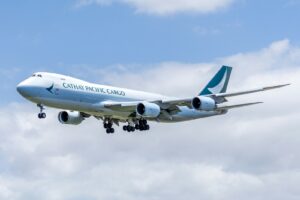
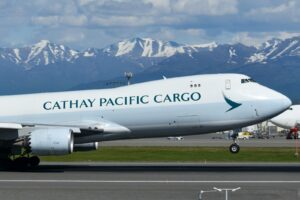
Air freight is the transportation of goods by aircraft. It uses a global network of over 14,000 origins and destinations across 140+ countries, handling everything from small packages to heavy machinery. Cargo moves on dedicated freighter aircraft or in the belly hold of passenger planes.
Air freight accounts for less than 1% of world trade by volume but over 35% by value — because the goods that fly tend to be the most valuable, most urgent, and most time-sensitive.
Air Freight Costs: How Much Does It Cost to Ship by Air?
Air freight rates in 2026 typically range from $3.00 to $7.00 per kilogram for standard international services. However, the total cost depends on several factors:
| Cost Component | Typical Range | Notes |
|---|---|---|
| Base freight rate | $3.00-$7.00/kg | Varies by route, volume, and service level |
| Fuel surcharge | 15-25% of base rate | Fluctuates with jet fuel prices |
| Security surcharge | $0.05-$0.15/kg | TSA/regulatory compliance |
| Terminal handling | $0.10-$0.30/kg | Airport cargo handling fees |
| Customs clearance | $75-$250 per shipment | Documentation and broker fees |
| Pickup/delivery | Varies | Depends on distance from airport |
Total all-in cost typically runs $4.00-$10.00/kg when all surcharges are included.
Air Freight Cost by Route (2026 Estimates)
| Route | Rate per kg | Transit Time |
|---|---|---|
| China → US (West Coast) | $3.50-$6.00 | 3-5 days |
| China → US (East Coast) | $4.00-$7.00 | 4-6 days |
| Europe → US | $3.00-$5.50 | 2-4 days |
| US → Europe | $3.50-$6.00 | 2-4 days |
| Germany → US | $3.00-$5.00 | 2-4 days |
| India → US | $3.50-$6.50 | 4-6 days |
| US domestic (cross-country) | $1.50-$3.00 | 1-2 days |
How Air Freight Charges Are Calculated
Airlines charge based on chargeable weight — whichever is higher between actual weight and volumetric (dimensional) weight.
Volumetric Weight Formula
Volumetric weight (kg) = Length × Width × Height (cm) ÷ 6,000
Or equivalently: Volume (m³) × 167
Example: A shipment measuring 120×80×100 cm weighing 50 kg:
- Volumetric weight: 120 × 80 × 100 ÷ 6,000 = 160 kg
- Actual weight: 50 kg
- Chargeable weight: 160 kg (volumetric is higher)
This means lightweight but bulky items — like pillows, foam products, or electronics in large packaging — can cost significantly more than their actual weight suggests.
Types of Air Freight Services
Express Air Freight (1-3 Days)
Door-to-door service from integrated carriers like DHL, FedEx, and UPS. Best for shipments under 200 kg that need guaranteed delivery times. Includes pickup, customs clearance, and final delivery. Premium pricing: 20-40% above standard air freight.
Standard Air Freight (3-5 Days)
Airport-to-airport or door-to-door service using scheduled airline capacity. A freight forwarder coordinates the shipment across multiple carriers and handles documentation. Best for shipments from 100 kg to several tons.
Consolidated Air Freight (5-7 Days)
Multiple shipments from different shippers are combined into a single airway bill to achieve lower per-kg rates. Slower than direct service due to consolidation/deconsolidation at each end, but 20-30% cheaper.
Charter Flights
An entire aircraft dedicated to your cargo. Used for extremely large, heavy, or urgent shipments where scheduled capacity is insufficient. Cost: $50,000-$500,000+ depending on aircraft size and route.
Air Freight vs. Ocean Freight: When to Use Each
| Factor | Air Freight | Ocean Freight |
|---|---|---|
| Transit time | 1-7 days | 15-45 days |
| Cost per kg | $3-$10 | $0.10-$0.50 |
| Best for weight | Under 500 kg | Over 1,000 kg / 1 CBM |
| Reliability | Very high (95%+ on-time) | Moderate (70-85% on-time) |
| Ideal cargo | High-value, urgent, perishable | Bulk, heavy, cost-sensitive |
| Carbon emissions | Higher per kg | Lower per kg |
Rule of thumb: If your cargo’s value exceeds $15/kg and you need it within a week, air freight is usually the better option. Below that threshold, ocean freight makes more economic sense.
What Can You Ship by Air Freight?
Ideal for Air Freight
- Electronics and technology: High value-to-weight ratio, time-sensitive product cycles
- Pharmaceuticals and medical devices: Temperature-controlled, regulatory compliance required
- Perishable goods: Fresh produce, flowers, seafood — shelf life depends on speed
- Automotive parts: Emergency replacements to avoid production line shutdowns
- Fashion and apparel: Seasonal windows demand fast delivery
- E-commerce orders: Meeting customer expectations for fast delivery
Restricted or Prohibited Items
- Flammable liquids and explosives (require special certification and handling)
- Compressed gases (limited quantities with proper documentation)
- Lithium batteries (specific packaging and labeling requirements)
- Items exceeding aircraft door dimensions (typically 3.5m × 2.4m for widebody freighters)
How to Get the Best Air Freight Rates
- Optimize packaging: Reduce volumetric weight by using the smallest possible packaging
- Consolidate shipments: Combine multiple orders into fewer, larger shipments for volume discounts
- Be flexible on timing: Consolidated services (5-7 days) cost 20-30% less than direct
- Compare carriers: Use a freight forwarder like ExFreight that aggregates rates from multiple airlines
- Avoid peak seasons: Rates spike before holidays (November-December) and Chinese New Year
- Book in advance: Last-minute bookings command premium pricing
- Declare accurate weights: Discrepancies result in reweighing fees and adjusted charges
The Air Freight Process: Step by Step
- Get a quote: Provide cargo details (weight, dimensions, commodity, origin, destination) to your freight forwarder
- Book the shipment: Confirm the carrier, service level, and schedule
- Prepare documentation: Commercial invoice, packing list, airway bill, and any required permits
- Cargo pickup: Carrier or forwarder collects from your warehouse
- Export customs clearance: Documentation processed at origin
- Flight and transit: Cargo loaded and transported via scheduled or chartered flight
- Import customs clearance: Documentation processed at destination
- Final delivery: Cargo delivered to your door or available for pickup at the airport
Air Freight Market Trends in 2026
- E-commerce driving growth: Cross-border e-commerce shipments continue to fuel demand for air cargo capacity
- Rate stabilization: After post-pandemic volatility, rates have settled into a $3-7/kg range on most trade lanes
- Digital platforms: Online booking, instant quoting, and real-time tracking are now standard expectations
- Sustainability focus: Airlines investing in fuel-efficient aircraft and sustainable aviation fuel (SAF) to reduce emissions
- Capacity management: Dedicated freighter fleet growing as passenger belly capacity alone cannot meet demand
Get an Air Freight Quote from ExFreight
ExFreight provides instant air freight quotes through its digital platform, comparing rates across multiple airlines and service levels. Whether you need express delivery or cost-effective consolidated shipping, the platform gives you:
- Instant rate comparison from multiple carriers
- Online booking with automated documentation
- Real-time tracking with milestone alerts
- Full customs brokerage at origin and destination
- Cargo insurance options
- Coverage across 150+ countries
Request your free air freight quote today.
Frequently Asked Questions
How much does air freight cost per kilogram?
Air freight rates in 2026 typically range from $3.00-$7.00 per kg for the base rate, with total all-in costs (including fuel surcharge, security, handling, and customs) running $4.00-$10.00 per kg. Express services from DHL, FedEx, or UPS cost 20-40% more than standard air freight.
How long does air freight take?
Express: 1-3 business days. Standard: 3-5 business days. Consolidated: 5-7 business days. These are airport-to-airport times; add 1-2 days for pickup and delivery, and 1-2 days for customs clearance at each end.
What is the difference between volumetric weight and actual weight?
Actual weight is measured on a scale. Volumetric weight is calculated from the shipment’s dimensions (L × W × H ÷ 6,000). Airlines charge whichever is higher. Lightweight but bulky items are typically charged by volumetric weight.
When should I choose air freight over ocean freight?
Choose air freight when: your cargo is needed within days, the goods are high-value (over $15/kg), the shipment is perishable or time-sensitive, or when ocean freight delays would cause production disruptions or lost sales. Choose ocean freight for bulk, heavy, non-urgent shipments where cost is the priority.
Can I ship dangerous goods by air?
Some dangerous goods can be shipped by air with proper classification, packaging, labeling, and documentation per IATA Dangerous Goods Regulations. This includes certain batteries, chemicals, and flammable materials in limited quantities. Your freight forwarder handles the compliance requirements.