
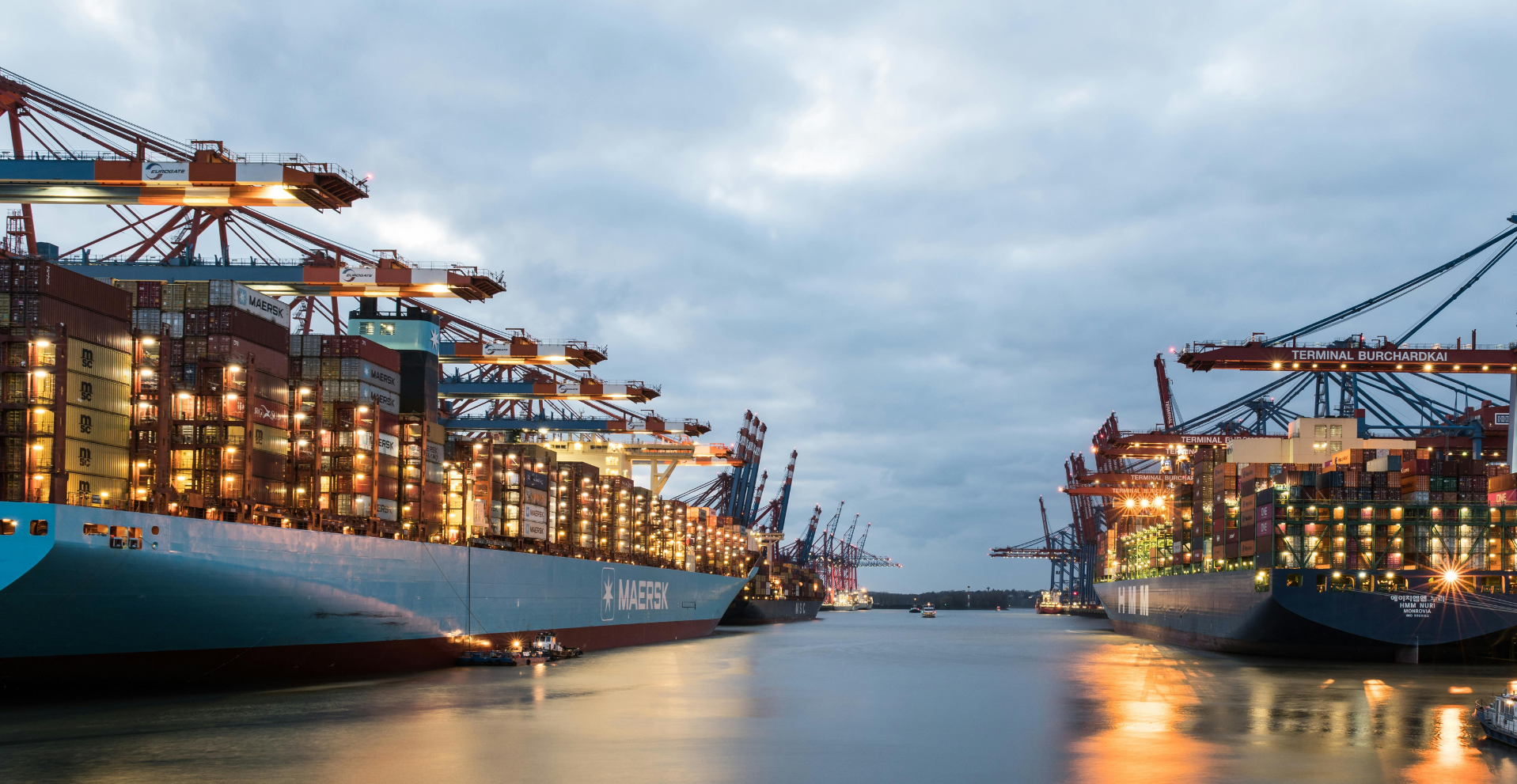
Ocean Freight Rate Decline Challenges the Financial Stability of Global Carriers
 Ocean freight, freight shipping, and freight transportation are undergoing significant changes. The current downward trend in ocean freight rates has intensified structural pressures across the maritime logistics sector, fundamentally altering the balance of power between shipping companies and shippers who depend on predictable pricing to maintain their international logistics frameworks. This situation, extensively detailed in the attached file, has evolved into a defining moment for the operational and commercial strategies that historically shaped the industry.
As demand for maritime transport weakens due to policy shifts, changes in consumption patterns, and corporate decisions influenced by global economic tensions, the market is transitioning into a phase where operating costs are becoming unsustainable for many carriers. Additionally, the combination of lower vessel utilization, increasingly unpredictable routing, and frequent adjustments in available capacity has created an environment where carriers must operate under strict cost discipline while attempting to maintain acceptable levels of financial performance.
This transformation is neither circumstantial nor temporary; rather, it is solidifying into a structural phenomenon fueled by the arrival of new vessel capacity, weakened import markets, and global dynamics that continue pushing rates toward levels that compromise operator profitability. Meanwhile, carriers are relying on mitigation strategies such as canceled sailings (blank sailings), itinerary changes, speed reductions (slow steaming), and the early retirement of older vessels. These tactics, while necessary, are not generating the corrective impact seen in past cycles when similar measures helped restore rates to functional levels. The industry, therefore, finds itself in a period where volatility has become a permanent characteristic of its operational environment.
Market Forces Behind the Decline in Ocean Freight Rates
Trade Policies and Shifting Import Behavior
Recent trade policies have prompted importers to modify their procurement and inventory strategies, accelerating shipments that traditionally would have been distributed more evenly throughout the year. This phenomenon, documented in the attached file, has disrupted the natural seasonality of freight shipping and contributed to weaker demand in subsequent cycles, where stability was previously expected. When the market loses coherence in its import patterns, capacity cycles become misaligned, forcing carriers to accept increasingly unfavorable rates.
Because much of the world’s commercial activity relies on maritime transportation, any shift in trade or fiscal policy immediately impacts global logistics flows, creating uncertainty for stakeholders who depend on stable demand forecasts and reliable capacity planning. Retailers and distributors, responsible for a significant share of global cargo movement, often reduce or delay shipments when anticipating additional external cost pressures, intensifying downward pressure on rates. 
Oversupply and Structural Capacity Imbalances
The continuous arrival of new vessels into a market characterized by weakened demand remains one of the most influential drivers of declining ocean freight rates. As described in the attached file, the industry has entered a cycle in which available capacity surpasses the volume of cargo being moved globally. This imbalance creates a competitive environment where carriers aggressively seek to fill available space, resulting in rate levels that, in many cases, fall below minimum operating requirements.
This oversupply also weakens the effectiveness of traditional management strategies such as alliance coordination, sailing optimization, or gradual vessel phase-outs. When vessel supply consistently outpaces demand, rate stabilization becomes unachievable through organic market mechanisms. As a result, carriers must adopt defensive measures that do not always align with the need to maintain a reliable global service network. Overcapacity is therefore not merely a matter of too many ships; it represents a broader misalignment between investment cycles and the actual conditions governing global trade.
Reduced Cargo Volumes and Evolving Consumption Patterns
Global consumption behavior has undergone significant changes influenced by economic, social, and geopolitical factors that directly affect demand for goods transported by sea. As markets adopt more cautious inventory management strategies, the volume of shipped goods decreases, leaving carriers exposed to increasingly subdued demand. This shift has a profound impact on freight transportation because maritime shipping depends on broad, sustained consumption cycles to maintain rate stability and ensure consistent cargo volumes.
Importers, particularly those operating in retail, frequently scale back or delay freight shipments when confronted with economic uncertainty. Instead of carrying high inventory levels, they adopt leaner operational models that require fewer shipments. The cumulative effect of this behavior creates downward pressure on maritime service demand and complicates carriers’ ability to plan capacity and routing across global networks. As a result, reduced shipment volumes represent a strategic challenge that intensifies an already strained market facing persistent overcapacity.
How Capacity Management Strategies Affect Market Stability
 Blank Sailings and Port Skipping Tactics
 Blank Sailings and Port Skipping Tactics
Blank sailings, widely used to calibrate available vessel capacity with actual market demand, have become one of the primary tools employed to slow the decline in freight rates. However, as indicated in the attached file, the global supply-demand imbalance is far too significant for these measures to deliver meaningful stabilization. Each canceled sailing generates ripple effects throughout logistics management operations, forcing importers to restructure routing, adjust distribution timelines, and reconfigure commercial planning.
Furthermore, blank sailings reduce service reliability, weakening carrier competitiveness among customers who increasingly demand precision and stability in transit schedules. In a business environment driven by real-time data and accelerated supply chain cycles, operational inconsistency erodes customer confidence. This reinforces a paradox: carriers implement blank sailings in an effort to support rate levels, yet this very action pushes shippers toward spot markets, where downward rate pressure persists.
Slow Steaming and Vessel Idling
Another recurring strategy in declining rate environments is slow steaming, which reduces speed to lower fuel consumption and absorb vessel capacity by lengthening voyages. Although effective in past cycles, this strategy now faces limitations due to growing expectations for faster delivery times and tighter inventory cycles across multiple industries. As delivery speed becomes a competitive differentiator, slow steaming introduces additional friction in supply chains, especially for sectors that rely on accelerated transport or precise inventory turnover.
Vessel idling—temporarily removing ships from service—is also used as a capacity absorption tool, although its effectiveness depends on carrier cooperation within alliances and a willingness to bear maintenance costs for inactive vessels. In a market where many carriers face simultaneous financial pressures, idling is used sparingly and its overall impact remains constrained. Taken together, these strategies reflect an industry attempting to balance operational tools against commercial realities that demand both efficiency and consistent service performance.
The Carrier Profitability Crisis 
Rising Operational Costs Outpace Revenue
Carriers face a growing cost structure that includes fuel, port operations, container repositioning, environmental compliance, and specialized workforce management. As these obligations increase, weakened freight rates can no longer cover minimum operational requirements. The attached file illustrates how this widening gap between rising costs and declining rates is placing carrier profitability at significant risk, even during periods that historically delivered stronger performance.
This situation is further intensified by external conditions such as port congestion, geopolitical disruptions, and regulatory shifts, each of which increases operational burden without providing offsetting commercial benefits. For shippers who depend on consistent supply chain reliability, a weakened carrier base introduces systemic risk, where small operational disruptions can lead to prolonged consequences across the supply chain.
Declining Market Forecasts and the Shift in Shipper-Carrier Power
Market projections suggest that carriers will operate under prolonged rate pressure with limited prospects for substantial recovery in demand. Analysts expect maritime operators to maintain cautious outlooks as global economic conditions fail to provide momentum strong enough to reverse downward trends. This environment has led to a rebalancing of negotiating power, placing shippers in a position to secure more favorable contract terms.
The shift in rate dynamics has also transformed relationships between carriers and ocean freight forwarders, who must now balance competitive rate offerings against the operational uncertainties imposed by fragile carrier networks. Maritime volatility has increased the importance of logistics intelligence, predictive planning, and advanced digital platforms that support real-time optimization. As a result, freight shipping services and the role of the freight forwarder have become increasingly central in interpreting shifting market conditions and designing resilient routing strategies.
Implications for Global Supply Chains
 Shippers Regain Leverage but Face Uncertainty
 Shippers Regain Leverage but Face Uncertainty
Falling freight rates present considerable opportunities for shippers, allowing them to reduce overall logistics costs—provided they maintain strategic foresight to anticipate sudden shifts in capacity availability. However, this advantage is accompanied by operational uncertainty resulting from inconsistent schedules, canceled sailings, and fluctuating transit times. In this environment, obtaining an accurate and timely ocean freight quote becomes essential for effectively balancing operational efficiency with supply chain resilience.
Moreover, lower rates do not inherently translate into improvements across the supply chain. Without careful capacity management, carriers risk compromising service reliability, leading to delays, scheduling conflicts, and heightened operational risks for shippers. As such, the pursuit of lower freight rates must be paired with rigorous evaluation of carrier performance commitments, as the true cost of instability may outweigh short-term savings.
Practical Tips for Shippers Navigating the Current Ocean Freight Market
- Use digital platforms that provide instant freight quotes and booking options across multiple carriers to save time and access competitive rates.
- Consider freight forwarding services that offer additional services such as customs clearance, temperature control, and handling of hazardous materials to ensure smooth transit.
- Evaluate whether full container load (FCL) or less than truckload (LTL) shipping is the best option for your freight shipment based on volume, urgency, and cost. For smaller shipments, LTL freight options from a leading LTL freight company can offer efficient and cost-effective transport, especially within North America and Canada.
- Ensure all required paperwork and shipping documents are accurate and complete to avoid delays at loading docks and during customs clearance.
- Track your shipment using a tracking number provided by the freight shipping service to monitor progress and anticipate delivery at your destination.
- Explore multimodal freight services that combine ocean freight with truck, rail, and pickup options to optimize transit times and cost efficiency from origin to final destination.
FAQs (Provided by the User)
What is the difference between dimensional weight and actual weight? 
Dimensional weight, also known as DIM weight, is calculated based on the density of a package and ensures that shipping charges reflect the space occupied rather than solely the physical weight. It is determined by applying the carrier’s conversion factor to the shipment’s volume. Actual weight reflects the true physical weight of the cargo including packaging and pallets. Chargeable weight is the higher of dimensional weight or actual weight. At ExFreight, dimensional weight is calculated automatically, which is especially useful in air freight shipping, where unused space can significantly increase cost.
What are the differences between LCL ocean and FCL ocean freight?
Ocean freight is one of the most cost-efficient global transportation options. ExFreight offers door-to-door and door-to-port services for both formats. FCL is ideal when the shipment volume justifies an entire container, providing greater security, minimal handling, and improved cost per unit. LCL is suitable for smaller loads consolidated with other cargo, though it requires additional packaging to withstand consolidation processes. The choice between FCL and LCL depends on shipment size, urgency, and supply chain needs.
 What is a reconsignment?
 What is a reconsignment?
A reconsignment refers to modifying the delivery address of a shipment already in transit. This process incurs additional charges based on routing changes and, in international cases, may require customs clearance to re-document the movement. Reconsignments should be requested only when strictly necessary, as they can extend transit times and significantly increase logistics costs.
The decline in ocean freight rates is reshaping the strategic landscape for both carriers and shippers in the freight shipping and freight transportation sectors. Persistent pressure on profitability—driven by overcapacity, geopolitical disruptions, demand fluctuations, and unpredictable regulatory environments—is forcing the industry to re-evaluate longstanding operational models. Tactics such as sailing cancellations, reduced speeds, and vessel idling are no longer sufficient to stabilize rates as they once did, underscoring the urgent need for more sophisticated approaches built on predictive analysis, cross-functional coordination, and advanced technology.
For shippers, this period presents an opportunity to optimize costs while simultaneously strengthening logistics resilience. Achieving this requires a strategic focus on logistics management, risk assessment, and modal diversification, including air freight shipping when appropriate. The industry is moving toward a model where operational intelligence and adaptability determine long-term competitiveness for both carriers and the companies that depend on efficient global cargo movement across the globe, from origin to destination.
