Skip to content

For most commercial shipments from the USA to India, ocean FCL is the cheapest way to move full containers and air freight is the fastest way to move urgent or high-value cargo. A 40ft container from the US West Coast to Nhava Sheva or Mundra typically runs 30 to 45 days port to port, while air freight from a major US gateway to Delhi (DEL) or Mumbai (BOM) clears in 4 to 8 days door to airport. The single biggest cost driver on this lane is mode choice: ocean wins on dense, heavy, non-urgent freight, and air wins when transit time or product value justifies the premium.
The second factor that decides your landed cost is India import tax. India charges Basic Customs Duty (BCD) on the assessable value, a Social Welfare Surcharge (SWS) at 10% of the BCD, and Integrated GST (IGST) on the duty-paid value, so your final cost depends heavily on your HS classification and declared value. ExFreight moves time-critical cargo on this corridor: review the USA to India air freight service for a fast, fully tracked airport-to-airport move with customs handling on both ends.
| Mode | Transit (typical) | Cost basis | Best for |
|---|---|---|---|
| Ocean FCL | 30 to 45 days port to port | Flat rate per 20ft / 40ft container | Full loads, heavy or dense cargo, lowest cost per unit |
| Ocean LCL | 35 to 50 days port to port | Per cubic meter (CBM), with a minimum | Shipments under roughly 12 to 15 CBM |
| Air freight | 4 to 8 days airport to airport | Per kg (chargeable weight) | Urgent, high-value, light or perishable cargo |
| Express / courier | 3 to 6 days door to door | Per shipment, all-in | Documents, samples, small parcels |
If you would rather hand the whole move to one partner, our USA to India freight forwarding service manages pickup, export clearance and delivery under a single quote.
Shipping methods from USA to India compared
The USA to India trade lane is a long-haul corridor that almost always routes through a transshipment hub, since there are few direct sailings between US ports and the Indian subcontinent. Ocean cargo typically transships through Mediterranean, Middle East, or Southeast Asian hubs (Colombo, Singapore, Jebel Ali, or a Mediterranean port), which is why transit times are longer and more variable than on a Pacific or Atlantic lane. Air capacity, by contrast, is deep and frequent, with daily widebody service into Delhi and Mumbai.
Use this rule of thumb. If your cargo is dense and you can fill a container, ocean FCL gives the lowest cost per kilogram and the best protection, since the box is sealed at origin and not co-loaded. If you have less than roughly 12 to 15 cubic meters, ocean LCL lets you pay only for the space you use, though you accept consolidation and deconsolidation handling. If the goods are urgent, fragile, high in value-to-weight, or seasonal, air freight removes four to six weeks of transit at a per-kilogram premium. For a structured way to weigh these variables, see our air freight versus ocean freight decision framework.
One factor that surprises first-time exporters is the role of the destination port and inland leg. Nhava Sheva (JNPT) near Mumbai handles over half of India’s containerized cargo and offers the deepest carrier choice, while Mundra in Gujarat gives the shortest connectivity to the north-western hinterland and Delhi. Cargo bound for the north (Delhi NCR, Punjab, Rajasthan) often clears faster through Mundra or an inland container depot, whereas western and central India is usually served through Nhava Sheva. If your final delivery is inland, factor in Indian domestic trucking or rail from the base port, which a forwarder coordinates as part of a door-to-door booking.
Ocean freight from USA to India
Ocean is the workhorse of the USA to India lane for heavy, non-urgent freight. The main US load ports are Los Angeles, Long Beach, Oakland, and Seattle on the West Coast, and New York/New Jersey, Savannah, Norfolk, Charleston, and Houston on the East and Gulf coasts. The main Indian discharge ports are Nhava Sheva (JNPT) and Mundra on the west coast, with Chennai serving the south and east. Because almost every service transships, expect roughly 30 to 45 days port to port from the West Coast and 28 to 40 days from the East Coast, where the Suez or Mediterranean routing is sometimes shorter to the Indian west coast than the long Pacific haul.
Indicative 2026 FCL rates from the US to Nhava Sheva or Mundra fall in the range of USD 1,800 to USD 3,500 for a 20ft container and USD 2,500 to USD 5,000 for a 40ft container, depending on origin coast, carrier, season, and equipment availability. LCL moves on a per cubic meter basis, commonly USD 70 to USD 150 per CBM with a one to two CBM minimum, plus origin and destination handling. These are indicative ranges, not live quotes, and pricing moves with peak season and with capacity disruptions on the Suez and Red Sea routing.
The LCL versus FCL break-even on this lane usually sits around 12 to 15 CBM. Below that, LCL is cheaper because you pay only for volume used. Above it, a 20ft FCL (which holds roughly 28 to 33 CBM of usable space) almost always costs less per unit and avoids consolidation handling. If your volume is climbing toward a full container, request both quotes and compare landed cost, not just freight. Remember that the quoted ocean rate is rarely the full bill: terminal handling charges at both ports, documentation, the bill of lading fee, and any chassis or detention costs sit on top, so ask for an all-in number before you commit. When speed matters more than the per-kilo savings, weigh ocean against the cost and transit trade-offs of air before booking.
Air freight from USA to India
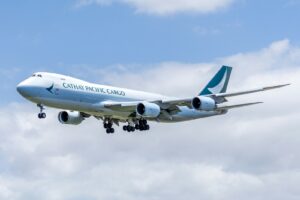
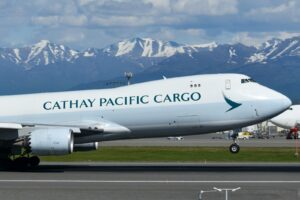
Air freight collapses the USA to India transit from weeks to days. The primary US cargo gateways are Los Angeles (LAX), Chicago O’Hare (ORD), New York JFK, San Francisco (SFO), Dallas Fort Worth (DFW), and Atlanta (ATL). On the Indian side, the main cargo airports are Delhi Indira Gandhi (DEL), Mumbai Chhatrapati Shivaji (BOM), Chennai (MAA), and Bengaluru (BLR), which together handle the large majority of India’s air cargo. Airport-to-airport transit is typically 4 to 8 days including consolidation, uplift, transshipment, and customs handling, and express courier moves smaller parcels door to door in 3 to 6 days.
Air freight is priced on chargeable weight, which is the greater of actual gross weight and volumetric weight (length x width x height in cm divided by 6,000). Indicative 2026 rates run roughly USD 4.00 to USD 8.00 per kg depending on lane, gateway, and density, with lower per-kilo rates on heavier consignments. Air wins when the goods are urgent, high in value relative to weight (electronics, components, pharmaceuticals, medical devices, samples), perishable, or when the cost of holding inventory in transit outweighs the freight premium. For dense, low-value, non-urgent cargo, ocean almost always remains the better economic choice.
A practical middle path many shippers overlook is to split a shipment. Move the bulk of an order by ocean to protect margin and air-freight a small launch quantity so the Indian buyer can start selling, restock, or test the market while the container is still on the water. This keeps cash flow moving without paying the air premium on the entire volume.
USA export clearance and documents
Exporting from the United States to India requires correct US export filing before the goods leave. The core obligation is the Electronic Export Information (EEI), filed through the Automated Export System (AES) on the ACE platform. EEI is mandatory when the value of goods under a single Schedule B number exceeds USD 2,500, or whenever the commodity requires an export license regardless of value. You will need the correct Schedule B classification, and for license-controlled goods, the Export Control Classification Number (ECCN) under the Export Administration Regulations (EAR). Filing late, incorrectly, or not at all carries civil penalties, so build AES into your booking timeline rather than treating it as an afterthought.
Standard commercial documents accompany every shipment: the commercial invoice, packing list, and the bill of lading (ocean) or air waybill (air). The Incoterms 2020 rule you agree with your buyer determines who files what, who pays freight, and where risk transfers. Many USA to India shipments move on FOB or CIF, but EXW and DAP are common too. Understand exactly what your term commits you to before quoting: our guide on what FOB means and how Incoterms work breaks down the cost and risk split. Also confirm any party-specific screening obligations, since US exporters must check restricted-party lists regardless of value. For the export rules themselves, consult U.S. Customs and Border Protection and the export guidance at the International Trade Administration (trade.gov).
India import customs, duties and VAT
On arrival, goods are declared electronically to Indian Customs through ICEGATE, the national customs EDI gateway. The importer of record (or a licensed Customs House Agent acting for them) files a Bill of Entry, and India’s customs framework is administered by the Central Board of Indirect Taxes and Customs (CBIC). A critical prerequisite is the Importer-Exporter Code (IEC): every commercial importer in India must hold an IEC, issued by the Directorate General of Foreign Trade (DGFT) and linked to the company’s PAN. A US exporter cannot self-clear in India: you ship to an Indian consignee who holds a valid IEC and acts as importer of record.
For the complete document checklist and duty rules, see India customs clearance requirements.
India stacks three charges on most imports. First, Basic Customs Duty (BCD) is levied on the assessable value (broadly the CIF value), at a rate set by the goods’ HS classification under the Customs Tariff Act. Second, a Social Welfare Surcharge (SWS) of 10% is charged on the BCD amount (not on the whole value). Third, Integrated GST (IGST), most commonly at 18%, is levied on the value inclusive of BCD and SWS; a GST-registered importer can usually reclaim the IGST as Input Tax Credit. Note that India’s 2026 tariff simplification cut the number of duty slabs and removed SWS from a list of tariff lines, so confirm the exact rate for your HS code before you quote.
As a worked example, a shipment with an assessable value of USD 20,000 and a 10% BCD rate incurs USD 2,000 in BCD. SWS at 10% of that BCD adds USD 200. IGST at 18% then applies to USD 22,200 (value plus BCD plus SWS), which is USD 3,996, for a combined duty and tax of USD 6,196 before any handling or delivery charges. Required documents are the commercial invoice, packing list, bill of lading or air waybill, the IEC, and, where applicable, a certificate of origin, plus any product-specific licenses. Regulated categories (food under FSSAI, drugs and cosmetics, wireless and electronic devices under BIS or WPC, and certain chemicals) need extra registration or clearance, so confirm requirements before shipping. To model your total cost, classify your goods correctly first using our HTS and tariff classification guide, then run the numbers with our landed cost calculation guide.
Transit times from USA to India
| Route | Mode | Typical transit |
|---|---|---|
| US West Coast (LA, Long Beach, Oakland, Seattle) to Nhava Sheva / Mundra | Ocean FCL | 30 to 45 days |
| US East Coast / Gulf (NY/NJ, Savannah, Houston) to Nhava Sheva / Mundra | Ocean FCL | 28 to 40 days |
| US to Indian base ports | Ocean LCL | 35 to 50 days |
| Major US gateway (LAX, ORD, JFK, SFO) to Delhi (DEL) / Mumbai (BOM) | Air freight | 4 to 8 days |
| US to India, small parcels | Express courier | 3 to 6 days |
Add origin pickup and export filing time at the front, plus Indian customs clearance and final delivery at the destination. Clearance through ICEGATE is usually fast for clean, well-documented shipments, often one to three days, but a missing IEC, an incorrect Bill of Entry, or a regulated commodity can add several days. Treat the transit figures above as port-to-port or airport-to-airport, and add buffer days at both ends when you plan delivery commitments to your buyer.
How to lower your USA to India shipping costs
- Match mode to cargo. Do not air-ship dense, non-urgent goods. Reserve air for urgent or high-value freight and put the rest on the water.
- Consolidate toward a full container. If your LCL volume is approaching 12 to 15 CBM, a 20ft FCL is often cheaper per unit and avoids consolidation handling and delays.
- Classify correctly. The right HS code can mean a lower lawful BCD rate and the correct IGST slab. An incorrect code triggers reassessment, delays, and penalties, so verify classification before you book.
- Make sure the consignee’s IEC and GST registration are valid. A clean IEC lets the importer reclaim IGST as Input Tax Credit, which materially lowers the real cost of the tax.
- Optimize packing. Air freight bills on volumetric weight, so reducing dimensional waste directly cuts the chargeable weight and the bill.
- Quote landed cost, not just freight. BCD, SWS, IGST, terminal handling, and delivery often outweigh the ocean versus air gap. Model the total before deciding.
Common mistakes shipping from USA to India
- Skipping or mis-filing the EEI. If your shipment crosses the USD 2,500 Schedule B threshold or needs a license, AES filing is mandatory before departure. Missing it stops the cargo and exposes you to penalties.
- Consignee has no valid IEC. A foreign exporter cannot self-clear in India. The Indian importer of record must hold a current Importer-Exporter Code before the goods arrive, or the Bill of Entry cannot be filed.
- Underestimating the stacked taxes. India charges BCD, then SWS on the BCD, then IGST on the duty-inclusive value. Budgeting only for BCD understates the landed cost.
- Ignoring product-specific rules. Food (FSSAI), drugs and cosmetics, and wireless or electronic devices (BIS, WPC) need extra registration. Confirm before shipping, not at the port.
- Confusing the Incoterm. Agreeing FOB then behaving as if it were DAP leads to surprise charges. Fix the term in writing and price to it.
- Treating the quoted freight as the total cost. Duty, surcharge, IGST, terminal and delivery charges are part of landed cost. Budget for all of them up front.
Ship from USA to India with ExFreight
ExFreight moves time-critical cargo on the USA to India corridor with instant online quotes, transparent all-in pricing, and customs handling on both ends. For urgent or high-value freight, book the USA to India air freight service for a fast, fully tracked airport-to-airport move. To compare lanes, modes, and rates across the wider US export network, start from the ExFreight USA shipping hub and get a live quote in minutes.
Frequently asked questions
How long does shipping from the USA to India take?
Ocean FCL from the US to Nhava Sheva or Mundra typically takes 28 to 45 days port to port because almost every service transships through a Mediterranean, Middle East, or Asian hub. Air freight from a major US gateway to Delhi or Mumbai clears in about 4 to 8 days.
How much does it cost to ship a container from the USA to India?
Indicative 2026 rates run roughly USD 1,800 to USD 3,500 for a 20ft container and USD 2,500 to USD 5,000 for a 40ft, depending on origin coast, carrier, and season. These are indicative ranges, not live quotes.
What import taxes does India charge on US goods?
India charges Basic Customs Duty (BCD) on the assessable value at a rate set by the HS code, a Social Welfare Surcharge of 10% on the BCD, and Integrated GST (most commonly 18%) on the duty-inclusive value. A GST-registered importer can usually reclaim the IGST as Input Tax Credit.
Do I need an IEC code to import into India?
Yes. Every commercial importer in India must hold an Importer-Exporter Code issued by the DGFT and linked to their PAN. A US exporter cannot self-clear, so the Indian consignee acting as importer of record must hold a valid IEC before the goods arrive.
Do I need to file an EEI to export from the USA to India?
Yes, when the value under a single Schedule B number exceeds USD 2,500 or the goods require an export license. The Electronic Export Information is filed through the Automated Export System before the shipment departs.
Which Indian ports and airports handle US cargo?
The main ocean ports are Nhava Sheva (JNPT) and Mundra on the west coast, plus Chennai for the south. The main cargo airports are Delhi (DEL), Mumbai (BOM), Chennai (MAA), and Bengaluru (BLR).
Ready to ship? Get an instant freight quote.