 Skip to content

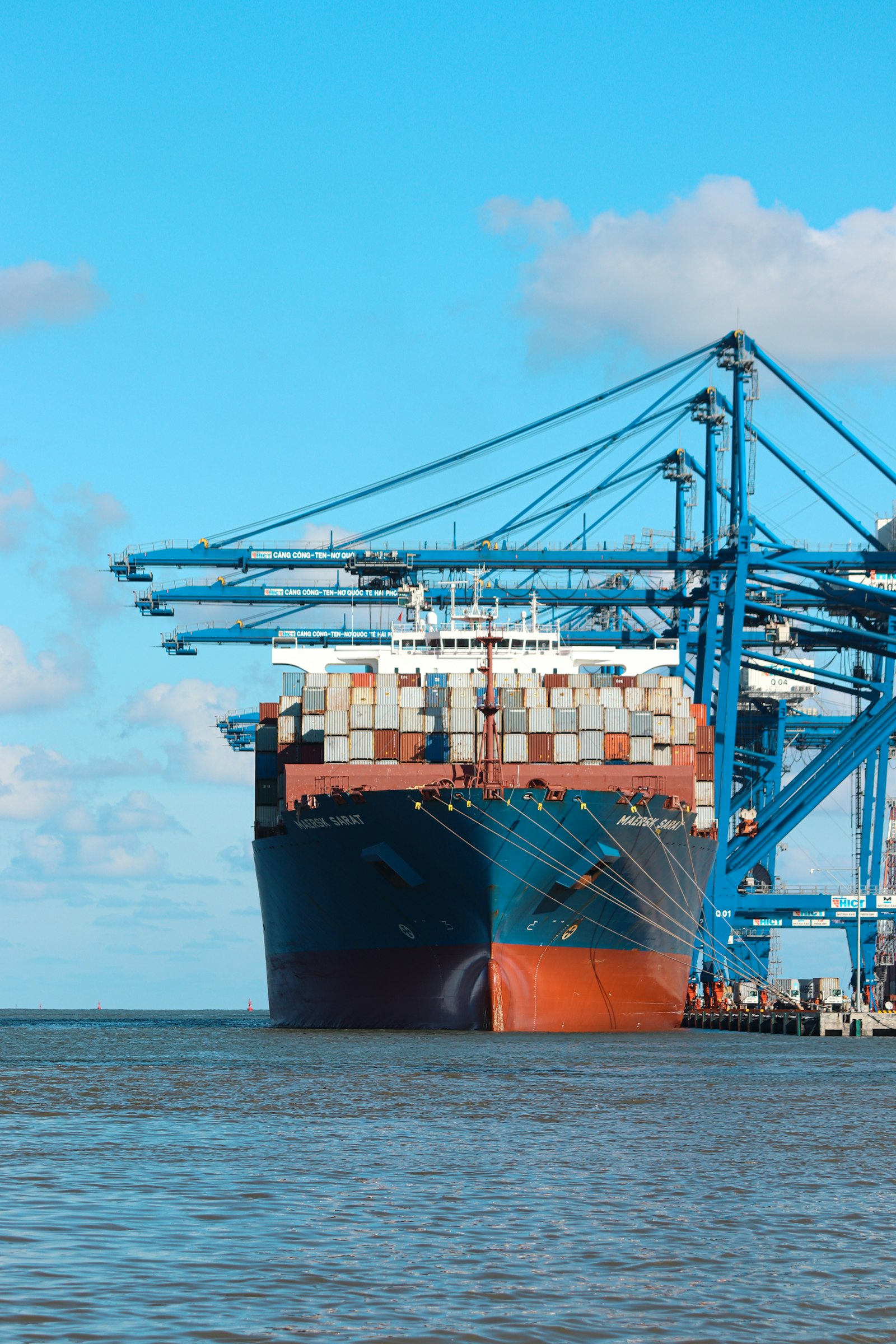
A freight forwarder from India to the USA books the ocean or air leg, coordinates the Indian export clearance with your supplier and files or supports your US import paperwork. Most ocean cargo leaves from Nhava Sheva (Jawaharlal Nehru Port) or Mundra and reaches the US West Coast in roughly 30 to 39 days or the East Coast in roughly 22 to 40 days, depending on whether carriers route through Suez or around Africa. Air freight from Mumbai or Delhi is the fast option for urgent or high-value goods.
If you are looking for a freight forwarder India to USA importers can rely on, the first thing to understand is that this lane behaves differently from the transpacific trade most US buyers know. India sits on the Arabian Sea and the Bay of Bengal, so ocean cargo has a real choice of direction: east across the Pacific via Southeast Asian transshipment, or west through the Red Sea and Suez to the US East Coast, or around the Cape of Good Hope when Suez routing is unsafe. That choice drives transit time more than any other variable.
This guide covers shipping from India to the USA end to end: which Indian ports and airports matter, what your supplier must file in India, what you must file in the US, and which trade rules are specific to Indian goods. ExFreight can quote the whole move door to door, so you can compare ocean and air before you commit.
Ocean or air from India: which mode fits your cargo
Indian exporters ship everything from textiles and auto components to pharmaceuticals and handicrafts, and the right mode depends on value, urgency and volume. The ranges below are port-to-port or airport-to-airport and come from published carrier and freight-industry schedules; actual sailings vary by carrier and by whether the vessel transships.
| Mode | Typical transit | Best fit |
|---|---|---|
| Ocean FCL, Nhava Sheva or Mundra to US West Coast | Roughly 30 to 39 days | Full container loads of general cargo, textiles, components, furniture |
| Ocean FCL, Indian west coast to New York/New Jersey via Suez | Roughly 22 to 25 days when Suez routing is open | East Coast and Midwest buyers with steady volume |
| Ocean FCL, same lane via Cape of Good Hope | Roughly 35 to 40 days | Applies when carriers avoid the Red Sea |
| Ocean LCL | Add consolidation and deconsolidation time on top of the sailing | Smaller shipments that do not fill a container |
| Air freight, Mumbai or Delhi to US gateways | Scheduled flight times, usually with a transfer or direct belly or freighter service | Urgent replenishment, samples, pharmaceuticals, high-value goods |
Published figures for the same lane differ because some sources quote the Suez routing and others the Cape routing. Because a service can be rerouted between the advertised schedule and the booking, always confirm the routing and sailing days on the booking confirmation.
Ask whether your booking sails via Suez or the Cape. Our notes on the East Coast versus West Coast routing decision show how the same Indian supplier can land on either coast.
When LCL makes sense from India
Many Indian suppliers are small manufacturers that ship a few pallets at a time. LCL shipping lets them consolidate, but cargo is handled at a container freight station at both ends, which adds days and handling touchpoints. If you ship regularly, an FCL booking usually gives cleaner transit and fewer chances for damage.
Nhava Sheva, Mundra and Chennai: where Indian cargo loads and where it lands in the US
India's container trade is concentrated on the west coast. Jawaharlal Nehru Port Authority (JNPA, commonly called Nhava Sheva) near Mumbai operates five container terminals under a landlord model and, according to the port authority, handles around half of the containerized cargo moving through India's major ports. Mundra in Gujarat is the other big west coast gateway, and Chennai serves the south and east.
| Origin gateway | Region served | Typical US gateway |
|---|---|---|
| Nhava Sheva (JNPA), Maharashtra | Mumbai, Pune, Gujarat, northern India inland routes | Los Angeles/Long Beach, New York/New Jersey, Savannah, Houston |
| Mundra, Gujarat | Gujarat, Rajasthan, northern India | New York/New Jersey, Savannah, Los Angeles/Long Beach |
| Chennai, Tamil Nadu | Tamil Nadu, Karnataka, auto and electronics belt | Savannah, New York/New Jersey, Los Angeles/Long Beach |
| Mumbai and Delhi airports | Western and northern India | New York (JFK), Chicago, Los Angeles, Atlanta, Dallas |
| Chennai and Bengaluru airports | South India | New York, Chicago, Los Angeles |
For air cargo, Mumbai, Delhi and Chennai have long been India's largest international freight airports according to Airports Authority of India traffic statistics, with perishables and pharmaceuticals a major share of volume.
East Coast or West Coast from India
Because India is closer to Suez than to the Pacific, East Coast ports often give the shortest ocean transit when the Red Sea is open. When it is not, the Cape routing narrows the gap and West Coast discharge with intermodal rail inland can compete. Your delivery address, not just the port price, should decide the gateway. Inland delivery from the US port is a separate leg: ExFreight books LTL and FTL trucking in the US.
What your Indian supplier files before cargo can leave: IEC, shipping bill and ICEGATE
India's export clearance is electronic and runs through ICEGATE, the portal of the Central Board of Indirect Taxes and Customs. Your supplier handles these steps, but knowing them lets you spot delays early.
- Importer Exporter Code (IEC): a 10-digit code issued by the Directorate General of Foreign Trade. A shipping bill cannot be filed without a valid IEC, so ask new suppliers for it.
- Shipping bill: the export declaration filed with Indian Customs under Section 50 of the Customs Act, 1962, usually by the supplier's customs house agent on ICEGATE.
- Bank authorized dealer code: the exporter's bank must be registered against the relevant customs port on ICEGATE for the filing to go through.
- Supporting documents: commercial invoice, packing list and any permits are uploaded electronically through e-Sanchit.
- Risk management check and Let Export Order: cargo is cleared by the customs risk management system and only leaves India after a Let Export Order is issued.
A shipping bill lodged at one port cannot be found under another port code, so make sure the booking and the filing name the same port of loading. Mismatches between the shipping bill, the invoice and the bill of lading are the most common cause of avoidable holds at Indian ports. India's own import rules, which matter if you also ship goods into India, are covered on our India customs page.
US entry for Indian goods: ISF, bond, classification and what changed for India in 2019
Whatever the origin, ocean cargo bound for the US needs an Importer Security Filing, usually called ISF 10+2, transmitted to CBP at least 24 hours before the cargo is loaded at the Indian port. A late or inaccurate filing can draw liquidated damages of $5,000 per violation, which is why the filing should be agreed with your forwarder before the supplier books space. Our ISF 10+2 guide lists the ten data elements and who supplies each.
- Customs entry and bond: formal entries usually need a customs bond, and most importers move to a continuous bond once they ship more than a few times a year. See US customs entry information and our comparison of single-entry and continuous bonds.
- HTS classification: Indian suppliers often describe goods in trade terms that do not map cleanly to US tariff lines. Use the HTS classification guide to settle the code before the entry is filed.
- Importer of record: the party named on the entry is liable for duties and accuracy. If you do not want that role, read what an importer of record is.
Trade program status for India
India was removed as a beneficiary developing country from the US Generalized System of Preferences effective June 5, 2019 (Proclamation 9902), and the GSP program itself lapsed on December 31, 2020 and has not been renewed, so there is currently no GSP benefit for any origin. India has no free trade agreement with the United States, so duty is based on the normal tariff rate for the HTS line plus any additional duties in force.
Additional US duties on top of the HTS rate change often: Section 232 duties on steel, aluminum and certain derivatives, Section 301 where it applies, and temporary measures. The IEEPA reciprocal tariffs were struck down by the Supreme Court in February 2026 (Learning Resources v. Trump). Check current CBP CSMS messages and HTSUS Chapter 99 before you price an order. We do not quote rates; our Section 232 steel and aluminum guide covers the metals rules.
Anti-dumping and countervailing duties on Indian products
Several Indian products are subject to AD/CVD orders, including certain welded carbon steel pipes and tubes (orders continued by Commerce in January 2024) and quartz surface products. Check the ITA AD/CVD case list for your product and origin. If your goods are steel, pipe or fabricated metal, check the order scope before you buy. Our AD/CVD importer guide explains how scope rulings and cash deposits work.
Why two India quotes for the same cargo can differ: inland haul, routing and Diwali timing
We do not publish rate ranges because Indian lanes move with fuel, routing and capacity. These are the variables that decide your landed cost:
- Routing via Suez or the Cape: the longer Cape routing consumes more vessel time, which tends to tighten capacity and add surcharges on the Indian west coast trades.
- Origin inland haul: many Indian suppliers are inland. Trucking from the factory to Nhava Sheva, Mundra or Chennai, and any container freight station stop for LCL, is a real cost line.
- Chargeable weight versus volume: air freight is billed on the greater of actual and volumetric weight, so bulky light goods can cost more than their weight suggests. See how chargeable weight is calculated.
- Seasonality: Indian festival and wedding season, including Diwali, lifts export volumes in the autumn, and US peak season for holiday goods overlaps with it. Booking earlier protects you from space shortages.
- Duties and tariffs: duty is often the largest single line. Model it with the landed cost formulas or the duty and tax estimate before you commit to a purchase order.
- Incoterms: whether the supplier sells FOB or ex-works decides who pays origin charges. Review what an Incoterm is before accepting a quote.
Booking India to USA freight through a digital forwarder
ExFreight is a digital freight forwarder, so an Indian shipment can be priced and booked online. For this lane that means:
- Door-to-door rating from an Indian origin to a US address, covering air, ocean FCL and LCL, plus LTL and FTL trucking for the US delivery leg.
- Customs brokerage that can be added to the booking, so the US entry for Indian goods does not need a separate hire. Cargo insurance is offered at the time of booking.
- Map-based tracking with email status alerts for air and ocean, and online document storage for the invoice, packing list and bill of lading your Indian supplier sends.
- The Global Duty and Tax Calculator for landed-cost estimates, useful where duty is a large share of an Indian order.
- Amazon FBA deliveries to US fulfillment centers, and US-based customer service online 8:00 AM to 8:00 PM EST. ExFreight has operated since 2006.
To compare ocean and air for your cargo, request a door-to-door quote and see air freight options alongside ocean.
India to USA shipping: questions importers ask
How long does shipping from India to the USA take?
Ocean cargo typically takes roughly 30 to 39 days to the US West Coast and roughly 22 to 40 days to the East Coast depending on Suez or Cape routing. Air freight takes far less in the air but still depends on flight schedules and customs clearance at both ends.
Which Indian port is best for exports to the US?
Nhava Sheva (JNPA) and Mundra are the main west coast gateways, and Chennai serves southern suppliers. The right port is usually the one closest to your supplier with a direct or well-timed service to your US gateway.
Do I need an ISF for cargo from India?
Yes, for ocean shipments. The ISF must reach CBP at least 24 hours before loading at the Indian port, and violations can cost $5,000 each.
Do Indian goods get duty-free treatment in the US?
Not currently. India lost GSP status in June 2019, the GSP program lapsed on December 31, 2020, and there is no US-India free trade agreement. Duty depends on the HTS code plus any additional duties in force, so classify before you buy.
What does my Indian supplier need to ship?
A valid IEC from DGFT, a shipping bill filed on ICEGATE, a commercial invoice and packing list, and customs clearance that ends in a Let Export Order.
Is air or ocean better from India?
Air suits pharmaceuticals, samples and urgent replenishment. Ocean suits volume cargo where cost matters more than speed. Many importers split a purchase order between the two.
Can I ship India to Amazon FBA?
Yes. ExFreight handles Amazon FBA deliveries to US fulfillment centers, so goods can go from Indian suppliers straight to the fulfillment network.
Transit times are typical ranges, not commitments. Duties, tariffs and rules change: confirm current requirements with CBP and your customs broker before you ship.
