 Skip to content

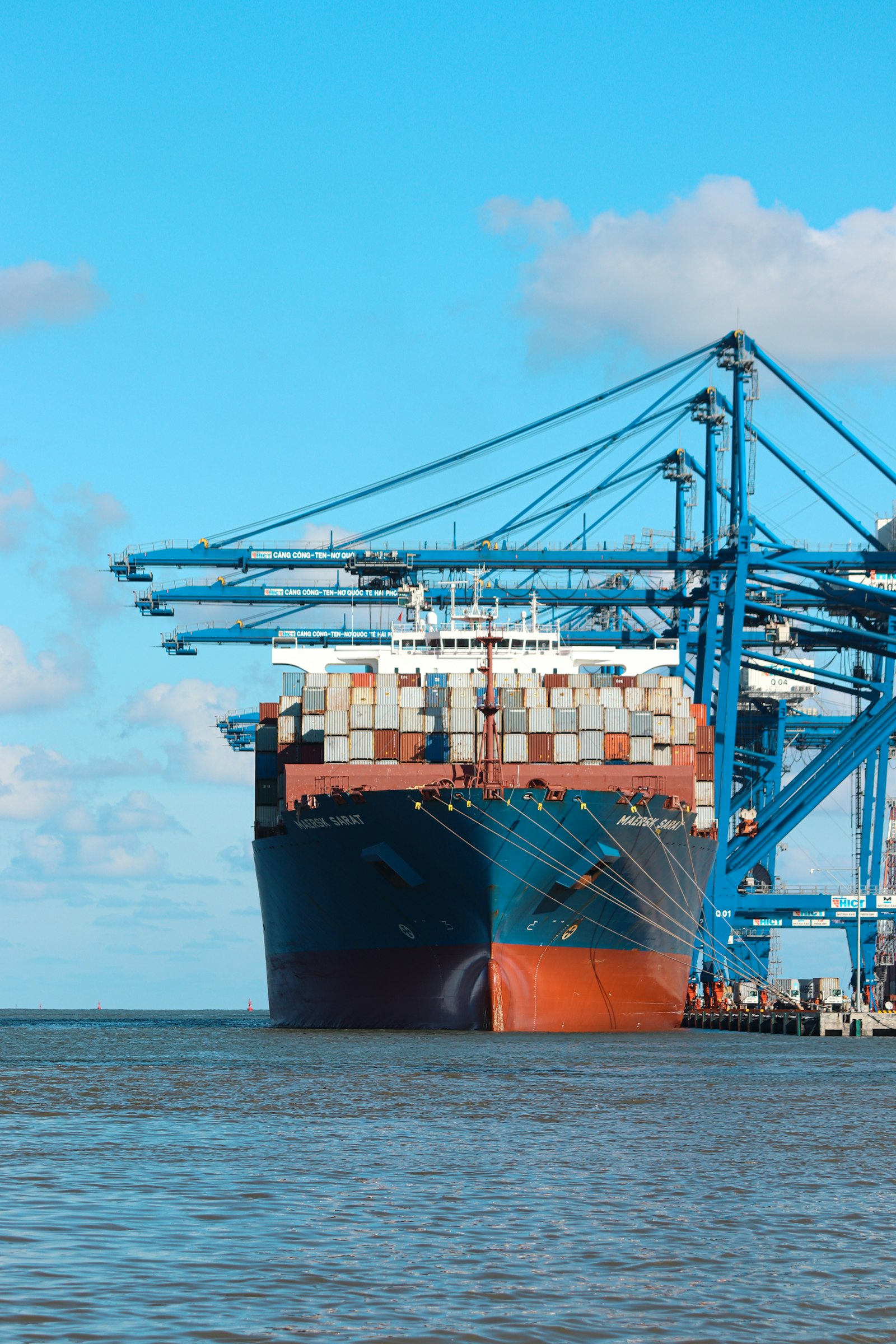
A freight forwarder from Japan to the USA books the ocean or air leg, coordinates export clearance through Japan's NACCS system with your supplier, and supports your US ISF and customs entry. Japan is a short transpacific hop: the fastest direct ocean services from Yokohama to Los Angeles/Long Beach have been published at around 10 days port to port, and air freight from Narita, Haneda or Kansai is scheduled in days. Most Japanese goods pay normal US duty, because the US-Japan Trade Agreement covers only a limited list of products.
If you need a freight forwarder Japan to USA importers can trust with time-sensitive cargo, this lane rewards precision more than any other transpacific route. Japanese suppliers ship machinery, auto parts, precision instruments, electronics components and food and beverage products, and many of them expect exact cut-offs, clean documentation and no surprises.
Below is how shipping from Japan to the USA works in practice: where cargo loads, how the export declaration is filed through NACCS, what US trade rules apply to Japanese origin goods and where cost comes from. ExFreight prices the whole move door to door, so you can compare container shipping from Japan to the US against air freight on the same screen.
Container, LCL or air from Japan: matching mode to cargo
Japan's proximity to the US West Coast makes ocean freight unusually predictable, and Figures below are port-to-port or airport-to-airport.
| Mode | Typical transit | Best fit |
|---|---|---|
| Ocean FCL, Yokohama or Tokyo to Los Angeles/Long Beach | Around 10 days on the fastest direct services, longer on rotations that call at several ports | Machinery, auto parts, components shipped by the container |
| Ocean FCL, Japan to US East Coast | Transpacific plus Panama Canal or intermodal rail from the West Coast, so allow materially longer | East Coast manufacturers with steady supply |
| Ocean LCL | Sailing time plus consolidation at the origin CFS and deconsolidation in the US | Samples, spare parts, small purchase orders |
| Air freight, Narita, Haneda or Kansai to US gateways | Scheduled by flight, typically a matter of days door to door | Precision instruments, semiconductor equipment parts, urgent spares |
Cut-offs matter more than sailing days on this lane. Japanese export declarations are filed before loading, and containers must be gated in on time for the vessel. A missed cut-off can cost a full week.
Japan's Golden Week holidays around the start of May compress working days at suppliers and ports. Our note on transpacific booking around Golden Week shows how to book ahead of it.
Keihin, Hanshin and Nagoya: Japan's loading ports and the US gateways they feed
Japan's government designated the Keihin ports (Tokyo, Yokohama and Kawasaki) and the Hanshin ports (Kobe and Osaka) as its international container hubs. Yokohama's Minami-Honmoku pier has an 18-meter-deep container terminal, described by MLIT as the deepest in Japan. Nagoya in the Chubu region is the third major loading area, close to the auto and machinery belt.
| Origin gateway | Region served | Typical US gateway |
|---|---|---|
| Yokohama and Tokyo (Keihin) | Kanto, Tokyo metro area, northern Japan | Los Angeles/Long Beach, Seattle/Tacoma, Oakland |
| Nagoya | Chubu, automotive and industrial manufacturers | Los Angeles/Long Beach, Seattle/Tacoma, Savannah via transshipment or rail |
| Kobe and Osaka (Hanshin) | Kansai, Hyogo, Osaka electronics and chemicals | Los Angeles/Long Beach, Oakland, Seattle/Tacoma |
| Narita (NRT) | Tokyo region, Japan's primary international air cargo airport | Los Angeles, New York, Chicago |
| Kansai (KIX) and Haneda (HND) | Kansai region and Tokyo | Los Angeles, San Francisco, New York, Chicago |
Narita is the main Tokyo-area air cargo airport and Kansai the main western gateway; Kansai Airports reports that belly cargo on passenger flights carries more than half of its cargo.
Why West Coast discharge dominates
Because Japan is a Pacific origin, most container cargo discharges at Los Angeles/Long Beach, Oakland or Seattle/Tacoma, then continues by truck or intermodal rail. If you are inland or on the East Coast, compare that with a Panama Canal routing in our East Coast versus West Coast routing guide. ExFreight books US air freight and LTL or FTL trucking from the gateway to your door.
NACCS and Japan Customs: how Japanese exporters clear cargo for departure
Japan runs its port, customs and cargo procedures through NACCS, the Nippon Automated Cargo And Port Consolidated System, operated by NACCS Inc. in Tokyo. Sea-NACCS and Air-NACCS were later merged into one system. For exports, it covers moving cargo into a bonded area, the export declaration, loading and vessel or aircraft departure.
- Export declaration: filed by the exporter or a licensed customs broker through NACCS. Japan Customs permits the export once the declaration is accepted and, where selected, examined.
- Where it is filed: normally at the customs office with jurisdiction over the dock where the vessel loads. Japan Customs allows declaration without bringing goods into the customs area for certain cases, such as cargo already in a container.
- No filing fee: Japan Customs states there is no fee for the export declaration itself, and counter hours run 8:30 a.m. to 5:00 p.m. on working days.
- Supporting documents: commercial invoice, packing list and, for controlled goods, the relevant export licence. Customs may ask for proof that goods were shipped.
- Origin document: a certificate of origin from a chamber of commerce is only needed when your US customs broker or a program requires it. Ask before the supplier ships.
Because the declaration is tied to the loading dock, make sure your supplier names the correct terminal and vessel. Changes after acceptance create extra paperwork in Japan and can break your ISF data on the US side. For Japan's inbound rules, which apply if you also sell into Japan, see our Japan customs page.
US customs entry for Japanese goods: ISF, HTS and the limits of the US-Japan Trade Agreement
Ocean cargo from Japan needs an Importer Security Filing transmitted to CBP at least 24 hours before loading in Japan, and a late or inaccurate filing can draw liquidated damages of $5,000 per violation. Because Japanese carriers close early for key sailings, file the ISF as soon as your supplier confirms the booking. See the ISF 10+2 guide.
- Entry and bond: formal entries usually need a customs bond. Read US customs entry information and the bond comparison to pick the right type.
- HTS classification: technical goods from Japan, such as machine parts and instruments, hinge on precise classification. Start with the HTS code guide.
- Importer of record: you carry the duty and accuracy liability unless you arrange otherwise. Our explainer on importers of record covers the options.
What the US-Japan Trade Agreement actually covers
The US-Japan Trade Agreement and the companion Digital Trade Agreement took effect January 1, 2020. USTR describes them as limited early agreements. On the US side, the tariff cuts cover selected industrial goods, including certain machine tools, fasteners, steam turbines, bicycles and bicycle parts, and musical instruments. Most other Japanese goods do not receive agreement preferences, so duty follows the normal HTS rate. Check the HTS line and any preference text on the CBP Japan trade agreement page before you assume a lower rate.
A 2025 US-Japan framework changed the tariff picture for many Japanese goods, so check current CBP guidance before you assume a duty. Additional US duties on top of the HTS rate change often: Section 232 duties on steel, aluminum and certain derivatives, Section 301 where it applies, and temporary measures. The IEEPA reciprocal tariffs were struck down by the Supreme Court in February 2026 (Learning Resources v. Trump). Check current CBP CSMS messages and HTSUS Chapter 99 before you price an order. We do not quote rates; our Section 232 steel and aluminum guide covers the metals rules. If your product category has AD/CVD exposure, the AD/CVD guide explains how to check order scope.
What moves the price on Japan cargo: cut-offs, handling standards and Golden Week
We do not publish rate ranges. For Japan lanes, these factors do most of the work:
- Mode and speed: the sailing is short, so the premium for air over ocean is a judgment about inventory value and stock-out risk, not just days saved.
- Port of loading: inland trucking from a Kansai or Chubu factory to a Keihin port, or the other way, is a real cost, and high domestic handling standards mean trucking and CFS charges are part of the origin quote.
- Container fit: machinery and precision goods often need special packing or flat-rack and open-top equipment, which changes the price and availability.
- Chargeable weight: air freight is billed on greater of actual or volumetric weight; see how chargeable weight works.
- Seasonality: Golden Week around the start of May, Obon in mid-August and the New Year closure compress supplier and port working days, and US peak season tightens transpacific space in the second half of the year.
- Duties and tariffs: the landed cost formulas and the duty and tax estimate let you model duty before ordering.
Getting a Japan to USA quote from ExFreight
ExFreight is a digital freight forwarder, and Japanese suppliers who work to tight cut-offs fit an online booking flow well. The service covers:
- Instant door-to-door rating between North America and 150+ countries, including Japan, for air, ocean FCL and LCL.
- Trucking in the US by LTL or FTL from the discharge port or airport to your dock.
- Online document storage and map-based tracking with email alerts, so shipment status is visible without chasing the supplier.
- Customs brokerage as an add-on and cargo insurance at the time of booking, which matters for high-value precision goods.
- The Global Duty and Tax Calculator for estimates before you order, Amazon FBA deliveries, and US-based customer service online 8:00 AM to 8:00 PM EST. In business since 2006.
Compare ocean and air for your cargo with a door-to-door quote.
Shipping from Japan to the USA: common questions
How long does shipping from Japan to the USA take?
The fastest direct ocean services from Yokohama to Los Angeles/Long Beach have been published at around 10 days port to port. Real transit depends on the service, the ports of call and the discharge port, and door-to-door time adds origin and destination handling. Air freight is scheduled in days.
Which Japanese ports ship the most containers to the US?
Keihin (Tokyo, Yokohama, Kawasaki) and Hanshin (Kobe, Osaka) are Japan's designated international container hubs, with Nagoya serving the Chubu industrial region.
Is there a free trade agreement between Japan and the US?
Not a full one. The US-Japan Trade Agreement of 2020 covers a limited list of goods, including certain machine tools, fasteners, steam turbines, bicycles and musical instruments. Other goods pay the normal tariff for their HTS line.
How is an export declaration filed in Japan?
Through NACCS, the electronic system run by NACCS Inc., by the exporter or a licensed customs broker. Customs permits export after acceptance and any examination, and there is no filing fee.
Do I need an ISF for Japanese cargo?
Yes, for ocean shipments. File it at least 24 hours before loading in Japan. Violations can cost $5,000 each.
Is container shipping from Japan to the US cheaper than air?
Ocean is usually the lower-cost mode for volume cargo, while air is chosen for precision goods or urgency. The comparison depends on weight, volume, duty and inventory carrying cost, so quote both.
Can ExFreight deliver Japan cargo to an Amazon FBA warehouse?
Yes. ExFreight handles Amazon FBA deliveries to US fulfillment centers.
Transit times are typical ranges, not commitments. Duties, tariffs and rules change: confirm current requirements with CBP and your customs broker before you ship.
