 Skip to content

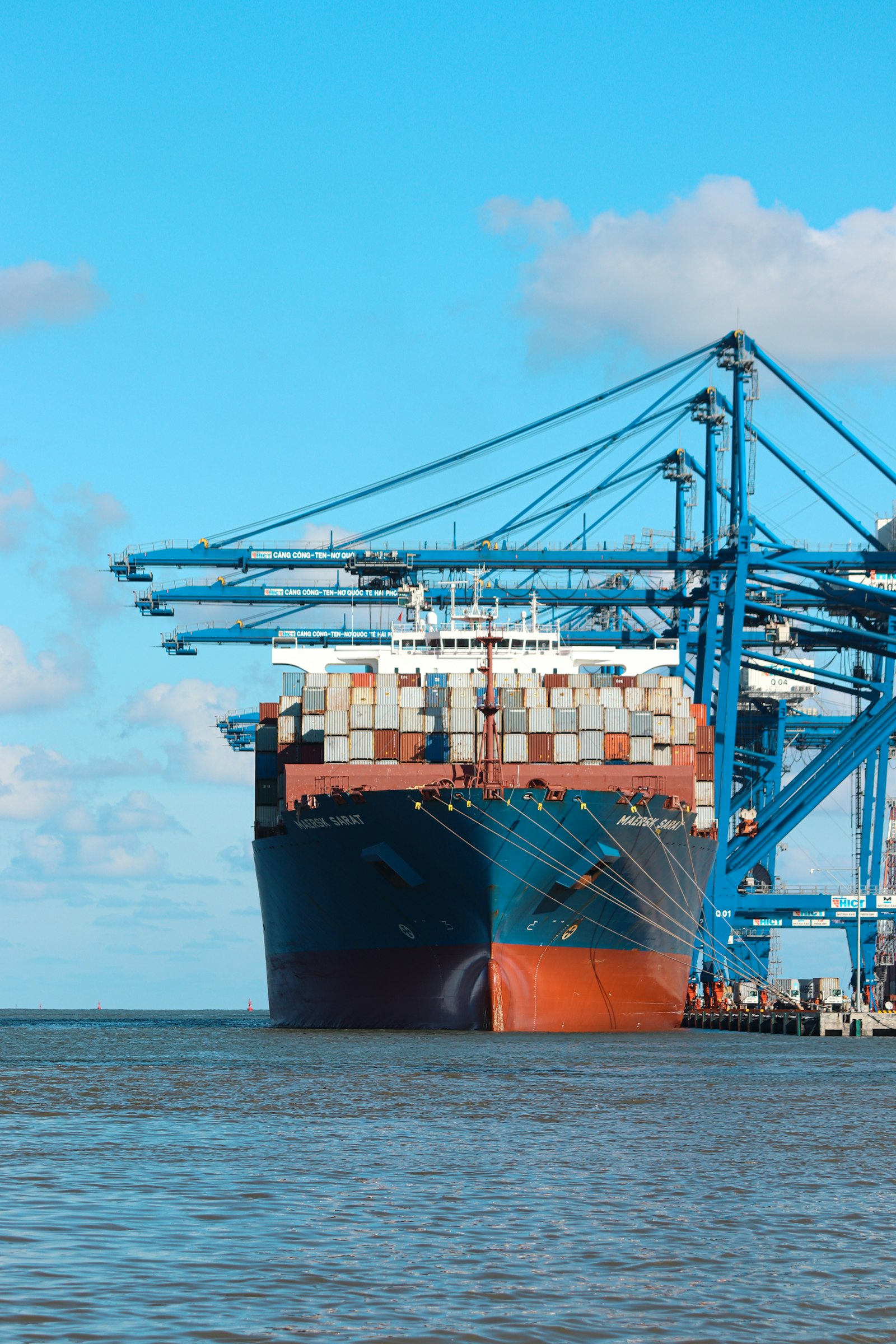
A freight forwarder from Vietnam to the USA books the cargo out of Cai Mep-Thi Vai, Cat Lai (Ho Chi Minh City), Hai Phong or a Vietnamese airport, files the ISF before loading, and delivers after US customs entry. Ocean is the default for furniture, footwear and apparel volumes; air suits samples, electronics and urgent replenishment. Vietnam has no free trade agreement with the United States, so duty depends on the HTS code, any additional US duties in force and any AD/CVD order.
Looking for a freight forwarder Vietnam to USA importers can rely on from the first purchase order to the final delivery? Vietnam is a core sourcing country for furniture, footwear, garments, electronics assembly and seafood. The route has its own rhythm: a southern cluster of deep-water terminals with direct transpacific calls, a northern gateway around Hai Phong, and a factory calendar dominated by Tet.
This guide covers what is specific to shipping from Vietnam to the USA: how long each mode takes, which port to load from, what your Vietnamese supplier files before the box leaves, and what you must have in place on the US side. For an instant door-to-door quote, use the ExFreight quote form.
Ocean and air from Vietnam: how long each mode takes
Vietnam to USA is a transpacific trade, so the real question is whether your cargo sails on a direct service from a southern port or is moved by feeder to a hub first. A direct sailing is typically on the water for about two to three weeks, and feeder routings, transshipment and port dwell add time on top. Treat the figures below as typical ranges and confirm the sailing before you commit to a ship-by date.
| Mode | Typical transit (origin port or airport to US gateway) | Best fit |
|---|---|---|
| Ocean FCL | Typically about 2 to 4 weeks port to port, depending on direct call versus feeder routing | Full container loads of furniture, footwear, apparel, housewares and bulky components |
| Ocean LCL | Port-to-port time similar to FCL plus consolidation at the origin CFS and deconsolidation in the US, so plan for several extra days | Pallet to few-pallet orders, new-supplier trial orders, mixed lots from one Vietnamese supplier |
| Air freight | Typically quoted in days rather than weeks airport to airport, plus handling at both ends | Samples, high-value electronics, replenishment when stock is about to run out, production-line parts |
Two practical points shape the choice. First, Vietnamese factories often cluster around Ho Chi Minh City, Binh Duong and Dong Nai in the south and around Hai Phong and Bac Ninh in the north, so the shorter the inland leg to the port, the more predictable the cut-off. Second, ocean space tightens around Tet and ahead of the US peak season, so buyers with a fixed in-store date often split an order between ocean and a smaller air release.
For full containers see FCL services; for smaller lots see LCL shipping and air freight.
Cai Mep, Hai Phong and Cat Lai: where Vietnamese cargo leaves for the US
Vietnam's container trade is split between a northern gateway, a river-port cluster in Ho Chi Minh City and a deep-water cluster on the Thi Vai river. For US-bound cargo the deep-water terminals matter most, because they take large vessels that can sail to the US West Coast without a feeder connection. A transpacific loop connecting Cai Mep, Busan and Long Beach was inaugurated at Cai Mep International Terminal in 2026, and a weekly loop serving Haiphong and Vung Tau for the US West Coast has also been reported.
| Origin gateway | Region served | Typical role on the US trade |
|---|---|---|
| Cai Mep-Thi Vai (Ba Ria-Vung Tau) | Ho Chi Minh City, Binh Duong, Dong Nai and the Mekong region | Deep-water terminals with direct US West Coast calls and services toward the East Coast; the main choice for large southern FCL volumes |
| Cat Lai (Ho Chi Minh City) | Southern factories and CFS operations in the city | Southern river-port hub for Ho Chi Minh City containers and CFS operations |
| Hai Phong | Hanoi, Bac Ninh, Hai Duong and northern industrial parks | Northern gateway for electronics and garment clusters; some US-bound cargo is routed by feeder or moved south |
| Noi Bai (Hanoi) and Tan Son Nhat (Ho Chi Minh City) airports | North and south respectively | Main international air cargo airports in the north and south |
US gateways for Vietnam cargo
Los Angeles and Long Beach are the natural first call for transpacific boxes, with Oakland, Seattle and Tacoma as alternatives. East Coast delivery is possible by US inland movement from the West Coast or by a direct service to the East Coast. If the destination is far from the coast, ask your forwarder to price the discharge port and the US trucking together.
Vietnam export clearance: VNACCS/VCIS e-declarations and what your supplier files
Your Vietnamese exporter is the legal declarant on the Vietnam side, normally through a customs broker. Export declarations are filed electronically on VNACCS/VCIS, the automated customs clearance and risk management system that Vietnam Customs rolled out nationwide from 2014 with Japanese grant support and a design based on Japan's NACCS. The system also handles e-manifests and e-payment, and a 2014 trade report noted that the export declaration was expanded from 27 to 109 data fields.
- Commercial invoice and packing list that match the declaration line by line: HS code, quantity, value and gross weight.
- Export declaration filed in VNACCS/VCIS with the customs office at the port or inland clearance depot; the declaration number is the reference your forwarder needs for container gate-in.
- Sector permits where relevant. Imports and exports in Vietnam must be inspected by competent agencies before customs clearance, so food, plant and wood products carry extra paperwork that the supplier must secure.
- Bill of lading or air waybill instructions that reflect the US importer of record, notify party and the ISF data the importer has supplied.
Ask your supplier for the VNACCS declaration number and the cleared status before the vessel cut-off. Cargo gated in without a cleared declaration is the most common reason a Vietnamese container misses its sailing.
Because there is no US trade agreement to claim, a certificate of origin does not set the duty, but your supplier's origin statements must still match what you declare to CBP. Vietnam Customs and a licensed Vietnamese customs broker remain the authority for export procedure details, which change by commodity.
Importing from Vietnam: no FTA, extra duties and AD/CVD traps
Every ocean shipment to the US needs an Importer Security Filing, the ISF 10+2, transmitted at least 24 hours before the cargo is loaded at the Vietnamese port. A late or inaccurate filing can draw liquidated damages of $5,000 per violation, so the data must be ready before the booking, not after. Our ISF guide lists the ten importer data elements and the two carrier elements.
After arrival the cargo needs a customs entry and a correct HTS code, and formal entries usually need a customs bond. Learn how US customs entry works, and settle classification early with the HTS classification guide.
Trade-program position
The United States and Vietnam trade under the 2001 bilateral trade agreement and Vietnam's WTO membership, not under a free trade agreement, so Vietnamese goods pay the normal HTS duty rate unless another measure changes it. Additional US duties on top of the HTS rate change often: Section 232 duties on steel, aluminum and certain derivatives, Section 301 where it applies, and temporary measures. The IEEPA reciprocal tariffs were struck down by the Supreme Court in February 2026, and a 2025 US-Vietnam trade framework was announced. We quote no rates here: check current CBP CSMS messages and HTSUS Chapter 99 before you price an order.
Products with AD/CVD orders from Vietnam
Antidumping and countervailing duty orders are product and country specific, and they sit on top of ordinary duty. Orders on Vietnam include, for example, certain frozen fish fillets (the pangasius and basa trade) and certain frozen warmwater shrimp. Look up your product on the International Trade Administration AD/CVD case list for current scope and cash deposit status; our AD/CVD importer guide explains how deposits and reviews work.
What moves the freight bill on Vietnam shipments, from Tet to inland trucking
We do not publish rate ranges because the lane moves with the market, but these are the factors that decide what a Vietnam to USA quote looks like:
- Mode and routing. A direct deep-water call and a feeder-plus-mainline routing price differently, and so do air routings with and without a hub connection.
- Chargeable weight versus volume. Furniture and flat-packed goods fill cubic space before they reach weight limits, so carton design and container fill matter.
- Origin inland haul. Trucking from a factory in Binh Duong to Cai Mep is a different cost from a northern factory to Hai Phong, and congested approach roads add waiting time.
- Tet, the Lunar New Year. Factories close for days or weeks, space tightens before the holiday and output restarts slowly afterward, so cargo is often shipped early or compressed into the weeks around it.
- US peak season and port congestion. Late-summer and autumn demand, plus congestion at West Coast terminals, affect space, equipment and detention exposure.
- Duties and tariffs. HTS duty, any additional US duties, any AD/CVD cash deposit and the merchandise processing fee are paid at import, not on the freight invoice, but they belong in the landed cost.
- Add-ons. ISF filing, customs brokerage, cargo insurance and US delivery.
Booking Vietnam to USA freight with ExFreight
ExFreight Zeta Inc. has been in business since 2006. For a Vietnam purchase order, the useful part is seeing the whole move before you commit to the supplier's ship date:
- Price the split. Instant door-to-door rating between North America and 150+ countries lets you compare ocean FCL, LCL and air from the same Vietnamese pickup, which matters when a Tet deadline forces a part-air, part-ocean order.
- Estimate the duty side. The Global Duty and Tax Calculator gives estimates in 150+ countries, so the extra US duties on a Vietnamese HTS code do not surprise you after the order is placed.
- Add brokerage and insurance at booking. Customs brokerage can be added for the entry, and cargo insurance is offered at the time of booking.
- Follow the box. Map-based tracking with email status alerts covers air and ocean, and your invoice, packing list and bill of lading are uploaded and stored online.
- Finish the trip in the US. LTL and FTL trucking move cargo from the discharge port to your door, and Amazon FBA deliveries go to US fulfillment centers.
- Reach a person in US hours. Customer service is US-based and online from 8:00 AM to 8:00 PM EST.
Ready to compare? Request your Vietnam to USA quote.
Vietnam to USA shipping questions answered
How long does shipping from Vietnam to the USA take?
Ocean port-to-port is typically about 16 to 30 days depending on whether the vessel calls direct from Cai Mep or routes via a feeder, plus origin pickup, export clearance and US delivery. Air is typically a few days airport to airport.
Which Vietnamese port is best for US-bound cargo?
For southern factories, Cai Mep-Thi Vai usually offers the most direct US calls. For northern factories, Hai Phong is the practical gateway, and some importers truck northern cargo south for better schedules. The right port depends on the factory location and the sailing you need.
Do I need an ISF for cargo from Vietnam?
Yes, for ocean cargo. The ISF must be transmitted at least 24 hours before loading at the Vietnamese port, and violations can carry $5,000 in liquidated damages per violation.
Is there a free trade agreement between Vietnam and the US?
No. Vietnam goods pay the HTS duty for their classification, plus any additional US duties or AD/CVD duties that apply to the product.
Which Vietnamese products face antidumping duties in the US?
Documented orders include certain frozen fish fillets, certain frozen warmwater shrimp, among others. Look up your product on the ITA AD/CVD case list.
What does my Vietnamese supplier need to do to export?
File the export declaration through Vietnam's VNACCS/VCIS system, usually via a customs broker, issue a matching commercial invoice and packing list, and obtain any sector permits for regulated goods.
How does Tet affect shipping from Vietnam?
Factories close and restart slowly, and space tightens beforehand. Plan production and booking weeks ahead of the holiday and confirm your supplier's restart date.
Can ExFreight ship Vietnam goods to Amazon FBA?
Yes. ExFreight handles ocean and air from origin and delivers to US Amazon fulfillment centers, with customs brokerage available as an add-on.
Transit times are typical ranges and can change. Duties, tariffs and rules change: confirm current requirements with CBP and your customs broker before you ship.
