Skip to content

If you are new to freight shipping, the terminology can be confusing. Shipping lines and carriers are terms that often get used interchangeably, but they refer to different things in the logistics world. Understanding the distinction helps you make better decisions about how to move your goods, who to negotiate with, and how to structure your supply chain.
This guide breaks down the differences between shipping lines, carriers, and freight forwarders — and explains how they work together to move your cargo from origin to destination.
What Are Shipping Lines?
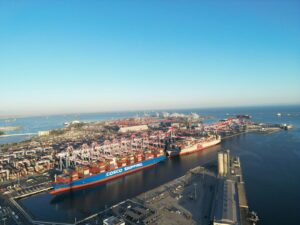
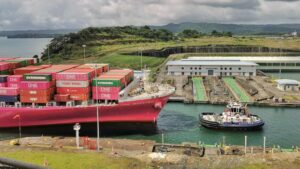
Shipping lines are companies that own and operate vessels for transporting cargo by sea. They manage fleets of container ships, tankers, bulk carriers, and specialized vessels that move goods between ports worldwide.
Major shipping lines include:
- Maersk Line — The world’s largest container shipping company
- MSC (Mediterranean Shipping Company) — Second largest, extensive global network
- CMA CGM — French shipping giant with strong Asia-Europe routes
- COSCO Shipping — China’s state-owned carrier, dominant in Pacific trade
- Hapag-Lloyd — German carrier with premium service focus
- Evergreen Marine — Taiwan-based, significant transpacific presence
- ONE (Ocean Network Express) — Japanese alliance of three former carriers
Shipping lines provide scheduled services on fixed routes (called trade lanes), publish their own tariffs, and sell cargo space either directly to large shippers or through freight forwarders.
What Are Carriers?
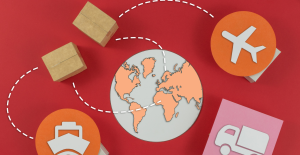
Carrier is a broader term that encompasses any company that physically transports goods — by sea, air, road, or rail. In this sense:
- A shipping line is a carrier (ocean)
- An airline that transports cargo is a carrier (air)
- A trucking company is a carrier (road)
- A railroad is a carrier (rail)
So all shipping lines are carriers, but not all carriers are shipping lines. The term “carrier” applies across all transport modes.
Shipping Lines vs Carriers: Key Differences
| Aspect | Shipping Lines | Carriers (General) |
|---|---|---|
| Transport mode | Ocean only | Ocean, air, road, rail |
| Asset ownership | Own/operate vessels | Own/operate transport assets for their mode |
| Service type | Port-to-port (ocean) | Varies by mode — terminal-to-terminal, door-to-door |
| Pricing | Per container (FCL) or per CBM (LCL) | Per kg, per mile, per container — depends on mode |
| Booking | Through freight forwarders or direct (large volume) | Direct or through brokers/forwarders |
| Examples | Maersk, MSC, CMA CGM | FedEx (air), JB Hunt (trucking), Maersk (ocean) |
Where Do Freight Forwarders Fit In?
A freight forwarder is neither a shipping line nor a carrier (in most cases). Freight forwarders are intermediaries that organize and coordinate shipments on behalf of shippers. They:
- Book cargo space with shipping lines and carriers
- Negotiate rates by consolidating volume from multiple customers
- Handle documentation — bills of lading, commercial invoices, customs declarations
- Manage customs clearance at origin and destination
- Coordinate multimodal transport — combining ocean, air, and ground as needed
- Provide cargo insurance and risk management
Think of freight forwarders as the architects of your supply chain, while shipping lines and carriers are the builders who physically move the goods.
Why the Distinction Matters for Your Business
Negotiating Rates
If you ship high volumes, you may negotiate directly with shipping lines for ocean freight contracts. For most businesses, however, a freight forwarder will secure better rates through their aggregated buying power.
Liability and Insurance
Carriers are liable for cargo while it is in their physical possession (governed by the Hague-Visby Rules for ocean freight). Freight forwarders have different liability structures — they may act as agents (limited liability) or as principals (NVOCC — Non-Vessel Operating Common Carrier), which affects your insurance needs.
Service Scope
Shipping lines handle port-to-port movement. If you need door-to-door service — including inland trucking, customs clearance, and last-mile delivery — you need either a freight forwarder or a carrier that offers integrated logistics (like Maersk’s end-to-end services).
Types of Ocean Freight Services from Shipping Lines
FCL (Full Container Load)
You rent an entire container (20ft or 40ft). Best for large shipments where you can fill most of the container. You control what goes inside, reducing damage risk from co-loading.
LCL (Less than Container Load)
Your cargo shares a container with other shippers’ goods. Best for smaller shipments that do not justify a full container. Pricing is per cubic meter (CBM). Transit times are slightly longer due to consolidation and deconsolidation at CFS (Container Freight Stations).
Reefer (Refrigerated) Containers
Temperature-controlled containers for perishable goods — food, pharmaceuticals, chemicals. Shipping lines charge a premium for reefer service, and specific temperature requirements must be declared at booking.
How Shipping Lines Set Their Rates
Ocean freight rates from shipping lines are influenced by:
- Supply and demand: Available vessel capacity vs. cargo volume on each trade lane
- Fuel costs (bunker prices): Reflected in the Bunker Adjustment Factor (BAF)
- Port charges: Terminal Handling Charges (THC) vary by port
- Seasonal factors: Pre-Chinese New Year and pre-holiday peaks drive rates up
- Geopolitical events: Route disruptions (e.g., Red Sea diversions) affect capacity and costs
- Alliance dynamics: The three major shipping alliances control most global capacity
Shipping Alliances: How They Affect Your Rates
Most major shipping lines operate within alliances that share vessel capacity:
- 2M Alliance: Maersk + MSC
- Ocean Alliance: CMA CGM, COSCO, Evergreen, OOCL
- THE Alliance: Hapag-Lloyd, ONE, Yang Ming, HMM
These alliances control approximately 80% of global container shipping capacity. For shippers, this means rates are influenced not just by individual carriers but by alliance-level capacity decisions.
Best Practices for Working with Shipping Lines and Carriers
- Work with a freight forwarder: Unless you ship thousands of containers annually, a forwarder like ExFreight will get you better rates and handle the complexity
- Book early: Especially during peak season (August-October for Asia-US trade), space fills up fast
- Understand your Incoterms: Know whether you are responsible for ocean freight (FOB) or the seller handles it (CIF/DDP)
- Get all-in pricing: Ask for quotes that include all surcharges — BAF, THC, ISPS, documentation fees
- Diversify carriers: Do not rely on a single shipping line. Alliances can restructure, schedules can change
- Ensure proper documentation: Have your Bill of Lading, commercial invoice, packing list, and customs forms ready before the vessel sails
How ExFreight Connects You with the Right Carriers
ExFreight’s digital platform gives you access to rates from multiple shipping lines and carriers — all in one place. Whether you need FCL ocean freight, LCL consolidation, air freight, or domestic trucking, the platform provides:
- Instant rate comparison across carriers
- Online booking with automatic documentation
- Real-time tracking with milestone alerts
- Cargo insurance options at booking
- Customs brokerage at origin and destination
Frequently Asked Questions
What is the difference between a shipping line and a freight forwarder?
A shipping line owns and operates vessels that physically transport cargo by sea. A freight forwarder is an intermediary that organizes the shipment — booking space with shipping lines, handling documentation, customs clearance, and coordinating multimodal transport. Most businesses work with freight forwarders rather than directly with shipping lines.
Can I book directly with a shipping line?
Yes, but shipping lines typically offer direct booking only for high-volume shippers (usually 100+ containers per year). For most businesses, booking through a freight forwarder like ExFreight provides better rates and more comprehensive service.
How long does ocean freight shipping take?
Transit times depend on the route. China to US West Coast takes 12-18 days, China to US East Coast takes 25-35 days, Europe to US East Coast takes 10-14 days, and Asia to Europe takes 30-40 days. Add 3-7 days for port handling and customs clearance on each end.
What is a Bill of Lading?
A Bill of Lading (BOL or B/L) is a legal document issued by the carrier or their agent that serves three purposes: it is a receipt for the cargo, a contract of carriage, and a document of title. You need the original Bill of Lading to claim your goods at the destination port.
Is ocean freight cheaper than air freight?
Yes, significantly. Ocean freight typically costs $1-3 per kg on major routes, while air freight costs $3-8 per kg. However, ocean freight takes 2-6 weeks compared to 3-7 days for air freight. The choice depends on your urgency, cargo value, and budget.
What is an NVOCC?
A Non-Vessel Operating Common Carrier (NVOCC) is a freight forwarder that issues its own Bill of Lading and assumes carrier liability, even though it does not own vessels. NVOCCs buy space from shipping lines in bulk and resell it to shippers, often at competitive rates.