Skip to content

European freight in 2026 is shaped by four hard variables: the definitive phase of the Carbon Border Adjustment Mechanism (CBAM), the full inclusion of maritime emissions in the EU Emissions Trading System, a shortage of ~400,000 truck drivers across the bloc, and the sustained Asia trade rerouting around the Cape of Good Hope. Shippers moving Full Truckload (FTL), Less Than Truckload (LTL), and ocean containers in or out of the EU now plan around compliance costs, driver economics, and route reliability as much as the per-kilometer rate.
Regulation: CBAM, ETS Maritime, and EUDR Are Operational
The Carbon Border Adjustment Mechanism entered its definitive period in January 2026. Importers of cement, iron and steel, aluminium, fertilisers, electricity, and hydrogen must surrender CBAM certificates that match the embedded emissions of those goods, priced against the weekly EU ETS auction average. The reporting-only window closed at the end of 2025, so any covered shipment in 2026 carries a real carbon cost on top of duty and VAT.
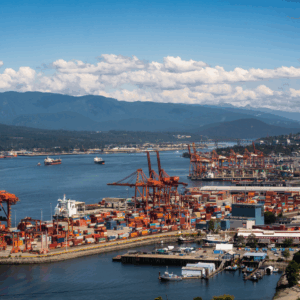
The EU ETS Maritime, in force since 2024, applies to 100 percent of in-scope emissions from 2026 for vessels above 5,000 gross tonnage. That covers nearly every container ship, ro-ro, and bulker calling EU ports. Carriers pass the cost through as ETS surcharges. Intra-EU voyages carry the full charge; legs between an EU port and a non-EU port carry 50 percent of voyage emissions.
The EU Deforestation Regulation (EUDR) became enforceable in December 2024 after a one-year postponement. Coffee, cocoa, soy, palm oil, cattle, wood, and rubber, plus a long list of derived products, cannot enter or leave the EU without a due diligence statement linking each consignment to geolocated plots proven deforestation-free after 31 December 2020.
Customs has tightened too. ICS2 phase 3, live since June 2024, requires complete advance cargo information for road and rail traffic entering the EU. Brexit friction has not faded: UK-EU customs declarations remain mandatory in both directions, and the UK Border Target Operating Model continues to phase in checks on EU-origin food and plant products.
The Mobility Package and the Driver Shortage
The EU Mobility Package, fully phased in by 2024, governs driver rest periods, posted-worker rules, and the requirement that vehicles return to their country of establishment every eight weeks. The return-to-base rule has reshaped Eastern European fleet planning: Polish, Romanian, and Lithuanian carriers that previously stayed semi-permanently on Western corridors now run scheduled repositioning legs, removing some capacity from the spot market.
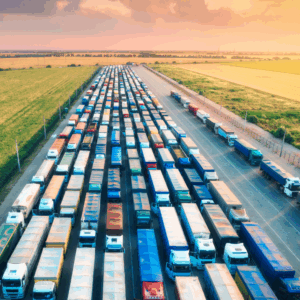
The International Road Transport Union estimates a shortfall of about 400,000 professional drivers across the EU in 2026, concentrated in Germany, France, Italy, Poland, and Spain. Average driver age in several large markets is above 47 and replacement rates remain insufficient. The effect on FTL pricing is a floor that resists discounting even in soft demand quarters.
The e-CMR protocol, aligned with UN/CEFACT Recommendation 47, is now ratified by most EU member states and used routinely by digital-first carriers, customs, and insurers.
FTL Rates and Corridor Economics in 2026
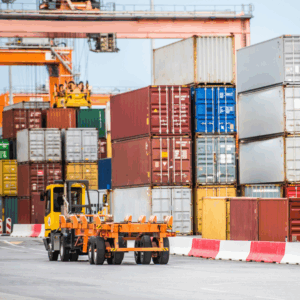
Average FTL spot rates in Western Europe sit between EUR 1.30 and EUR 1.80 per kilometer in 2026, depending on lane, equipment, and seasonality. Germany, France, the Netherlands, and Northern Italy fall inside that band. Eastern European corridors (Poland-Germany, Czech Republic-Italy) run more competitively at EUR 0.95 to EUR 1.30 per kilometer thanks to lower carrier cost bases, though Mobility Package compliance has narrowed the gap compared to 2022.
Contract rates have largely converged with spot rates after the 2022-2024 normalization. Long-term agreements now include fuel-index clauses, ETS Maritime pass-through where relevant, and carbon-cost adjustments tied to CBAM certificate prices. Spot now reflects real operational cost plus a thin margin.
For shippers comparing FTL with LTL, the 2026 decision criteria go beyond cost per kilometer: volume, density, urgency, value, and carbon footprint per consignment all enter the calculus. ExFreight’s freight services cover trucking and ocean freight, with rate engines that calculate density and chargeable weight automatically.
Technology: Visibility, Matching, and Electric Trucks
Real-time visibility platforms are now standard on most cross-border European lanes. project44, Shippeo, and FourKites lead the market, with carrier integrations covering the great majority of asset-based fleets in Germany, France, Benelux, Iberia, and Italy. Shippers expect ETA accuracy within 30 minutes on linehaul movements.
Digital freight matching has matured into core infrastructure. sennder operates as one of the largest digital road carriers in Europe; Trans.eu and Saloodo continue to scale; and incumbent telematics providers have built their own marketplaces. The result is faster cycle times on spot tenders and tighter price discovery, which compresses brokerage margins on commodity lanes.
Electric trucks are no longer pilots. The Volvo FH Electric, the Daimler eActros 600, and the MAN eTruck run scheduled service on corridors up to about 500 kilometers between charges, mostly in Germany, the Netherlands, France, and northern Italy where megawatt-charging exists. Total cost of ownership versus diesel improves once CBAM, ETS Maritime, and CO2-weighted road taxes are factored in.
Megatrailers and 25.25-meter European Modular System combinations have continued to expand under Performance-Based Standards rules, with more countries opening cross-border PBE corridors. For high-cube low-weight cargo, EMS cuts per-pallet cost meaningfully on the right lane.
Red Sea Rerouting Still Drives EU-Asia Lanes
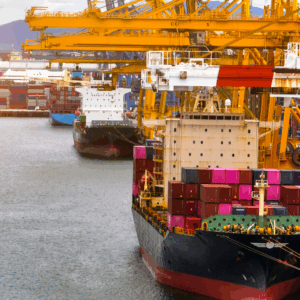
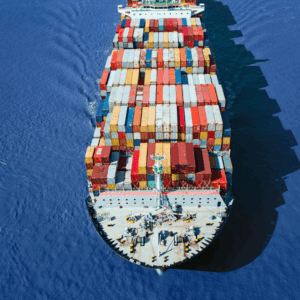
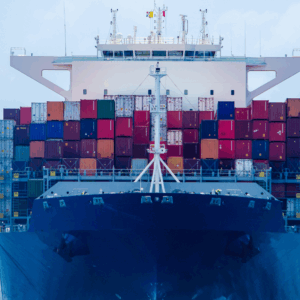
Red Sea disruption remains the dominant variable on EU-Asia ocean lanes in 2026. Most major container alliances continue to route via the Cape of Good Hope rather than the Suez Canal, adding 7 to 14 days of transit and consuming additional vessel capacity. Schedule reliability has stabilized at a lower baseline than pre-2024, and ETS Maritime surcharges sit on top of the longer voyage. Mediterranean transshipment hubs (Algeciras, Valencia, Piraeus, Gioia Tauro) have absorbed extra volume; the rate mechanics are covered in port congestion and capacity constraints.
Trade-policy volatility outside the EU also feeds back into European volumes. United States tariff actions have rerouted some flows; the effect on European exporters is set out in the analysis of U.S. tariffs and freight rates. For Germany-to-United States lanes, documentation and transit options are detailed in the complete guide to shipping from Germany to the USA.
What Shippers Should Plan For in 2026
Three planning items separate well-prepared shippers from the rest. First, treat CBAM and ETS Maritime as line items in the landed-cost model rather than annual surprises. Second, build buffer into European road lanes for Mobility Package return-to-base and driver-rest constraints, especially for Friday-to-Monday transit windows. Third, demand real-time visibility and electronic proof of delivery on every cross-border move, because the documentary load from CBAM, EUDR, and ICS2 makes paper workflows uneconomical.
The European freight market is not in crisis in 2026. It is more regulated, more digital, and more priced-in than it was in 2022. Shippers who understand which lanes carry which cost can still buy reliable capacity at fair rates.
Frequently Asked Questions
Is CBAM live in 2026?
Yes. The definitive period started in January 2026. Importers of cement, iron and steel, aluminium, fertilisers, electricity, and hydrogen surrender CBAM certificates priced against the EU ETS weekly auction average for the embedded emissions of each consignment.
How much does ETS Maritime add to ocean freight in 2026?
ETS Maritime applies to 100 percent of in-scope emissions for vessels above 5,000 GT. Carriers pass the cost through as a surcharge that varies by lane and EUA price. Intra-EU voyages carry the full charge; EU to non-EU legs carry 50 percent.
Why are FTL rates higher in Western than in Eastern Europe?
Western European carriers face higher driver wages, fuel taxes, and tolls. Eastern carriers run lower cost bases, although Mobility Package return-to-base and posted-worker rules have narrowed the gap. Spot FTL: Western Europe EUR 1.30 to EUR 1.80 per km; Eastern corridors EUR 0.95 to EUR 1.30 per km.
Are electric trucks a real option for cross-border European freight?
Yes, on corridors up to roughly 500 km per leg with megawatt charging available. The Volvo FH Electric, the Daimler eActros 600, and the MAN eTruck run scheduled service in Germany, the Netherlands, France, and northern Italy.
Does Brexit still affect EU freight in 2026?
Yes. UK-EU customs declarations remain mandatory in both directions, and the UK Border Target Operating Model continues to phase in checks on EU-origin food and plant products.
How long is the Cape of Good Hope detour adding to EU-Asia transit?
Most major container services routing via the Cape rather than the Suez Canal add 7 to 14 days, with ETS Maritime surcharges on top.