

 December 2025 Freight Forwarder Market Outlook: What Shippers Should Know
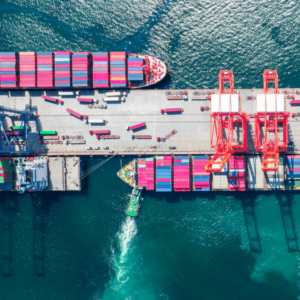
The end of the year represents a critical moment to understand the evolution of the freight forwarder, freight shipping, and logistics services sectors, especially in a global environment where supply and demand patterns no longer follow traditional cycles and where regulatory, climatic, operational, and geopolitical pressures intersect to redefine stability in the logistics market. In this extensive and deeply specialized analysis, we examine how the behavior of the international transportation market transforms during December, a period in which dynamics of capacity contraction, strategic operational adjustments, distribution network reconfiguration, and rising demands on supply chain resilience converge. The purpose is to offer a comprehensive perspective that enables logistics decision-makers, freight forwarders, and logistics services providers to anticipate risks, interpret emerging trends, and design action strategies that strengthen operational performance before entering the next commercial cycle. Throughout the text, advanced technical fundamentals related to freight companies, international logistics, freight transportation, ocean freight, air freight, logistics management, international freight services, freight service, less than truckload (LTL) shipments, and freight quote are integrated to provide a high-value analysis aligned with the real needs of professionals who require substantiated decision-making rather than superficial generalities.
General Overview of the Freight Forwarder Market in December
In December, the freight forwarding market presents a complex interaction between reduced operational capacity, seasonal pressure, variability in resource allocation, and tactical adjustments that both carriers and freight companies implement to balance profitability and contractual obligations. Although it is a period in which the bulk of priority cargo has already moved in previous weeks, the final window of the year concentrates challenges related to irregular availability of equipment, the need for freeze protection, rerouting of logistics networks due to climatic conditions, and particularly sensitive regulatory requirements in high-value sectors. Logistics management departments observe how the apparent stability of demand conceals structural tensions such as the reassignment of fleets, temporary suspension of services in regions experiencing severe weather, and dependence on critical infrastructure subject to holiday closures. The impact on international logistics magnifies in supply chains operating with reduced temporal margins or requiring absolute documentary precision to avoid customs holds and unexpected costs.
 Ground freight transportation experiences added challenges due to fewer daylight hours in regions with shorter days, compromising transit speed, driver availability, and equipment rotation, especially for long-haul services. Companies relying on ocean freight face additional limitations associated with itinerary recalibration, terminal congestion, and container redistribution, while air freight becomes a tactical alternative for time-sensitive cargo, albeit at higher costs and with reduced scheduling elasticity. These dynamics underscore the importance of working with experienced international ocean freight forwarders and logistics experts who can provide competitive pricing and efficient delivery solutions.
Advanced Capacity Dynamics in December
Equipment utilization patterns are heavily influenced by seasonality combined with adverse weather conditions. The market observes that available capacity does not disappear solely due to volume but also through strategic decisions by operators to prioritize lower-risk routes, optimize energy-related expenses, and reduce exposure to incidents. For the categories of cargo dependent on thermal integrity, temperature-controlled equipment becomes a critical resource. Its demand increases not only for perishables but also for industrial goods sensitive to freezing that normally do not require protection in other seasons. This phenomenon alters availability in key corridors and forces freight service users to plan further in advance to avoid disruptions.
At the same time, open-deck services experience a marked contraction because securement, tarping, and handling operations require stable weather, something December rarely provides. Many operators temporarily migrate to dry van services to ensure stable revenue and minimize incidents, reducing real availability for industrial projects or specialized moves. Operational complexity increases further for oversized shipments, where permits, time-of-day restrictions, and geographical limitations significantly narrow operational windows. In these cases, the expertise of the freight forwarder becomes essential for coordinating state regulations, assessing climate risks, and adjusting timelines without compromising project integrity.
International Market Behavior and Its Impact on Freight Shipping
The ecosystem of international freight services in December presents conditions that require a deep understanding of global dynamics. Geopolitical fluctuations force diversions, extend transit times, and require operators to adopt alternatives that affect not only cost but also service predictability. Demand that remains steady in ocean freight often redistributes across less congested ports, but this does not eliminate the pressure placed on associated inland infrastructure, especially where chassis, tractors, or intermediate storage are limited.
Air freight absorbs a portion of this volatility, serving as a mitigation method for urgent or temperature-sensitive shipments. However, air capacity in December frequently undergoes strategic reallocations by airlines that prioritize higher-yield cargo, forcing shippers to negotiate with heightened precision and flexibility. The freight quote across all modes reflects these variations, and although no numerical figures are presented, it is common for pricing behavior to respond more to micro-operational factors than to visible global trends, requiring case-by-case analysis from logistics procurement teams.
Role of Freight Forwarders and Logistics Services Providers in December
Freight forwarders act as logistics experts coordinating shipments through multiple carriers and modes, including ocean freight forwarders, air freight, rail, and trucking. They offer an end-to-end process that includes freight consolidation, cargo insurance, customs brokerage, and  documentation management to streamline operations and ensure reliable delivery to the final destination.
Logistics services providers also offer additional services such as inventory management, warehousing, and order fulfillment, which are critical for maintaining supply chain efficiency during the high-demand holiday season. Their expertise in managing less than truckload (LTL) shipments and full truckload (FTL) freight, combined with technology-enabled tracking and real-time visibility, enhances customer satisfaction by providing timely and accurate updates.
Strategic Recommendations for Shippers in a High-Complexity Market
To navigate the December Freight Market Outlook effectively, shippers must prioritize actions based on advanced analysis rather than historical cycles. The first action is to plan with greater anticipation than usual, considering not only equipment availability but also operational restrictions tied to schedules, closures, and weather phenomena. The second is to strengthen communication with freight forwarders, who possess consolidated visibility of market conditions and can adjust routes, modes, and capacity strategies without jeopardizing cargo flow.
 The third is to evaluate multimodal alternatives, integrating ocean freight, air freight, and specialized ground transportation to ensure continuity. The fourth is to establish rigorous documentation verification processes, since December typically brings higher incidents linked to errors, omissions, or inconsistencies that trigger customs delays. The fifth is to analyze regulatory, weather-related, and operational risks through formal matrices that allow shippers to anticipate extraordinary costs, transit disruptions, or last-minute restrictions.
The sixth is to review contractual exposure and consider renegotiations that provide added flexibility in the face of unexpected changes. The seventh is to implement real-time visibility systems that enable monitoring of diversions, congestion, and resource availability. Together, these measures strengthen operational resilience and mitigate volatility associated with the end of the year, supporting a successful ecommerce business and ensuring efficient delivery.
ExFreight Frequently Asked Questions
Which documents are required to ship internationally?
To execute an international shipment, at minimum a commercial document accurately describing the goods is required, along with a packing list detailing contents, weights, and characteristics of the cargo. Additionally, a Shipper’s Letter of Instruction is necessary if the exporter has not completed the corresponding declaration during the booking process. Depending on destination country and commodity type, additional documents may be required to ensure customs compliance and prevent delays or unexpected costs.
Which trucking services does ExFreight offer?
ExFreight offers partial-load services known as less than truckload (LTL) or groupage, full truckload (FTL) services, and intermediate options designed for high-volume shipments within the United States, Canada, and Europe. The pricing structure is based on densities and technical metrics such as volumetric calculations, cubic capacity, and linearity, eliminating the need for complex calculations by the customer and ensuring that generated rates align with each carrier’s operational limits.
What are destination terminal fees and when do they apply?
Destination terminal fees are charges required for unloading, handling, and processing cargo upon arrival at the final maritime or air terminal. When a shipment is contracted under a door-to-port modality, these fees are not included and must be paid by the consignee, who must  also manage customs clearance and inland delivery coordination. In some cases, these charges may exceed the cost of primary transport, especially in consolidated shipments. In door-to-door services offered by ExFreight, these fees are included in the total rate, preventing surprises and simplifying logistics management.
The December Freight Market Outlook for the logistics sector requires a deep technical interpretation that anticipates the effects of weather changes, operational restrictions, capacity redistribution, and variability in global service reliability. For those managing freight forwarders, freight shipping, and logistics services, December represents a turning point in which strategic planning, operational adaptability, and specialized analysis determine the stability of cargo flow. Understanding structural market tensions, applying advanced management criteria, and strengthening coordination with logistics partners enables organizations to navigate an environment where predictability depends not on historical cycles but on well-informed decision-making.

Leave A Comment
You must be logged in to post a comment.