Skip to content


On Nov. 7, U.S. Central Command (CENTCOM) said its forces disabled the bulk carrier Huda in the Gulf of Oman. The ship was attempting to leave the region after calling at an Iranian port. The same week, tankers were hit or set ablaze close to the Strait of Hormuz, according to the Joint Maritime Information Center (JMIC).
What happened to the Huda
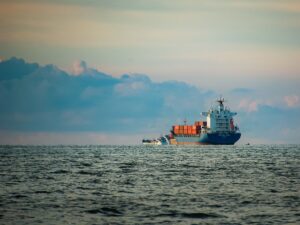
CENTCOM stated that the Huda’s crew ignored repeated warnings and tried several times to get around the U.S. naval blockade of Iran. The vessel sails under the flag of St. Kitts and Nevis. A U.S. military aircraft fired precision munitions at the ship’s stern. CENTCOM said the crew had first been told to leave the spaces that were targeted.
UKMTO logged the event under warning 198-26, roughly 18 nautical miles off Khor Fakkan on the UAE coast. When the report was written, the crew’s condition, the scale of the damage and any pollution risk were not known.
CENTCOM also gave enforcement totals since July. It said 147 commercial vessels were redirected after following U.S. instructions. Five merchant ships were disabled after they refused.
Tanker incidents near Khasab
JMIC’s Advisory Update 112, dated Nov. 8, recorded five more maritime security incidents. That brought its count to 177 since March 1. The center kept the regional threat level at SEVERE.
- Nov. 5: an outbound tanker reported an explosion on its port side at the waterline, about 16 nautical miles from Khasab, Oman. The crew was safe and the ship carried on. JMIC called it the fifth attack off the Musandam coast since Nov. 1.
- Nov. 7: a tanker roughly eight nautical miles northwest of Khasab was on fire and its crew was evacuated. The advisory did not establish the cause or the ship’s later condition.
- Nov. 7: a second tanker, outbound, was hit by an unidentified projectile in the strait. Everyone aboard was accounted for, and no environmental impact was reported.
JMIC counted two tanker attacks in this period, down from four in the one before. It also noted continued IRGC activity: surveillance of merchant ships, drone overflights and VHF calls aimed at vessels.
Traffic and anchorages
JMIC said independent tracking showed very low daily crossings of the strait (single digits to low double digits). U.S. Naval Cooperation and Guidance for Shipping data showed about 30 U.S.-facilitated transits a day from Nov. 5 to 7. The 2025 average was about 138 transits a day.
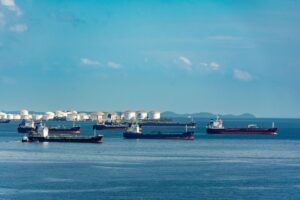
On Nov. 8, JMIC estimated 162 vessels were at anchor off Fujairah and Khor Fakkan. Another 46 were waiting near Musandam and Sohar. The center expects thin traffic and crowded anchorages to continue while the threat of attacks, military activity and limits on movements tied to Iranian ports remain.
JMIC also described an event in Bab el-Mandeb on Nov. 6. A merchant ship saw an unidentified radar target heading north toward Yemen with no apparent navigation lights. A large explosion followed near it, then a surface fire lasting over 30 minutes. No distress call was made, and the cause is unknown. JMIC recorded no confirmed attack on merchant ships in the southern Red Sea in the period and rates the threat there SUBSTANTIAL.
What it means for shippers
Cargo moving to, from or through the Gulf should be booked with the understanding that schedules can change quickly. With transits far below the 2025 average and a large number of ships waiting at anchor, delays at UAE and Omani ports are a practical risk. Our earlier report on IMO incident counts and Hormuz transit levels shows how long these conditions have lasted.
The Huda case shows that a vessel’s call at an Iranian port can bring enforcement action by U.S. forces. Importers and exporters should ask forwarders and carriers about vessel history and routing before cargo is committed. Check the commercial terms for war-risk surcharges, and confirm with your insurer what cargo coverage applies in these waters. Earlier surcharge and detention measures are described in our post on Maersk’s Hormuz update and line detention relief.
The attack pattern also deserves attention. Our coverage of the record weekly count of Hormuz tanker attacks tracked the earlier peak. The latest advisory shows fewer tanker attacks than in the prior period, yet the threat level has not changed. Shippers with cargo near the region should keep documents current and watch carrier advisories. For wider context on cost effects, see our explainer on how geopolitical tensions affect freight rates.