Skip to content


Next flight out (NFO) shipping is an urgent air freight service that books cargo on the first available commercial flight after pickup, often delivering same day or overnight.
NFO is the fastest way to move freight that cannot wait for a scheduled consolidation or a truck. ExFreight books Next Flight Out for domestic U.S. and international shipments as part of its air freight service: a driver collects the freight, it is tendered directly to the airline on the earliest flight that can take it, and it is recovered at the destination airport for delivery. This page explains when NFO is worth the premium, how the timeline works, what drives the cost and what to have ready before you call.
Key takeaways
- NFO puts your freight on the earliest commercial flight with space, skipping consolidation and hub sorting, so door-to-door times are measured in hours rather than days.
- The airline’s cargo cut-off, not the departure time, decides which flight your freight makes. Domestic cut-offs commonly fall 60 to 120 minutes before departure.
- NFO is a best-effort booking. Weather, offloads and screening can push freight to a later flight, so delivery times are estimates, not commitments.
When to use next flight out
NFO costs more than any standard air or ground option, so it makes sense when the cost of waiting is higher than the freight bill. The common cases are:
- Production line down: a failed part, die or controller that stops a plant or a project site.
- Aircraft on ground (AOG) parts and urgent maintenance spares.
- Medical devices, surgical kits and lab equipment needed for a scheduled procedure.
- Trade show booths, retail launches and court or contract documents tied to a fixed date.
- Recovery of a missed truck or ocean delivery, when a customer order would otherwise be lost.
A simple test helps: add up what one more day of delay costs (idle labor, a missed contract penalty, an expedited replacement part, a lost customer order) and compare it with the difference between an NFO quote and a standard air quote. If the delay costs more, NFO pays for itself. Shippers who face these situations often should also keep packaging, documents and commodity details for critical parts on file, so a quote can be issued in minutes instead of hours.
If the freight can arrive in two to five business days, standard domestic air freight or deferred air is usually the better value. If the distance is short, a dedicated truck may beat a flight once airport handling is counted; our guide to expedited trucking covers that option. NFO wins on long lanes, such as Miami to Seattle or Chicago to Frankfurt, where no truck can match the timeline.
How an NFO shipment moves, step by step
- Quote and booking. You share pickup and delivery addresses, the time the freight is ready, pieces, weight, dimensions and the commodity. The flight options are checked against airline cut-offs and the drive time to the origin airport.
- Pickup. A dedicated driver collects the freight and drives it straight to the airline’s cargo terminal, not to a cross-dock.
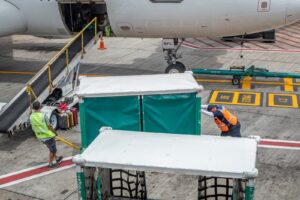
- Screening and tender. Cargo flying on passenger aircraft must be screened under TSA rules before it is loaded. The freight is tendered at the airline counter before the cut-off.
- Flight. The cargo flies on the booked flight, or on the next one with space if it is offloaded.
- Recovery and delivery. A driver recovers the freight at the destination airport once the airline makes it available, usually one to three hours after arrival, and delivers it to the consignee.
On international NFO, two more steps apply. Export data must be filed before departure (for U.S. exports, the electronic export information must be filed and the filing citation given to the airline no later than two hours before the scheduled departure under 15 CFR 30.4), and the cargo must clear customs at destination before delivery.
Cut-off times and typical timelines
Airlines publish a latest acceptance time for each flight. Freight that reaches the counter after it waits for the next departure, no matter how close the flight is. The ranges below are industry norms, not ExFreight commitments; each airline, airport and aircraft type sets its own.
| Service | Typical cargo cut-off | Typical door-to-door time | Best for |
|---|---|---|---|
| Domestic U.S. NFO (counter-to-counter) | 60 to 120 minutes before departure | Same day to next morning | Critical parts, medical, AOG |
| International NFO | 3 to 6 hours before departure, after export filing | 1 to 3 days, plus destination customs | Urgent exports and imports on long lanes |
| Standard domestic air | Afternoon of the ship day | 1 to 3 business days | Time-sensitive but not critical freight |
| Expedited truck (team or sprinter) | No airline cut-off | About 1,000 miles per 24 hours with a team | Short and mid-length lanes, oversize pieces |
Two factors stretch these ranges. Freight that arrives unscreened for a passenger flight needs screening time at the airport. And the last flight of the evening on many domestic lanes leaves before typical business closing times on the West Coast, so a 5:00 PM ET ready time in New York may still make a same-night flight, while a 5:00 PM PT ready time in Los Angeles to the East Coast often means a red-eye or a first-morning departure.
Airlines can offload cargo for weight and balance, weather, mechanical issues or a higher-priority load. When that happens the freight moves on the next available flight. Plan around the earliest realistic delivery, and treat the booked arrival as an estimate.
What drives the cost of next flight out
NFO pricing stacks several services that a standard shipment shares with other freight. Expect the quote to reflect:
- Dedicated pickup and delivery drivers, often after hours or on weekends.
- Airline counter-to-counter or priority rates, which are higher per kilogram than general cargo rates and carry minimum charges.
- Chargeable weight: the greater of actual and dimensional weight. Light, bulky boxes cost more than their scale weight suggests.
- Screening, security and fuel surcharges, plus any dangerous goods or special handling fees.
- For international moves, export filing, destination customs entry and destination charges.
The biggest lever on NFO cost is size. A single carton that fits the belly of a narrow-body aircraft has far more flight options than a pallet that needs a wide-body or a freighter. If the urgent item can be broken down or shipped without its pallet, ask for both options. The second lever is timing: freight ready early in the day has more departures to choose from, which usually means a lower rate and a better chance of same-day delivery.
Our breakdown of how air freight charges are calculated explains each line in detail. On international door-to-door bookings, a basic customs entry is included in the rate; duties, taxes, bonds, MPF and HMF are billed separately. Quotes are informational and subject to change; shipments can be re-invoiced if actual details differ.
What to have ready before you book NFO
Speed depends on clean information up front. Before you request a quote, gather:
- The exact time the freight is packed and ready, plus loading dock hours at both ends.
- Piece count, weight and dimensions of each piece, measured, not estimated. Airline counters re-weigh, and a wrong size can bump freight to a wider-body flight.
- A specific commodity description and its value. Lithium batteries, chemicals or other dangerous goods need declarations and limit the flights available.
- Consignee name, phone and a contact who will be there to receive, especially after hours.
- For exports: Schedule B or HTS codes, the commercial invoice and the details needed for the export filing.
Shippers who send freight on passenger aircraft regularly should also understand the TSA known shipper program. TSA requires 100% of cargo on passenger aircraft to be screened, and its air cargo programs control which shippers’ freight can be tendered to passenger flights. That widens or narrows the flights an NFO booking can use.
ExFreight’s U.S.-based chat support runs 8:00 AM to 8:00 PM ET. For an urgent shipment, send the full details through the quote form so the booking can start as soon as the options are confirmed.
Frequently asked questions
What does next flight out mean in shipping?
Next flight out means freight is picked up and tendered to the airline for the earliest commercial flight with space to the destination, without waiting for consolidation or hub sorting. A driver delivers it to the airport and another recovers it at destination, so door-to-door transit is often same day or overnight within the U.S.
How much does next flight out shipping cost?
NFO costs more than standard air freight because it combines dedicated pickup and delivery drivers with priority airline rates and minimum charges. Price depends on chargeable weight, distance, time of day, screening and any dangerous goods fees. Light domestic pieces cost the least; heavy, bulky or international NFO costs more.
Can a next flight out shipment miss its flight?
No. NFO books the earliest available flight, but airlines can offload cargo for weight and balance, weather or mechanical issues, and the freight then moves on the next flight with space. Delivery times are estimates. Plan around the earliest realistic arrival rather than treating the booked flight as certain.
What is the difference between next flight out and same day delivery?
Next flight out describes how freight moves: on the first available commercial flight. Same day delivery describes the result. A domestic NFO shipment picked up in the morning can deliver the same day, while a late pickup or long international lane can take one to three days even on the next flight out.
Can next flight out be used for international shipments?
Yes. International NFO works the same way but adds export filing before departure, longer airline cut-offs and customs clearance at destination. For U.S. exports, electronic export information must be filed and the filing citation given to the airline at least two hours before scheduled departure when filing is required.