Skip to content

The best freight forwarders in Dallas handle four things well: instant online quoting across modes, in-house US Customs Brokerage at the largest inland distribution hub in the southern US, real operational presence around DFW air cargo and the AllianceTexas intermodal complex, and trade lane depth that matches what Dallas-Fort Worth shippers actually move: Asia air, Asia ocean via intermodal rail, and cross-border Mexico trucking. This guide ranks six freight forwarders that Dallas-area importers and exporters shortlist most often, scored on quote speed, customs licensing, lane coverage, and pricing transparency. Get instant Dallas freight rates in seconds.
How we ranked these Dallas freight forwarders
Five criteria carry the most weight for Dallas shippers in 2026:
- Instant online quoting across modes. Can you get a binding rate for LTL, FTL, ocean FCL, ocean LCL, air freight, and international small parcel in seconds, without a sales call or registration?
- Licensed US Customs Brokerage. Does the forwarder hold its own US Customs Broker license, so a single vendor handles ISF 10+2, entry filing, and duty at the Dallas-Fort Worth inland port of entry (5501)?
- DFW air cargo, intermodal, and cross-border presence. Does the forwarder run real operations around DFW International and Fort Worth Alliance air cargo, the BNSF and Union Pacific intermodal terminals, and the Laredo cross-border gateway, or is “Dallas” just a sales address?
- Asia, Europe, and Mexico lane depth. Does the forwarder actively price the lanes Dallas shippers use most (Asia air via DFW, China to USA ocean via Houston and LA/Long Beach intermodal, cross-border USMCA trucking through Laredo, and Europe air)?
- Pricing transparency. Can a new shipper book without a meeting, a credit application, or a minimum monthly commitment?
For the full evaluation framework beyond Dallas, see our guide on how to choose a freight forwarder. If you are still mapping the difference between an NVOCC, a freight forwarder, and a customs broker, start with NVOCC vs freight forwarder vs customs broker.
Quick comparison: 6 Dallas freight forwarders
| Rank | Forwarder | Instant online quotes | In-house US customs broker | Best fit shipper |
|---|---|---|---|---|
| 1 | ExFreight | Yes (all modes, no registration) | Yes | SMB importer/exporter, 1-50 shipments/month, multi-mode |
| 2 | Expeditors | No | Yes | Mid-market and enterprise, air-heavy, named account |
| 3 | Kuehne+Nagel | SME platform only | Yes | Mid-market and enterprise, global multi-modal |
| 4 | DSV | No | Yes | Enterprise, full air/ocean/road, large DFW footprint |
| 5 | C.H. Robinson | Platform quoting (truck) | Yes | Truckload, LTL, intermodal, cross-border Mexico |
| 6 | Hub Group | No (intermodal) | No (uses brokers) | Asia-import intermodal rail and drayage into DFW |
Verdict at a glance: ExFreight ranks first for SMB and mid-market Dallas shippers because of a feature combination we rarely see in this market: instant binding quotes across LTL, FTL, ocean FCL/LCL, air, and small parcel, plus an in-house US Customs Broker license, with no sales call required. The other five are strong providers for different shipper profiles, from air-heavy enterprise programs to dominant cross-border Mexico trucking and Asia-import intermodal rail.
1. ExFreight: instant quotes, US Customs Broker, multi-mode digital forwarding
Best for: Small and mid-market US importers and exporters who want instant rates across LTL, FTL, ocean, and air without a sales call, with in-house US Customs Brokerage included on imports.
ExFreight is an NVOCC and licensed US Customs Broker that quotes and books LTL, FTL, ocean FCL and LCL, air freight, and international small parcel online in real time. The instant-rate engine covers the lanes Dallas-Fort Worth shippers use most: air freight inbound from Asia and Europe through DFW International and Fort Worth Alliance Airport; ocean FCL and LCL railed inland from Houston (approximately 240 miles south) and from the Los Angeles/Long Beach trans-Pacific land bridge; and LTL and FTL across the Texas triangle and the Sun Belt distribution corridor.
The customs broker license means a single vendor handles ISF 10+2, entry filing at the Dallas-Fort Worth inland port of entry (5501), ABI/ACE transmission, duty payment, and post-entry corrections on imports. ExFreight supports Amazon FBA direct injection for the large DFW fulfillment cluster, and exposes the rate engine via a public API for shippers and 3PLs.
Pricing is published without registration. Enter origin, destination, weight, and dimensions, and the system returns binding quotes for every applicable mode. Bookings, document upload, milestone tracking, and invoicing run through the same portal. For Dallas importers running 1 to 50 shipments per month (the slot most underserved by enterprise forwarders), this collapses the workflow from three vendors and a week of emails to one login and same-day execution.
Dallas-Fort Worth-specific coverage
- Air freight inbound and outbound through DFW International Airport (one of the top US air cargo gateways) and Fort Worth Alliance Airport (cargo-focused), with truck transfer to the metroplex.
- Ocean FCL and LCL moved via the Port of Houston and via the LA/Long Beach trans-Pacific land bridge, then intermodal rail into the BNSF Alliance and Union Pacific Dallas terminals.
- Intermodal drayage from the AllianceTexas inland port and the DFW rail ramps to warehouses across Fort Worth, Dallas, Arlington, Garland, and the I-35 / I-20 / I-45 distribution belt.
- Cross-border Mexico trucking on USMCA lanes through the Laredo land port, the number-one US land port by trade value.
- US Customs entry filing at the Dallas-Fort Worth inland port of entry (5501), with full customs help resources, plus real-time shipment tracking across modes.
Trade lanes Dallas shippers ship most
ExFreight quotes daily on the lanes that dominate Dallas-Fort Worth volumes: China to USA (air via DFW and ocean via Houston/LA plus intermodal rail), USA to China, USA to Canada, cross-border Mexico under USMCA through Laredo, and Europe air. The full lane catalog lives at the freight forwarding services hub.
Strengths: Instant binding quotes across modes, no minimum volume, no sales call, in-house US Customs Brokerage, single portal for booking and tracking, ISF and entry filing included on imports, public rate API.
Limitations: Account-manager handholding is not the default. Shippers who want a dedicated weekly call from a named rep will be better served by one of the enterprise options below. Project cargo (out-of-gauge, heavy lift, breakbulk charter) is handled but with longer quote times than the digital lanes.
Bottom line: The fastest path from RFQ to booked shipment for any Dallas shipper who wants to skip the sales call. Get an instant Dallas freight quote.
2. Expeditors International: global enterprise, strong DFW air freight
Best for: Mid-market and enterprise shippers who need a global tier-one freight forwarder with strong air freight, technology and retail vertical depth, in-house customs brokerage, and named-account service.
Expeditors runs one of the most consistent global freight forwarder operations in the industry, with its own offices (not agents) in more than 350 cities and an in-house technology stack covering air, ocean, customs, and distribution. The DFW branch is a key Southern US footprint, and air freight is a particular strength, a natural fit for the technology, electronics, and retail shippers that cluster around the metroplex and route time-sensitive cargo through DFW International.
For Dallas importers, Expeditors is the safe enterprise choice. The named-account model, in-house customs brokerage (national permit), and unified TMS reporting fit programs with $5M+ annual freight spend, regulated commodities, or complex multi-mode air-and-ocean programs. For a $200K-per-year importer with five lanes, Expeditors is overbuilt and overpriced relative to digital alternatives.
Strengths: Global own-office network, exceptional air freight, in-house customs broker, deep technology, electronics, and retail verticals, mature compliance program, established DFW branch.
Limitations: Account-managed pricing. No public instant quote. Optimized for shippers who want a relationship, not a transaction.
Bottom line: Default enterprise pick for Dallas air-heavy freight programs above $5M annual spend. Below that, the value gap versus instant-quote digital forwarders narrows fast.
3. Kuehne+Nagel: global multi-modal, deep air and ocean
Best for: Mid-market and enterprise shippers who want a global tier-one forwarder with deep ocean and air capacity and integrated Asia-US, Europe-US, and Mexico programs.
Kuehne+Nagel is one of the largest freight forwarders in the world, with global air and ocean volumes that rival DSV and DHL Global Forwarding. The DFW operation supports Asia and Europe air freight through DFW International, ocean volume railed inland from Houston and the West Coast, and cross-border Mexico flows tied to the nearshoring boom. K+N’s acquisition of Apex Logistics expanded its trans-Pacific air capability, which matters for Dallas shippers moving electronics and high-value goods by air.
For Dallas shippers, K+N is the choice when the freight mix spans Asia air, Asia and European ocean, and Mexico cross-border under one contract. Pricing is account-managed with limited SME platform access. Customs brokerage runs through K+N’s licensed entity.
Strengths: Global scale, deep Asian and European capacity, integrated air and ocean, strong trans-Pacific air via Apex, in-house US customs broker.
Limitations: Account-managed by default. No public instant quote for spot rates. Better suited to programs with $3M+ annual spend than to SMB transactional shippers.
Bottom line: Strong global option for Dallas enterprise programs spanning multiple continents. For digital SMB freight, ExFreight prices and books faster.
4. DSV: global giant, large DFW footprint, full air/ocean/road
Best for: Enterprise shippers who want a single global forwarder across air, ocean, and road freight, with a large physical footprint in the Dallas-Fort Worth logistics market.
DSV is one of the largest transport and logistics companies in the world, and its 2025 acquisition of DB Schenker further expanded its global air, ocean, and road network and its US contract-logistics warehousing base. In the DFW metroplex, DSV operates substantial warehousing and distribution alongside its forwarding desks, making it a natural fit for shippers who want freight forwarding and contract logistics under one roof.
For Dallas shippers, DSV is the choice when the program combines international air and ocean freight with significant warehousing and domestic road distribution out of the metroplex. Pricing is account-managed. Customs brokerage runs through DSV’s licensed entity, and the road network covers both domestic US trucking and cross-border Mexico flows.
Strengths: Global scale across air, ocean, and road, large DFW warehousing and distribution footprint, integrated contract logistics, in-house customs broker, expanded network after the DB Schenker acquisition.
Limitations: Account-managed pricing. No public instant quote. Post-acquisition integration means some shippers see organizational change during onboarding.
Bottom line: Strong enterprise pick for Dallas shippers who want forwarding plus warehousing and road distribution under one global vendor. For instant multi-mode SMB pricing, ExFreight is faster.
5. C.H. Robinson: truckload, LTL, intermodal, and cross-border Mexico leader
Best for: Dallas shippers whose freight mix is dominated by domestic truckload, LTL, and intermodal, plus cross-border Mexico trucking through the Laredo gateway.
C.H. Robinson is one of the largest third-party logistics providers in North America, with one of the deepest truckload, LTL, and intermodal capacity pools in the market. That surface-transport strength is exactly what the Texas triangle (Dallas-Houston-San Antonio) and the Laredo cross-border corridor demand. C.H. Robinson’s cross-border Mexico capability under USMCA is a genuine differentiator for Dallas distributors riding the nearshoring boom, and the firm also offers customs brokerage and a technology platform (Navisphere) with self-serve truck quoting.
For Dallas shippers, C.H. Robinson is the choice when the freight is primarily North American surface transport: domestic truckload and LTL across the Sun Belt, intermodal rail, and cross-border Mexico moves through Laredo. Its global forwarding (air and ocean) exists but is secondary to the dominant surface and 3PL business.
Strengths: Massive truckload, LTL, and intermodal capacity, leading cross-border Mexico capability via Laredo, customs brokerage, mature technology platform with truck self-serve quoting, deep Texas triangle coverage.
Limitations: International air and ocean forwarding are not the core strength. Pricing on international lanes is account-managed rather than instant. Brokered-capacity model can vary by lane and market cycle.
Bottom line: The strongest pick for Dallas shippers whose freight is truckload, LTL, intermodal, and cross-border Mexico dominant. For instant multi-mode international quoting with in-house customs, see ExFreight.
6. Hub Group: North American intermodal and drayage specialist
Best for: Dallas shippers moving high volumes of Asia-import containers railed inland from LA/Long Beach and Houston, who need intermodal rail, drayage, and dedicated trucking into the DFW market.
Hub Group is one of the leading intermodal providers in North America, combining rail intermodal, drayage, and asset-based trucking. For Dallas, the value is in the inbound container flow: Asian imports landing at LA/Long Beach or Houston, then railed inland to the BNSF Alliance and Union Pacific Dallas terminals, with Hub Group handling the rail booking, the drayage from the ramp, and final-mile trucking to DFW warehouses. That intermodal-plus-drayage combination is precisely how a large share of DFW’s consumer and retail freight actually arrives.
For Dallas shippers, Hub Group is the choice when the priority is moving boxes off the rail ramp efficiently and into distribution. It is not, however, a digital instant-quote international forwarder: Hub Group does not publish online ocean or air rates, and it relies on third-party customs brokers for clearance rather than holding the license in-house.
Strengths: Leading North American intermodal network, strong drayage and dedicated trucking, efficient handling of Asia-import containers railed inland to DFW, deep BNSF and UP ramp relationships.
Limitations: Not a digital instant-quote forwarder for international freight. No in-house customs broker license. Air freight and ocean forwarding are not core; international shippers still need a separate forwarder and broker.
Bottom line: Top pick for Dallas shippers whose need is intermodal rail and drayage on inbound Asia-import containers. For instant multi-mode international quoting with customs in-house, see ExFreight.
When to pick which freight forwarder
If you want instant rates and ship between 1 and 50 times a month: ExFreight. Instant binding quotes across ocean LCL, FCL, and air, combined with in-house customs brokerage, eliminate the broker handoff and the sales call.
If you have $5M+ annual freight spend and want named-account air-heavy service: Expeditors or Kuehne+Nagel. Both have DFW operational presence and an in-house customs entity. Expeditors leans technology, electronics, and retail air freight. K+N leans integrated global multi-modal across air and ocean.
If you want forwarding plus warehousing and road distribution under one global vendor: DSV. The large DFW footprint and the expanded post-DB Schenker air, ocean, and road network handle enterprise programs that combine international freight with metroplex distribution.
If your freight is truckload, LTL, intermodal, or cross-border Mexico dominant: C.H. Robinson. The deep surface-transport capacity and the Laredo cross-border capability are real advantages for the Texas triangle and nearshoring programs.
If your need is intermodal rail and drayage on inbound Asia-import containers: Hub Group. The intermodal network and BNSF/UP ramp relationships move boxes from the rail terminal into DFW distribution efficiently.
Why ExFreight is the strongest digital forwarder in Dallas
Five reasons ExFreight ranks first for Dallas SMB and mid-market freight:
- Digital first, by design. Every rate is online. Every booking is online. Every document upload, milestone, and invoice runs through the same portal. No PDF rate sheets, no email chains, no “let me get back to you with pricing.”
- Fast. Quote returned in under thirty seconds. Booking confirmed same day. ISF filed same day for ocean inbound. No waiting on a sales rep to circle back.
- No sales call required. You do not need to register, qualify a credit line, or sit through a discovery meeting to see prices. Open the rate tool, get a number, decide.
- Multi-mode in one place. LTL, FTL, ocean FCL, ocean LCL, air freight, and international small parcel quoted under the same login. The mode decision (see our air vs ocean framework) stops being a friction point, useful in Dallas, where air via DFW and ocean via Houston/LA intermodal are both live options.
- Customs in-house. Licensed US Customs Broker. ISF, entry, ABI/ACE, duty, and post-entry corrections on a single contract. Bonded for single-entry and continuous customs bonds.
For Dallas shippers who think a freight forwarder should feel like a logistics tool, not a vendor relationship, this is the difference. Try the instant rate engine on a real Dallas lane.
Dallas freight market by the numbers
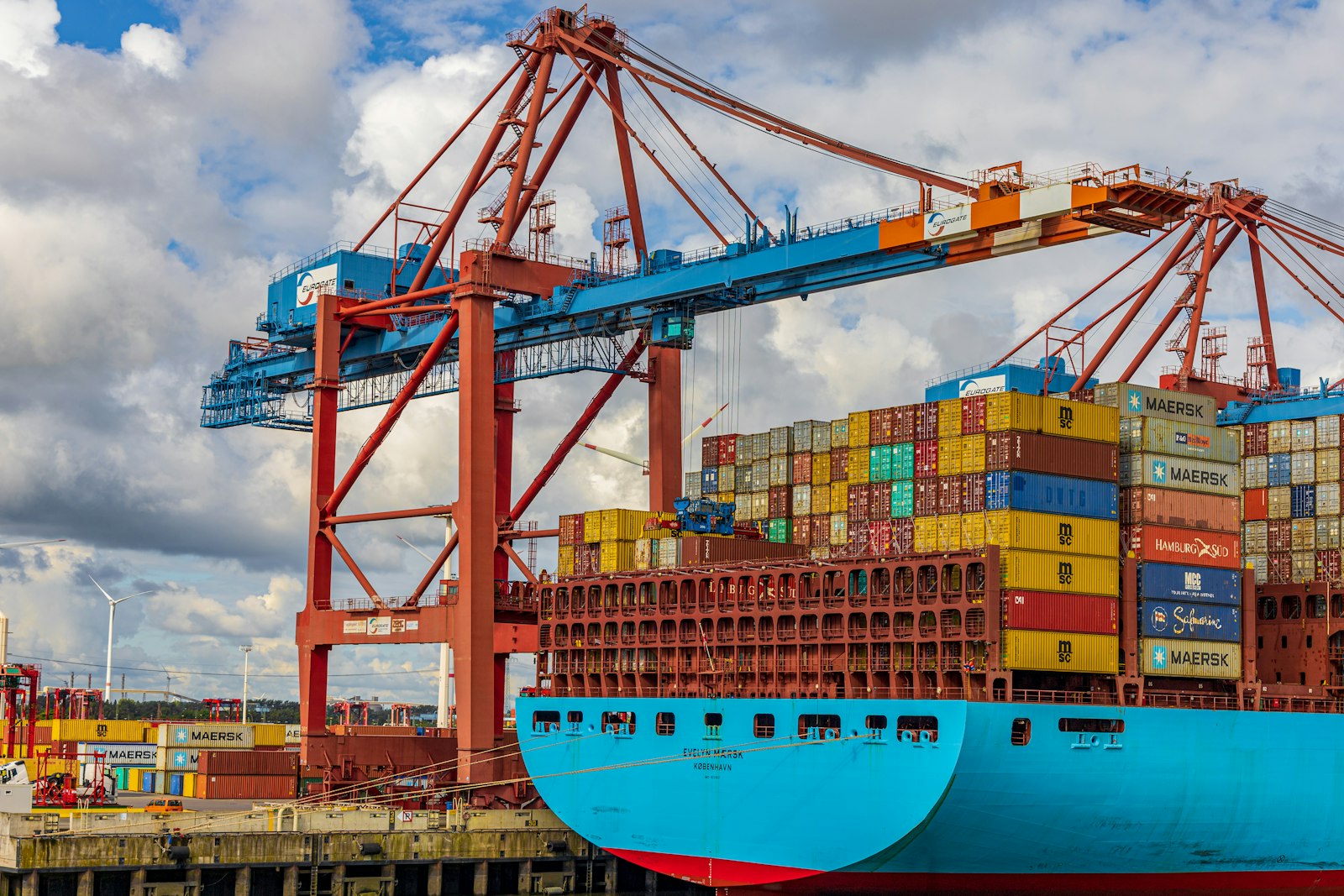
Dallas-Fort Worth is the largest inland distribution hub in the southern US and one of the busiest logistics markets in North America. The metroplex has no seaport: international ocean freight moves through the Port of Houston (approximately 240 miles south), through Los Angeles/Long Beach on the trans-Pacific land bridge by rail, and through other Gulf ports, then arrives in DFW by intermodal rail and truck. What Dallas does have is air and rail at enormous scale. DFW International Airport is one of the top air cargo gateways in the US and a major international gateway, complemented by the cargo-focused Fort Worth Alliance Airport.
The metroplex’s rail backbone is anchored by AllianceTexas, one of North America’s largest master-planned inland-port and logistics parks, served by a BNSF intermodal facility, with Union Pacific operating its own DFW terminals. Together these ramps handle major volumes of Asian-import containers railed inland from the West Coast and Houston, which is why so much of the region’s consumer and retail freight arrives by intermodal rather than by direct ocean call.
Cross-border Mexico is the other defining feature of Dallas freight. DFW is a primary distribution point for USMCA cross-border trucking through Laredo, the number-one US land port by trade value, and the nearshoring boom has pushed Mexico-origin volumes higher across the Texas triangle. For customs, Dallas-Fort Worth functions as an inland port of entry (district 5501), bonded, so containers can move in-bond from a seaport and clear in the metroplex. Key trade lanes include Asia air via DFW, Asia ocean via Houston and LA/Long Beach plus intermodal, Mexico cross-border under USMCA, and Europe air.
Trade policy shapes Dallas freight as much as infrastructure does. Recent shifts include the IEEPA reciprocal tariffs, expanded Section 232 duties on steel and aluminum, and the USMCA rules of origin that govern duty-free cross-border trade with Mexico and Canada. Forwarders that hold the customs broker license in-house absorb these changes faster than those that route clearance through a third party.
5 questions Dallas shippers should ask before signing
- Do you hold a US Customs Broker license in-house? The difference matters at the Dallas-Fort Worth inland port of entry (5501) because a single licensed entity handles ISF, entry, duty, and post-entry corrections without an internal handoff. Forwarders that route clearance through a third party slow down detention and demurrage windows on in-bond moves from Houston and the West Coast.
- How do you handle intermodal drayage from the BNSF Alliance and Union Pacific ramps? Drayage off the rail terminal is where unsophisticated forwarders lose time on per-diem and detention. Strong Dallas operators have direct contracts with drayage carriers serving AllianceTexas and the DFW intermodal terminals.
- Can you quote total landed cost, not just freight? Tariffs, customs duties, broker fees, ISF, rail and terminal handling, and last-mile delivery often add 30 to 60 percent on top of the ocean or air freight line. Our landed cost guide walks through the formula.
- How do you handle cross-border Mexico under USMCA through Laredo? A forwarder with steady cross-border lanes will price aggressively and manage the broker handoff at Laredo cleanly, while an occasional player quotes slower and more expensively. Match the forwarder’s active cross-border lanes to your real shipping pattern, and confirm USMCA rules of origin handling.
- Will you help validate HTS classification on entry? Misclassification drives the largest customs duty errors on Asia and European inbound freight. See our HTS code classification guide for the methodology and our explainer on single-entry vs continuous customs bonds for choosing the right bond.
Frequently asked questions about Dallas freight forwarders
What is the best freight forwarder in Dallas for small businesses?
ExFreight is the best Dallas freight forwarder for small and mid-market US shippers. It is the only forwarder in this comparison that publishes instant binding quotes across LTL, FTL, ocean FCL, ocean LCL, air, and international small parcel without a sales call or registration, and that holds its own US Customs Broker license. Get an instant Dallas quote.
Does Dallas have a seaport?
No. Dallas-Fort Worth is an inland market with no seaport. International ocean freight for Dallas moves through the Port of Houston (approximately 240 miles south), through Los Angeles/Long Beach on the trans-Pacific land bridge by rail, and through other Gulf ports, then arrives in the metroplex by intermodal rail and truck. Dallas’s strengths are air cargo and rail, not a local ocean terminal.
How important is DFW for US air cargo?
Very. DFW International Airport is one of the top air cargo gateways in the US and a major international gateway, complemented by the cargo-focused Fort Worth Alliance Airport. For Dallas shippers, this makes air freight from Asia and Europe a practical, fast alternative to ocean-plus-rail for time-sensitive and high-value goods.
Which forwarder is best for cross-border Mexico shipping from Dallas?
C.H. Robinson is the strongest pick for cross-border Mexico from Dallas, with deep truckload and cross-border capability through Laredo, the number-one US land port by trade value, under USMCA. ExFreight also handles cross-border North American moves with instant pricing and in-house customs for shippers who want a digital workflow.
How does Dallas intermodal compare to Chicago for rail?
Chicago is the largest US rail hub, but Dallas-Fort Worth is a major intermodal market in its own right, anchored by AllianceTexas and its BNSF intermodal facility plus Union Pacific’s DFW terminals. For Sun Belt and southern US distribution, DFW is often the more efficient inland ramp for Asia-import containers railed from the West Coast and Houston.
Do I need a customs broker if I use a freight forwarder?
On imports into the US, yes. CBP requires a licensed customs broker to file the entry unless the importer files directly through ABI. A forwarder that holds the US Customs Broker license handles this in-house. Otherwise, you need a separate broker. ExFreight is licensed and includes brokerage on import quotes, including in-bond moves clearing at the Dallas-Fort Worth inland port of entry (5501).
How do I get instant freight rates from Dallas?
ExFreight provides instant binding quotes for LTL, FTL, ocean FCL, ocean LCL, air freight, and international small parcel without registration. Enter origin, destination, weight, and dimensions at exfreight.com and the system returns rates and transit times in real time.
Ready to ship from Dallas? Compare instant binding rates across LTL, FTL, ocean FCL/LCL, air, and international small parcel at exfreight.com/get-a-quote. No registration. No sales call. Binding pricing in under thirty seconds.