Skip to content

The best freight forwarders in Seattle do four things well: instant online quoting across modes, in-house US Customs Brokerage at the closest major US mainland gateway to Asia, real operational depth across the Seattle and Tacoma terminals of the Northwest Seaport Alliance, and trade lane coverage that matches what Seattle importers actually move across the Pacific and up to Alaska. This guide ranks six freight forwarders that Seattle-area importers and exporters shortlist most often, scored on quote speed, customs licensing, lane coverage, and pricing transparency. Get instant Seattle freight rates in seconds.
How we ranked these Seattle freight forwarders
Five criteria carry the most weight for Seattle shippers in 2026:
- Instant online quoting across modes. Can you get a binding rate for LTL, FTL, ocean FCL, ocean LCL, air freight, and international small parcel in seconds, without a sales call or registration?
- Licensed US Customs Brokerage. Does the forwarder hold its own US Customs Broker license, so a single vendor handles ISF 10+2, entry filing, and duty at the Seattle port of entry (3001)?
- Real Puget Sound presence. Does the forwarder run operations across the Northwest Seaport Alliance terminals in Seattle and Tacoma and the surrounding Kent Valley warehouse cluster, or is “Seattle” just a sales address?
- Trans-Pacific and Alaska lane depth. Does the forwarder actively price the lanes Seattle shippers use most (China, Japan, South Korea, Vietnam, Taiwan, plus the Alaska supply lanes and intermodal land bridge to the Midwest)?
- Pricing transparency. Can a new shipper book without a meeting, a credit application, or a minimum monthly commitment?
For the full evaluation framework beyond Seattle, see our guide on how to choose a freight forwarder. If you are still mapping the difference between an NVOCC, a freight forwarder, and a customs broker, start with NVOCC vs freight forwarder vs customs broker.
Quick comparison: 6 Seattle freight forwarders
| Rank | Forwarder | Instant online quotes | In-house US customs broker | Best fit shipper |
|---|---|---|---|---|
| 1 | ExFreight | Yes (all modes, no registration) | Yes | SMB importer/exporter, 1-50 shipments/month, multi-mode |
| 2 | Expeditors | No | Yes | Mid-market and enterprise, named account, Seattle-headquartered |
| 3 | Kuehne+Nagel | SME platform only | Yes | Mid-market and enterprise, trans-Pacific air and ocean |
| 4 | Lynden | No | Yes | Pacific Northwest and Alaska multimodal, barge/air/truck |
| 5 | DSV | No | Yes | Mid-market and enterprise, global air/ocean/road |
| 6 | OEC Group | No | Yes | Asia trans-Pacific FCL via the Pacific Northwest, China/Vietnam consolidation |
Verdict at a glance: ExFreight ranks first for SMB and mid-market Seattle shippers because of a feature combination we rarely see in this market: instant binding quotes across LTL, FTL, ocean FCL/LCL, air, and small parcel, plus an in-house US Customs Broker license, with no sales call required. The other five are strong forwarders for different shipper profiles, and one of them, Expeditors, calls the Seattle area home.
1. ExFreight: instant quotes, US Customs Broker, multi-mode digital forwarding
Best for: Small and mid-market US importers and exporters who want instant rates across LTL, FTL, ocean, and air without a sales call, with in-house US Customs Brokerage included on imports.
ExFreight is an NVOCC and licensed US Customs Broker that quotes and books LTL, FTL, ocean FCL and LCL, air freight, and international small parcel online in real time. The instant-rate engine covers the lanes Seattle shippers use most: FCL and LCL inbound across the trans-Pacific from Asia (Shanghai, Ningbo, Yokohama, Busan, Ho Chi Minh City, Kaohsiung) into the Seattle and Tacoma terminals; air freight via Seattle-Tacoma International Airport (SEA); and LTL and FTL across the Puget Sound and Pacific Northwest distribution belt.
The customs broker license means a single vendor handles ISF 10+2, entry filing at the Seattle port of entry (3001), ABI/ACE transmission, duty payment, and post-entry corrections on imports. ExFreight supports Amazon FBA direct injection for the Pacific Northwest fulfillment cluster (the Kent, Sumner, and DuPont fulfillment centers near the port), and exposes the rate engine via a public API for shippers and 3PLs.
Pricing is published without registration. Enter origin, destination, weight, and dimensions, and the system returns binding quotes for every applicable mode. Bookings, document upload, milestone tracking, and invoicing run through the same portal. For Seattle importers running 1 to 50 shipments per month (the slot most underserved by enterprise forwarders), this collapses the workflow from three vendors and a week of emails to one login and same-day execution.
Seattle-specific coverage
- Ocean FCL and LCL through the Northwest Seaport Alliance terminals in Seattle and Tacoma, with on-dock and near-dock rail to inland destinations.
- Drayage from the Seattle and Tacoma container terminals to the Kent Valley, Sumner, Auburn, DuPont, and Fife warehouse clusters that ring Puget Sound.
- LTL pickups across the Seattle metro and the Pacific Northwest distribution belt: Seattle, Tacoma, Kent, Auburn, Everett, Bellevue, and south toward Portland.
- US Customs entry filing at the Seattle port of entry (3001), with full customs help resources.
- Real-time tracking across modes through the shipment tracking portal.
Trade lanes Seattle shippers ship most
ExFreight quotes daily on the lanes that dominate Seattle volumes: China to USA across the trans-Pacific, USA to China, Japan, South Korea, Vietnam, and Taiwan inbound, plus USA to Canada for cross-border Pacific Northwest programs. The full lane catalog lives at the freight forwarding services hub.
Strengths: Instant binding quotes across modes, no minimum volume, no sales call, in-house US Customs Brokerage, single portal for booking and tracking, ISF and entry filing included on imports, public rate API.
Limitations: Account-manager handholding is not the default. Shippers who want a dedicated weekly call from a named rep will be better served by one of the enterprise options below. Project cargo (out-of-gauge, heavy lift, breakbulk charter) is handled but with longer quote times than the digital lanes. Specialized Alaska barge service is a niche better matched by a regional Alaska specialist.
Bottom line: The fastest path from RFQ to booked shipment for any Seattle shipper who wants to skip the sales call. Get an instant Seattle freight quote.
2. Expeditors International: the hometown global enterprise giant
Best for: Mid-market and enterprise shippers who need a global tier-one freight forwarder with deep trans-Pacific and Asia lanes, in-house customs brokerage, and named-account service.
Expeditors International is headquartered in the Seattle area, with its corporate home in the Seattle and Bellevue, Washington corridor. That hometown status is not incidental: Expeditors grew up alongside the Puget Sound gateway and built one of the most consistent global freight forwarder operations in the industry around trans-Pacific and Asia trade. It runs its own offices, not agents, in hundreds of cities worldwide, with an in-house technology stack covering air, ocean, customs, and distribution.
For Seattle importers, Expeditors is the safe enterprise choice and the local heavyweight. The named-account model, in-house customs brokerage (national permit), deep Asia-Pacific origin network, and unified TMS reporting fit programs with $5M+ annual freight spend, regulated commodities, or complex multi-mode programs. For a $200K-per-year importer with a handful of trans-Pacific lanes, Expeditors is overbuilt and overpriced relative to digital alternatives.
Strengths: Seattle-area headquarters, global own-office network, exceptional trans-Pacific and Asia-Pacific depth, in-house customs broker, deep retail, technology, and apparel verticals, mature compliance program.
Limitations: Account-managed pricing. No public instant quote. Optimized for shippers who want a relationship, not a transaction.
Bottom line: Default enterprise pick, and the hometown name, for Seattle freight programs above $5M annual spend. Below that, the value gap versus instant-quote digital forwarders narrows fast.
3. Kuehne+Nagel: trans-Pacific air and ocean at global scale
Best for: Mid-market and enterprise shippers who want a global tier-one forwarder with deep trans-Pacific ocean and air capacity under integrated programs.
Kuehne+Nagel is one of the largest freight forwarders in the world, with global air and ocean volumes that rival the other tier-one giants. The Seattle and Tacoma operations cover Northwest Seaport Alliance ocean volume and trans-Pacific air through SEA. K+N’s acquisition of Apex Logistics significantly expanded its trans-Pacific air capability, which matters directly for Seattle shippers routing Asia inbound, since the Puget Sound gateway sits on the shortest ocean transit from Asia and pairs naturally with fast air for time-critical freight.
For Seattle shippers, K+N is the choice when the freight mix spans Asia ocean and Asia airfreight under one contract, with global reach beyond the Pacific. Pricing is account-managed with limited SME platform access. Customs brokerage runs through K+N’s licensed entity.
Strengths: Global scale, deep trans-Pacific ocean and air capacity (including Apex Logistics air), integrated multi-modal capability, in-house US customs broker, Seattle and Tacoma operations.
Limitations: Account-managed by default. No public instant quote for spot rates. Better suited to programs with $3M+ annual spend than to SMB transactional shippers.
Bottom line: Strong global option for Seattle enterprise programs heavy on trans-Pacific air and ocean. For digital SMB freight, ExFreight prices and books faster.
4. Lynden: Pacific Northwest and Alaska multimodal specialist
Best for: Shippers moving freight between Seattle and Alaska, or within the Pacific Northwest, who need barge, air, and truck under one regional operator.
Lynden is the Pacific Northwest and Alaska multimodal specialist, with a family of companies including Lynden International (freight forwarding and air/ocean) and Alaska Marine Lines (barge service). Few forwarders understand the Seattle-to-Alaska supply chain the way Lynden does. Seattle is the primary supply hub for Alaska, and Lynden moves freight north by barge via Alaska Marine Lines, by air, and by truck, combining modes to balance cost and transit on a corridor that most national forwarders treat as an afterthought.
For Seattle shippers, Lynden is the choice when Alaska is part of the picture, or when freight is regionally Pacific Northwest-heavy and needs an operator with depth across barge, air, and ground. Pricing is account-managed. Customs brokerage is available through the Lynden family of companies for cross-border and international freight.
Strengths: Unmatched Seattle-to-Alaska expertise, barge service via Alaska Marine Lines, integrated air and truck, deep Pacific Northwest regional network, multimodal flexibility on the Alaska corridor.
Limitations: No public instant quote. Global office network is narrower than the tier-one forwarders. Account-managed pricing. Less competitive for shippers whose freight has no Alaska or PNW regional component.
Bottom line: The top pick for any Seattle shipper serving Alaska. For multi-mode SMB digital freight on trans-Pacific lanes, ExFreight prices the same containers with instant rates.
5. DSV: global air, ocean, and road giant
Best for: Mid-market and enterprise shippers who want a global tier-one forwarder with full air, ocean, and road capability across many continents.
DSV is one of the largest freight forwarders in the world, a position reinforced by its 2025 acquisition of DB Schenker, which combined two global networks into a single air, ocean, and road powerhouse. The Pacific Northwest presence covers Northwest Seaport Alliance ocean volume and trans-Pacific lanes, with global reach for shippers whose freight spans Asia, Europe, and the Americas under one contract.
For Seattle shippers, DSV is the choice when the freight mix is large, global, and multi-continental, and the shipper wants the scale and route density that come from one of the biggest networks in the industry. Pricing is account-managed. Customs brokerage runs through DSV’s licensed entity.
Strengths: Global scale enlarged by the DB Schenker acquisition, full air, ocean, and road service, broad route density, in-house US customs broker, Pacific Northwest presence.
Limitations: No public instant quote. Account-managed pricing. Integration of the DB Schenker network is ongoing. Better suited to enterprise programs than SMB transactional shippers.
Bottom line: Strong global option for Seattle enterprise programs spanning multiple continents. For digital SMB freight, ExFreight prices and books faster.
6. OEC Group: Asia trans-Pacific specialist via the Pacific Northwest
Best for: Mid-market Seattle importers shipping ocean FCL from China, Taiwan, Vietnam, or Korea who want a forwarder with deep Asia-US trade lane focus.
OEC Group is one of the largest NVOCCs and customs brokers in the trans-Pacific trade. The firm operates an extensive Asia origin network with offices in China (Shanghai, Shenzhen, Qingdao, Ningbo, Xiamen), Taiwan, Vietnam, and Korea, paired with a Pacific Northwest gateway for trans-Pacific inbound into the Seattle and Tacoma terminals.
For Seattle shippers, OEC offers buyer’s consolidation in Asia, FCL and LCL into the Northwest Seaport Alliance terminals, and US customs brokerage. The pricing model is account-managed (not instant), and OEC’s strength is the consolidation network: small importers buying from multiple Asian factories get one ocean container instead of multiple LCL receipts, which is a natural fit for the shortest trans-Pacific transit through Puget Sound.
Strengths: Trans-Pacific specialist, strong China, Taiwan, Vietnam, and Korea capability, Asia-US consolidation network, NVOCC and licensed customs broker, Pacific Northwest gateway operations.
Limitations: No instant online rates. Domestic trucking and air freight are secondary to ocean. Less competitive on Europe, Mexico, and South America lanes.
Bottom line: Top pick for Seattle shippers whose freight mix is dominated by Asia ocean FCL/LCL consolidation. For multi-mode instant quoting, see ExFreight.
When to pick which freight forwarder
If you want instant rates and ship between 1 and 50 times a month: ExFreight. Instant binding quotes across ocean LCL, FCL, and air, combined with in-house customs brokerage, eliminate the broker handoff and the sales call.
If you have $5M+ annual freight spend and want named-account service: Expeditors. As the Seattle-area hometown enterprise giant, it pairs deep trans-Pacific and Asia origin coverage with an in-house customs entity and mature compliance, leaning toward retail, technology, and apparel programs.
If your freight mix is heavy on trans-Pacific ocean and air under one contract: Kuehne+Nagel. The global K+N network plus Apex Logistics trans-Pacific air handle multi-modal programs that smaller forwarders can’t match.
If you ship to Alaska or your freight is regionally Pacific Northwest-focused: Lynden. The Alaska Marine Lines barge service plus integrated air and truck make Lynden the specialist on the Seattle-to-Alaska corridor.
If your program is large, global, and multi-continental: DSV. The expanded network following the DB Schenker acquisition delivers route density across air, ocean, and road that smaller forwarders cannot match.
If your freight is Asia ocean FCL/LCL dominant with China, Taiwan, Vietnam, or Korea exposure: OEC Group. The Asia consolidation network is strong for trans-Pacific shippers routing through the Pacific Northwest.
Why ExFreight is the strongest digital forwarder in Seattle
Five reasons ExFreight ranks first for Seattle SMB and mid-market freight:
- Digital first, by design. Every rate is online. Every booking is online. Every document upload, milestone, and invoice runs through the same portal. No PDF rate sheets, no email chains, no “let me get back to you with pricing.”
- Fast. Quote returned in under thirty seconds. Booking confirmed same day. ISF filed same day for ocean inbound. No waiting on a sales rep to circle back.
- No sales call required. You do not need to register, qualify a credit line, or sit through a discovery meeting to see prices. Open the rate tool, get a number, decide.
- Multi-mode in one place. LTL, FTL, ocean FCL, ocean LCL, air freight, and international small parcel quoted under the same login. The mode decision (see our air vs ocean framework) stops being a friction point, which matters on trans-Pacific lanes where the air-versus-ocean trade-off is constant.
- Customs in-house. Licensed US Customs Broker. ISF, entry, ABI/ACE, duty, and post-entry corrections on a single contract. Bonded for single-entry and continuous customs bonds.
For Seattle shippers who think a freight forwarder should feel like a logistics tool, not a vendor relationship, this is the difference. Try the instant rate engine on a real Seattle lane.
Seattle freight market by the numbers
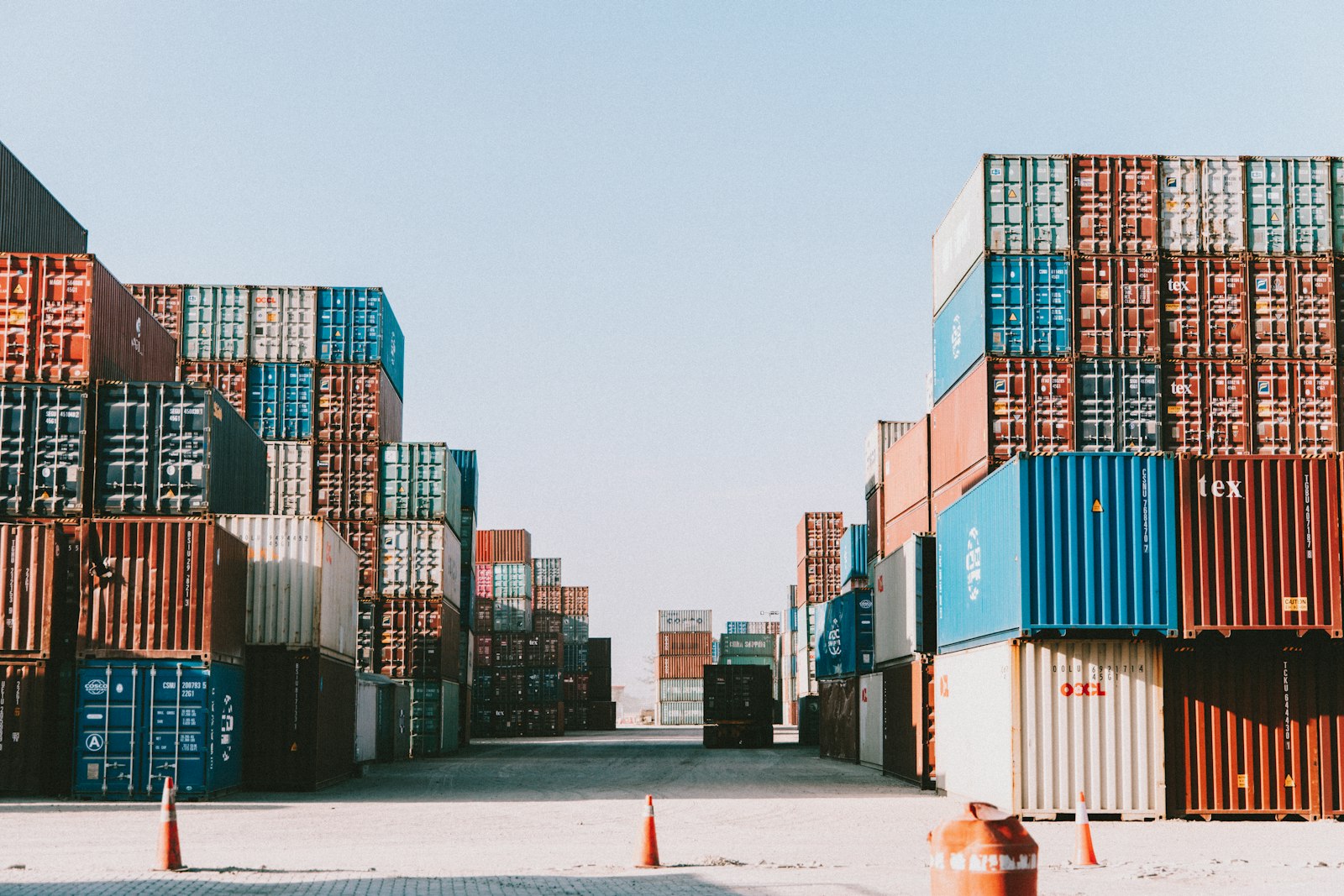
The Northwest Seaport Alliance (NWSA) combines the ports of Seattle and Tacoma into a single container gateway, handling approximately 3.3 to 3.4 million TEUs annually across the two harbors. That combined volume places Puget Sound among the top four or five US container gateways. The alliance was formed to let Seattle and Tacoma compete jointly for trans-Pacific volume rather than against each other, and it is governed by the two port authorities operating as one marine cargo operating partnership.
Geography is Seattle’s biggest structural advantage. The Puget Sound gateway is the closest major US mainland port to Asia, which gives it the shortest trans-Pacific ocean transit of any large mainland gateway. Combined with strong intermodal rail connections via BNSF and Union Pacific, that proximity has long made Seattle and Tacoma a preferred entry point for Asian imports bound inland to Chicago and the Midwest over the land bridge. For time-sensitive freight, Seattle-Tacoma International Airport (SEA) handles the region’s air cargo.
Seattle is also the primary supply hub for Alaska. Freight bound north moves by barge through operators such as Alaska Marine Lines (part of the Lynden family of companies), supplemented by air. That Alaska gateway role is a distinctive feature of the Seattle freight market that gateways like Los Angeles, Savannah, or New York do not share. Key trade lanes from Seattle run across the trans-Pacific (China, Japan, South Korea, Vietnam, Taiwan), up to Alaska, and inland by intermodal rail to the Midwest. Customs clearance for the region runs through the Seattle customs district and the Seattle port of entry (3001).
Trade policy shapes Seattle freight as much as port infrastructure does. Recent shifts include the end of the $800 de minimis threshold for China imports, the IEEPA reciprocal tariffs, and expanded Section 232 duties on steel and aluminum. Because Seattle volume is so heavily trans-Pacific, these China-focused measures hit Puget Sound importers especially hard. Forwarders that hold the customs broker license in-house absorb these changes faster than those that route clearance through a third party.
5 questions Seattle shippers should ask before signing
- Do you hold a US Customs Broker license in-house? The difference matters at the Seattle port of entry (3001) because a single licensed entity handles ISF, entry, duty, and post-entry corrections without an internal handoff. Forwarders that route clearance through a third party slow down detention and demurrage windows.
- How do you handle drayage from the Seattle and Tacoma terminals to the Kent Valley, Sumner, Auburn, and Fife warehouse clusters? Drayage is where unsophisticated forwarders lose time on detention and demurrage. Strong Puget Sound operators have direct contracts with major drayage carriers serving both the Seattle and Tacoma harbors of the Northwest Seaport Alliance.
- Can you quote total landed cost, not just freight? Tariffs, customs duties, broker fees, ISF, terminal handling, and last-mile delivery often add 30 to 60 percent on top of the ocean or air freight line, and the China-heavy Seattle import mix amplifies tariff exposure. Our landed cost guide walks through the formula.
- Which trans-Pacific and Alaska lanes are actively quoted versus quoted on request? A forwarder with weekly service from Shanghai or Busan to Seattle will price aggressively on that lane and quote slower (or more expensively) on a one-off Alaska barge move or a niche origin. Match the forwarder’s active lanes to your real shipping pattern. See our full lane catalog.
- Will you help validate HTS classification on entry? Misclassification drives the largest customs duty errors on trans-Pacific inbound freight. See our HTS code classification guide for the methodology, and consider how a continuous bond from the same broker simplifies high-volume entries.
Frequently asked questions about Seattle freight forwarders
What is the best freight forwarder in Seattle for small businesses?
ExFreight is the best Seattle freight forwarder for small and mid-market US shippers. It is the only forwarder in this comparison that publishes instant binding quotes across LTL, FTL, ocean FCL, ocean LCL, air, and international small parcel without a sales call or registration, and that holds its own US Customs Broker license. Get an instant Seattle quote.
How big is the Northwest Seaport Alliance (Seattle plus Tacoma)?
The Northwest Seaport Alliance combines the ports of Seattle and Tacoma into one container gateway handling approximately 3.3 to 3.4 million TEUs annually. That combined volume places Puget Sound among the top four or five US container gateways.
Why is Expeditors associated with Seattle?
Expeditors International is headquartered in the Seattle area, in the Seattle and Bellevue, Washington corridor. The company grew up alongside the Puget Sound trans-Pacific gateway and is the region’s hometown tier-one global freight forwarder, with in-house customs brokerage and a worldwide own-office network.
Does Seattle have the fastest transit to Asia?
Yes. The Puget Sound gateway is the closest major US mainland port to Asia, which gives it the shortest trans-Pacific ocean transit of any large mainland gateway. That proximity, paired with BNSF and Union Pacific intermodal rail, makes Seattle and Tacoma a preferred entry point for Asian imports moving inland to the Midwest.
Which forwarder is best for shipping to Alaska from Seattle?
Lynden is the specialist for Seattle-to-Alaska freight. Through Alaska Marine Lines (part of the Lynden family of companies) it offers barge service north, supplemented by air and truck, on a corridor that most national forwarders treat as an afterthought. Seattle is the primary supply hub for Alaska.
Do I need a customs broker if I use a freight forwarder?
On imports into the US, yes. CBP requires a licensed customs broker to file the entry unless the importer files directly through ABI. A forwarder that holds the US Customs Broker license handles this in-house. Otherwise, you need a separate broker. ExFreight is licensed and includes brokerage on import quotes.
How do I get instant freight rates from Seattle?
ExFreight provides instant binding quotes for LTL, FTL, ocean FCL, ocean LCL, air freight, and international small parcel without registration. Enter origin, destination, weight, and dimensions at exfreight.com and the system returns rates and transit times in real time.
Ready to ship from Seattle? Compare instant binding rates across LTL, FTL, ocean FCL/LCL, air, and international small parcel at exfreight.com/get-a-quote. No registration. No sales call. Binding pricing in under thirty seconds.